
What to Actually Pack for a Night Around a Fire
A plain-spoken packing list for fire nights: layers, chairs, fire tools, food that works over flame, and what to leave home.
For a night around a fire you need five things: more layers than you think, a chair with a back, a real way to start the fire, food that cooks on a stick or in foil, and a light source that isn't your phone. Everything else is optional, and half of what people bring never leaves the truck.
This is the list built from actual fire nights — backyard pits in October, gravel bars on Ozark rivers, high desert BLM land where the temperature drops thirty degrees the minute the sun quits. It works for all of them.
The layer math nobody explains
A fire cooks one side of you and ignores the other. Your face is warm and your kidneys are cold. This is why people who dress for the fire itself always end up miserable — you're not dressing for the fire, you're dressing for the air behind you.
The working formula: dress for the overnight low, not the temperature when you leave the house. If it's 65 at dinner and 42 at midnight, pack for 42. Specifically:
- A base layer you'd wear anyway. Something like the Bonfire Nights Crew is on theme, which counts for something.
- A mid layer — flannel, fleece, whatever lives in your back seat.
- A real jacket, even if you're sure you won't need it. You will need it around 10:30.
- A beanie. Most of your heat loss complaints trace back to a bare head.
- Wool socks. Cotton socks near a river or damp grass are a mistake you make once.
The trick is that you'll take layers off and put them back on three or four times over the night. That's normal. That's the whole system.
The chair question, settled
Standing around a fire is fine for twenty minutes. After that you want a chair, and the chair matters more than almost anything else on this list. Sitting on a log sounds rustic until your lower back files a complaint at hour two.
What to look for: a back that actually reclines a little, a cup holder, and legs wide enough that it doesn't sink into sand or soft dirt. The cheap folding chairs from a gas station work until they don't, usually mid-sit. If you fish or hunt you probably already own the right chair. Bring that one.
Also bring a blanket per person, or at least per couple. Wool if you have it — it doesn't care about sparks the way synthetic fleece does. A stray ember lands on wool and dies. It lands on a polyester throw and melts a hole shaped like your regret.
Fire tools that earn their spot
You do not need a hatchet, a folding saw, a fire piston, and a magnesium striker. You need:
- A lighter, plus a backup lighter, because the first one is always almost empty.
- Fire starter. Dryer lint in a bag, a paraffin cube, a fatwood stick — pick one. Newspaper works if it's dry, which it won't be.
- Dry wood, brought with you unless you know the site. Wet wood is the number one cause of a bad fire night. Buy it near where you're burning it — moving firewood long distances spreads pests, and many states ask you not to.
- One long-handled poker or just a sturdy green stick. Everyone will fight over it. That's part of the evening.
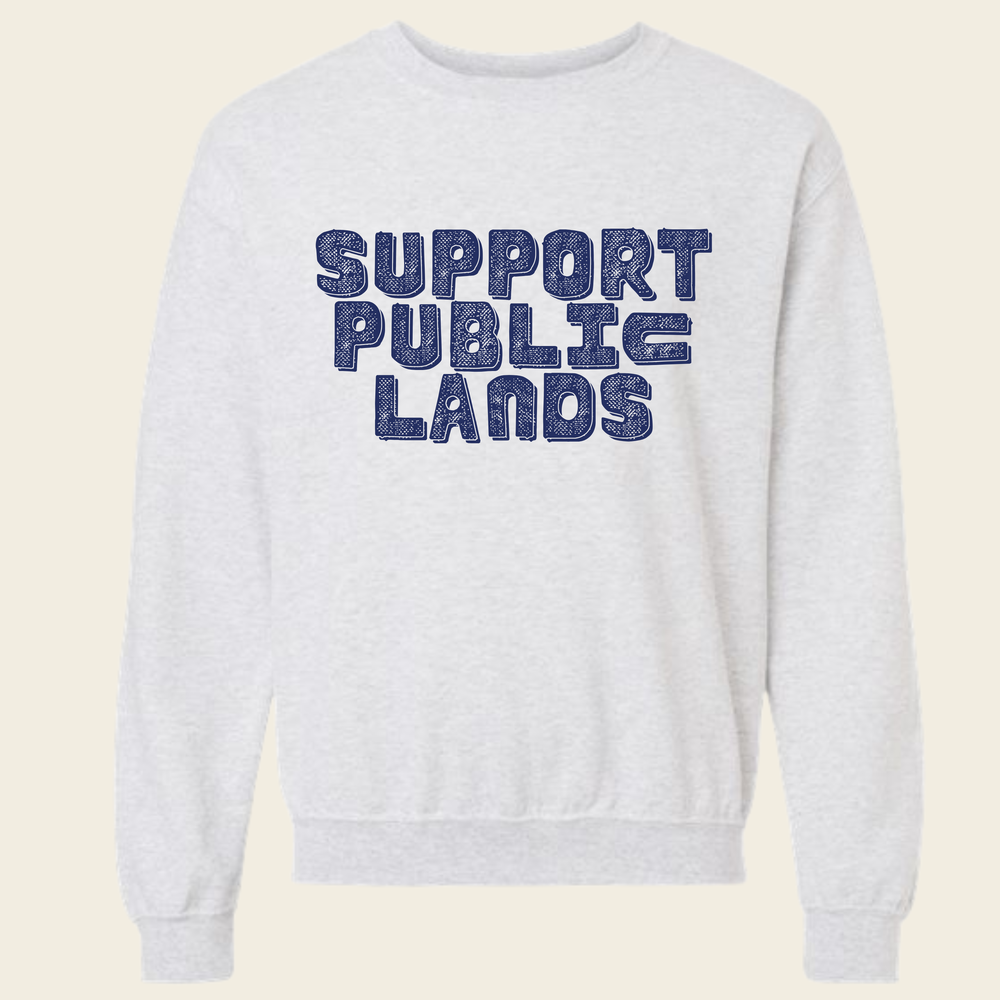
- Water or a shovel for putting it out. This is not optional. Dead out means you can put your hand in the ashes. If you're burning on public land, know the local fire rules before you strike anything — they change with the season and they exist for good reasons. The Support Public Lands Crew is the shirt version of this paragraph.
Food that actually works over flame
Fires are terrible stoves and great broilers. Anything that needs precise temperature is out. Anything that tolerates char is in.
- Hot dogs and brats. The floor and often the ceiling. A metal skewer beats a whittled stick unless you enjoy the whittling, which is a fair position.
- Foil packets. Potatoes, onions, butter, sausage, salt. Set them in the coals — not the flames — and leave them alone for a while. The while is longer than you think.
- S'mores, obviously, but the real move is letting the marshmallow catch fire on purpose and pretending it was an accident.
- Cast iron if you're ambitious. A pie iron with bread, pizza sauce, and cheese converts skeptics. Cast iron over coals will also do bacon and eggs at midnight, which is one of the better meals available in North America.
Bring paper towels, one trash bag, and one more trash bag. Pack out everything, including the foil, which does not burn no matter how long you stare at it.
Light, and the small stuff that gets forgotten
A fire lights a circle about ten feet wide. Everything beyond that — the cooler, the truck, the walk to wherever you're peeing — is dark. So:
- A headlamp per person. Phone flashlights die exactly when you need them.
- Bug spray in summer, especially near water at dusk. That first hour after sunset is when the mosquitoes hold their meetings.
- A knife. Not for anything dramatic. For opening packages, cutting cord, and sharpening the marshmallow stick.
- Camp cups. Canned drinks go warm or spill; a lidded cup survives being set on uneven ground.
- Water for drinking, separate from the water for the fire.
What to leave home
Bluetooth speakers are a judgment call, and the judgment is usually no. If you can hear another campsite, they can hear you. The fire makes its own soundtrack and it's better than your playlist.
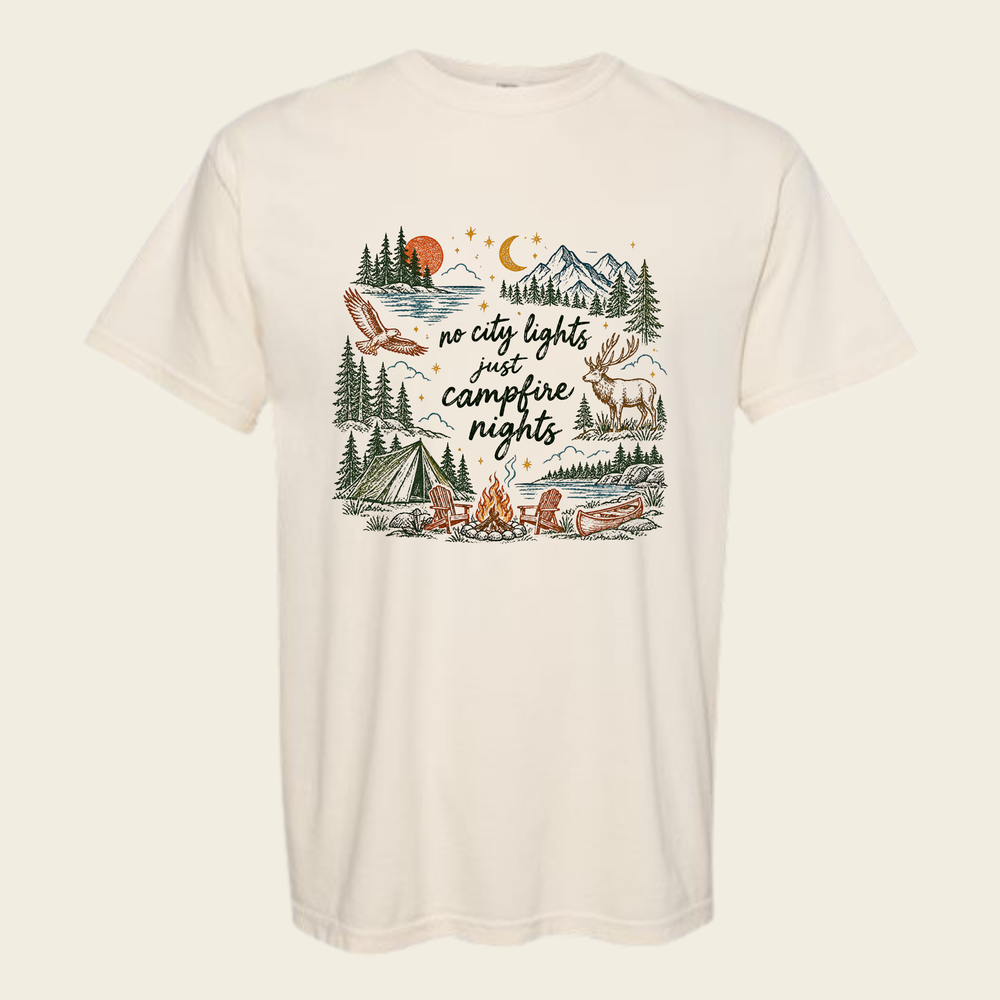
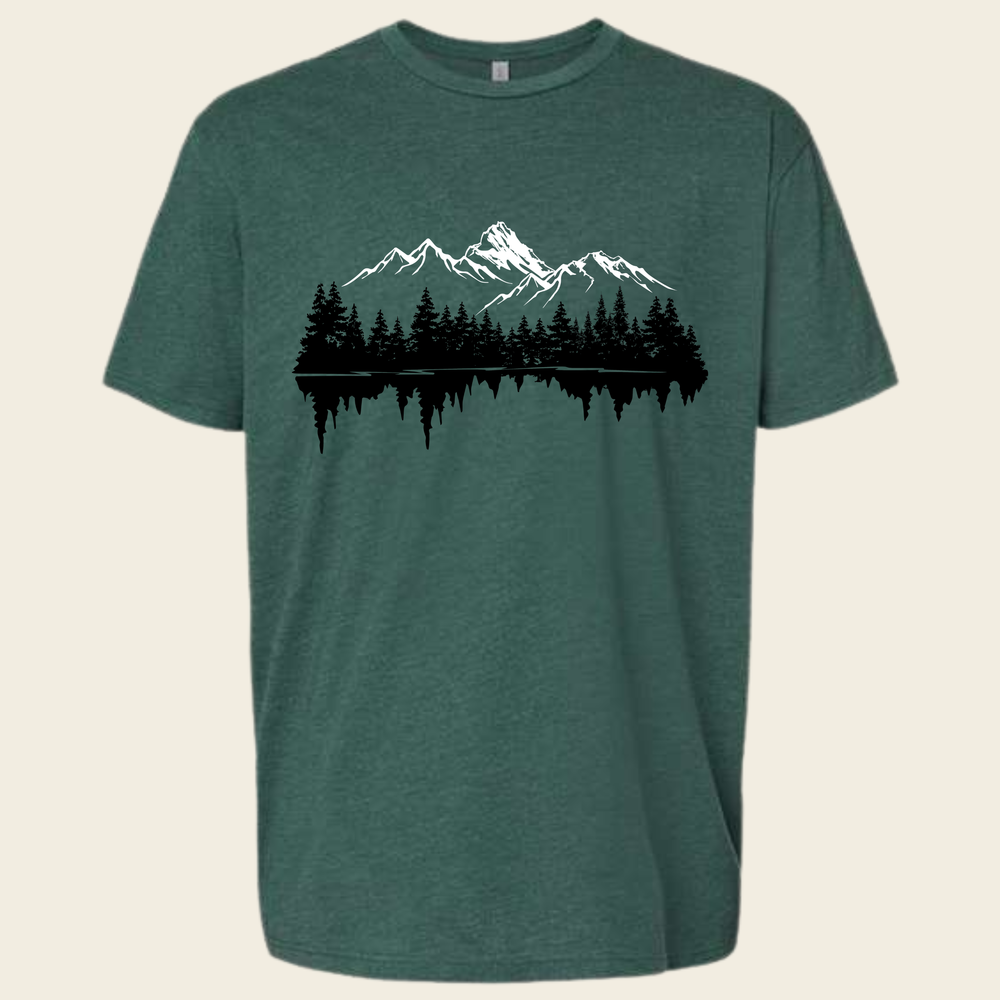
Skip anything precious. Fires produce smoke that gets into everything and sparks that occasionally land where they shouldn't. Wear the clothes you'd wear to do yard work — this is the natural habitat of things like the Campfire Cryptids Tee, and most of the outdoors collection, honestly. A fire night is not the place for the good jacket.
Skip the fireworks, the aerosol cans, the accelerants. Lighter fluid on an already-lit fire is how eyebrows are lost. If your fire won't start, your wood is wet or your kindling is too big. Fix the actual problem.
The one-glance checklist
- Layers: base, mid, jacket, beanie, wool socks
- Chair with a back, one per person
- Blanket, ideally wool
- Lighter, backup lighter, fire starter
- Dry wood, bought locally
- Poker stick, skewers
- Food: dogs, foil packets, s'mores kit
- Headlamps, bug spray, knife, cups
- Water and trash bags
- Way to put the fire dead out
That's it. The list fits in one tote and a cooler. The best fire nights aren't the ones with the most gear — they're the ones where nobody has to leave the circle to go find something.
Common questions
How much firewood do I need for one night?
Plan on more than seems reasonable — a bundle from the gas station lasts maybe an hour once the fire is going well. For a full evening, three to four bundles is a safer bet, and leftover wood is never wasted. Buy it close to where you're burning it.
What's the best food to cook over a campfire with no equipment?
Hot dogs on a stick and foil packets in the coals. Both need nothing but the fire itself, and both tolerate the uneven heat that ruins fancier plans. S'mores close it out and require zero skill, which is the point.
How do I know a fire is fully out before I leave?
Drown it, stir the ashes, and drown it again until you can hold your hand near the ashes and feel no heat. If it's steaming or hissing, it's not out. Wind can revive coals hours after you leave, so err heavily on the side of soggy.
Outdoors
Made by Land & Light — American lifestyle apparel with a sense of place and a sense of humor.
See every shirt