
The Unwritten Rules of a Scramble
A scramble is simple on paper. The unwritten rules are what keep four people in a cart from ruining a perfectly good Saturday.
A scramble is the format where all four players hit, the team picks the best shot, and everyone plays again from that spot. The unwritten rules are everything the scorecard doesn't cover: who hits first, what counts as a gimme, how many beers is too many before the turn, and why you should never apologize for a bad shot more than once.
Most people meet the scramble at a charity outing, a work event, or a member-guest at the local muni. Nobody hands you a rulebook in the parking lot. You're just expected to know. So here's what everybody else already knows.
Figure out which player you are, fast
Every scramble team sorts itself into roles within two holes, whether anyone says it out loud or not.
- The A player. Hits it far, hits it last, carries the team on par 5s. Also the most likely to lose his mind over a missed six-footer that didn't matter.
- The B player. Steady. Finds fairways. The team uses his ball more than anyone admits.
- The C player. Wildly inconsistent off the tee but somehow makes two long putts a round. Every team needs one.
- The D player. Signed up for the dinner and the raffle. Contributes one drive all day, on the hole where everyone else found the pond, and talks about it for a year.
The unwritten rule: play your role without narrating it. If you're the D player, you don't need to say "I'm just here for the beer" after every swing. Everyone knows. It's fine. That's the whole point of the format, and honestly it's the whole point of the Off the Clock collection too — some days the golf is the excuse, not the activity.
Hitting order is not random
On the tee, the shaky players go first. This isn't an insult, it's strategy. If the C player stripes one down the middle, the A player can swing out of his shoes with nothing to lose. If the first three balls are in the trees, the last guy knows he has to put something in play. Sending your best player first and watching three people try to beat a perfect drive is a waste of everyone's morning.
Same logic on the green, with a twist. The worst putter goes first — not to get it over with, but because his putt shows everyone the line. His job isn't to make it. His job is to miss it informatively. Then each putt teaches the next one, and the best putter goes last with a full scouting report.
The one exception: if someone on the team is genuinely feeling it that day, feed him the ball. Ride the hot hand. Egos wait in the cart.
Gimme range is a social contract
Nobody in the history of the charity scramble has ever putted out a ten-incher. The generally accepted standard is "inside the leather" — roughly the length of a putter grip — and in most casual scrambles it stretches to about two feet without anyone blinking.
The unwritten rules around gimmes:
- Don't ask for one. If it's good, someone will say "pick it up." Asking makes it awkward for everybody.
- Don't give yourself one. That's a different thing entirely, and people notice.
- Don't make a teammate putt a two-footer "just to be safe" unless there's actual money on the line. There is almost never actual money on the line.
The guy running the event does not care about your card. He cares that dinner starts on time.
Mulligans and the honor system
At most charity scrambles, you can buy mulligans at the registration table. Buy them. All of them. This is where the money goes to the actual cause, and complaining about the price of a mulligan at a fundraiser is a bad look that follows you.
How to use them is where the unwritten rules kick in. A mulligan is for a tee shot that went somewhere embarrassing, or a putt that mattered. It is not for turning a good drive into a slightly better drive. And a team that shows up claiming everyone shoots "around a hundred" and then posts twelve under has told everyone in the clubhouse exactly who they are. Sandbagging a charity scramble is the golf equivalent of elbowing kids at an Easter egg hunt. You might win a sleeve of balls. You'll pay for it in reputation.
Pace, carts, and the cooler
You will use one ball per shot as a team, which means a scramble should move faster than regular golf, not slower. It usually doesn't, because people forget the basics:
- Once the team picks a ball, everyone else picks theirs up. Immediately. Nobody needs to see you finish the hole for pride.
- Hit when you're ready. Honors don't exist in a scramble.
- One person marks the best ball while the others drive ahead to their own. Divide the labor.
- The cooler is a shared resource. Restock at the turn or forever hold your peace.
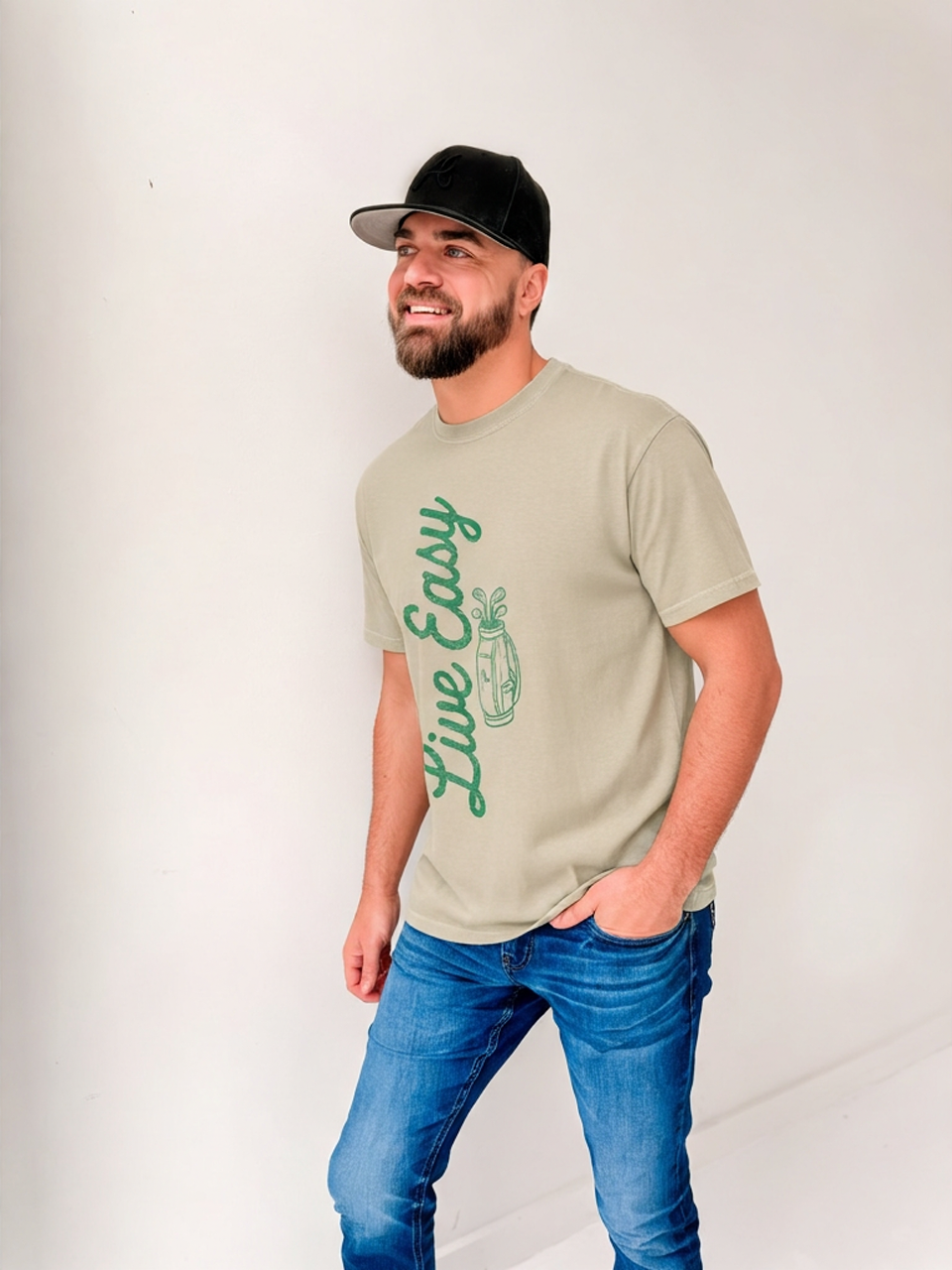
Dress code follows the same logic as pace: relaxed, but not careless. Most outings just want a collar or something close to it, and something like the Live Easy Golf Tee says roughly what a scramble is supposed to say — you came to play, but nobody's checking your handicap at the door.
The prize table and the 19th hole
Closest to the pin. Longest drive. The 50/50 raffle where the winner always seems to be the one guy who bought a single ticket. This is the real economy of the scramble, and the unwritten rules here are the simplest ones.
Stay for the dinner. The organizers spent months on this, and the room full of people at the awards is what makes them do it again next year. Clap for the winning team even if you're sure they cheated, because you are sure they cheated, and so is everyone else, and it doesn't matter. Buy raffle tickets you don't need. Tell the story of the D player's one great drive, loudly, with him in the room.
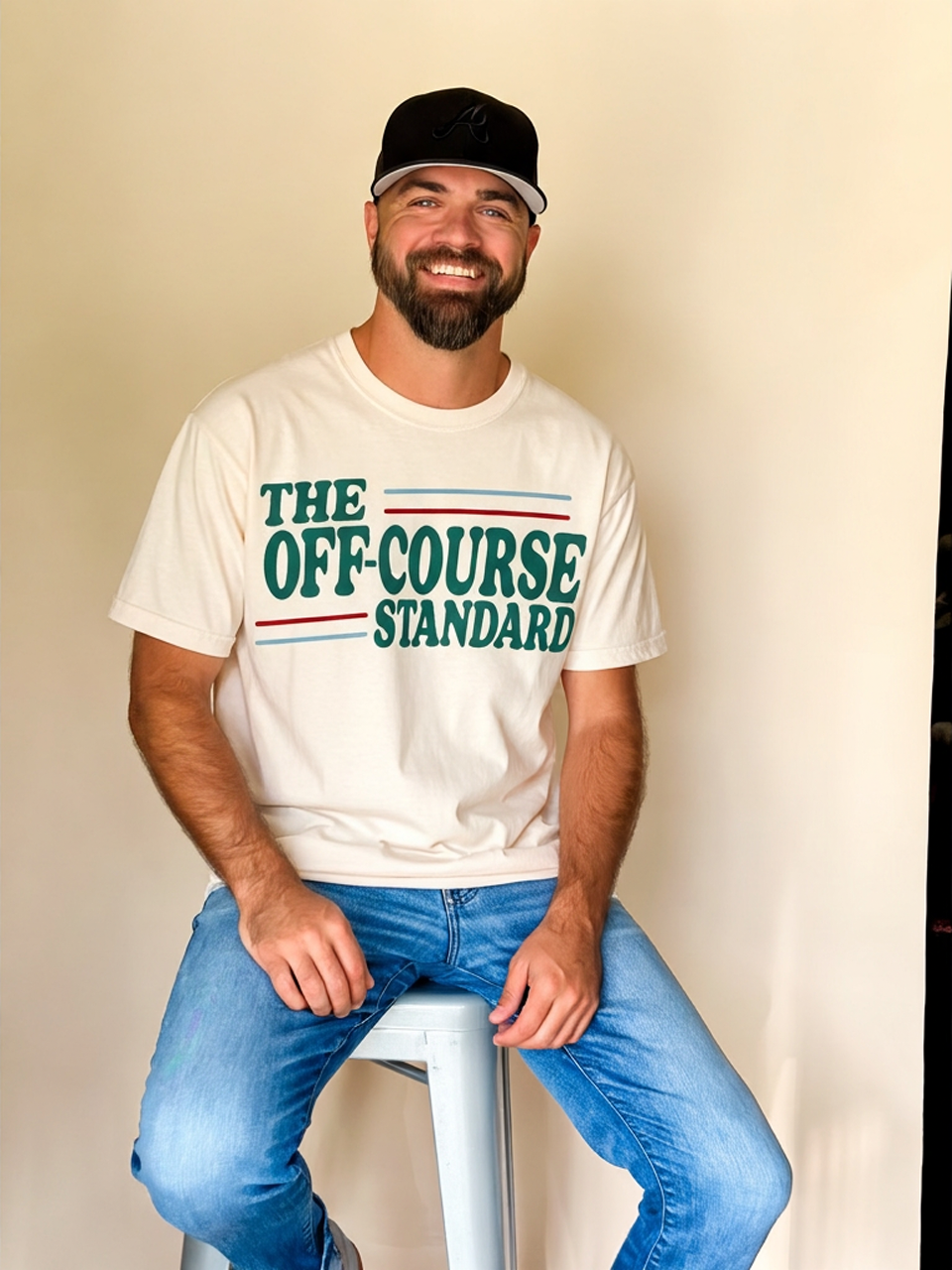
And when you finally peel off the golf shoes in the parking lot, have something to change into that doesn't smell like four hours of July. The Off-Course Standard Tee exists for exactly this fifteen minutes of the day — the tailgate is down, the round is over, and nobody's counting anything anymore.
Common questions
What exactly is a scramble format?
All four players tee off, the team picks the best shot, and everyone plays their next shot from that spot. Repeat until the ball is in the hole. One team score per hole, which is why bad golfers can play and good teams go low.
How many mulligans should I buy at a charity scramble?
Whatever the maximum is. The money goes to the cause, the mulligans keep the round fun, and nobody has ever regretted having one in reserve on the eighteenth tee.
I'm terrible at golf. Should I still play in a scramble?
Yes. The format is built for you — the team only needs one usable shot per stroke, and yours will show up when it's least expected and most appreciated. Show up, pick up your ball when asked, and stay for dinner.
Off the Clock


Made by Land & Light — American lifestyle apparel with a sense of place and a sense of humor.
See every shirt