
What People Get Wrong About Ohio
Ohio isn't flat, isn't one place, and isn't boring. A field guide to the myths and what's actually there.
Most of what people believe about Ohio is wrong. It isn't flat, it isn't all cornfields, it isn't one culture, and it isn't a place you drive through without noticing.
The state has a real coastline, real hills, three big cities that barely resemble each other, and food traditions strange enough that people argue about them decades after leaving. Here's what outsiders get wrong, one myth at a time.
Myth one: Ohio is flat
Northwest Ohio is flat. That part is true. The old Great Black Swamp country around Toledo and down toward Lima is table-flat farmland, and if that's the only Ohio you've seen from I-75, the myth makes sense.
But the southeast third of the state is Appalachia. Real hills, real hollows, real switchback roads. Drive Route 33 out of Columbus toward Athens and watch the land change under you. The Hocking Hills region has gorges, waterfalls, and sandstone recess caves — Old Man's Cave and Ash Cave draw crowds every fall for a reason. Athens sits in a valley. The roads down there curve like they mean it.
Even the supposedly flat parts have texture. The glaciers stopped partway through the state, which is why the north got scraped smooth and the southeast didn't. Ohio is two different landscapes wearing one name.
Myth two: Ohio is one place
The three C's — Cleveland, Columbus, Cincinnati — are three different worlds, and Ohioans will tell you this before you finish asking.
- Cleveland faces the lake and the Rust Belt. Eastern European roots, pierogi and Polish Boys, a chip on its shoulder it has earned the right to carry. Culturally it has more in common with Pittsburgh and Buffalo than with the rest of Ohio, though nobody in Cleveland wants to hear the Pittsburgh part.
- Cincinnati faces the river and the South. German heritage runs deep — the neighborhood is literally called Over-the-Rhine. The food is different, the accent is different, and the city looks across the water at Kentucky like a neighbor it's on decent terms with.
- Columbus is the capital, the university town, and the one that grew while the other two shrank. Test-market America, in the best and most literal sense — chains try new things in Columbus because it looks like everywhere.
Then there's everything between: Amish country in Holmes County, lake towns like Sandusky and Port Clinton, college towns like Oxford and Athens, and farm counties that operate on their own clock. Calling all of this "Ohio" is accurate but not descriptive.
Myth three: the food is boring
Ohio food is regional and specific, which is the opposite of boring.
Cincinnati chili is the famous example — a spiced meat sauce, closer to a Mediterranean ragù than Texas chili, served over spaghetti and buried under a haystack of shredded cheddar. Order a three-way at Skyline or Gold Star and someone at the next table will tell you which chain is correct. They will not agree with each other.
Cincinnati also has goetta, a pork-and-oats breakfast meat that basically doesn't exist outside the region. Cleveland has the Polish Boy — kielbasa, fries, coleslaw, and barbecue sauce on a bun, all at once, no apologies. Graeter's ice cream comes with chocolate chunks the size of poker chips because of how they make it. And the buckeye — peanut butter dipped in chocolate, styled after the nut of the state tree — shows up at every holiday table in the state.
None of this is subtle. All of it is loved.
Myth four: there's no coast
Ohio has a north coast, and people who grew up on it will use exactly that phrase. Lake Erie is the shallowest and warmest of the Great Lakes, which means swimmable water in summer and some of the best walleye and perch fishing anywhere.
The lake towns have their own rhythm. Sandusky has Cedar Point, which roller coaster people speak about the way climbers speak about certain mountains. Put-in-Bay on South Bass Island is Ohio's version of a beach party town, reachable by ferry, golf carts everywhere. Kelleys Island is the quieter neighbor, with glacial grooves carved into the limestone that are worth the trip alone. Marblehead has a lighthouse that ends up on half the postcards in the state.
In winter the lake freezes near shore and ice fishermen walk out with shanties and augers. It is not a decorative body of water. People live on it and off it.
Myth five: nothing comes from Ohio
The "flyover country" line falls apart fast here. The Wright brothers built their bicycles and their ideas in Dayton before they ever went to Kitty Hawk — the flying was in North Carolina, but the inventing was in Ohio. Neil Armstrong was from Wapakoneta, a small town off I-75 with a museum you can see from the highway. John Glenn was from New Concord. For a state people claim to fly over, Ohio produced a strange number of the people who figured out how to fly at all.
The list runs long past aviation — presidents, athletes, musicians, inventors — but the astronaut thing is the one Ohioans bring up first, and fair enough.
Myth six: the O-H thing is just a football chant
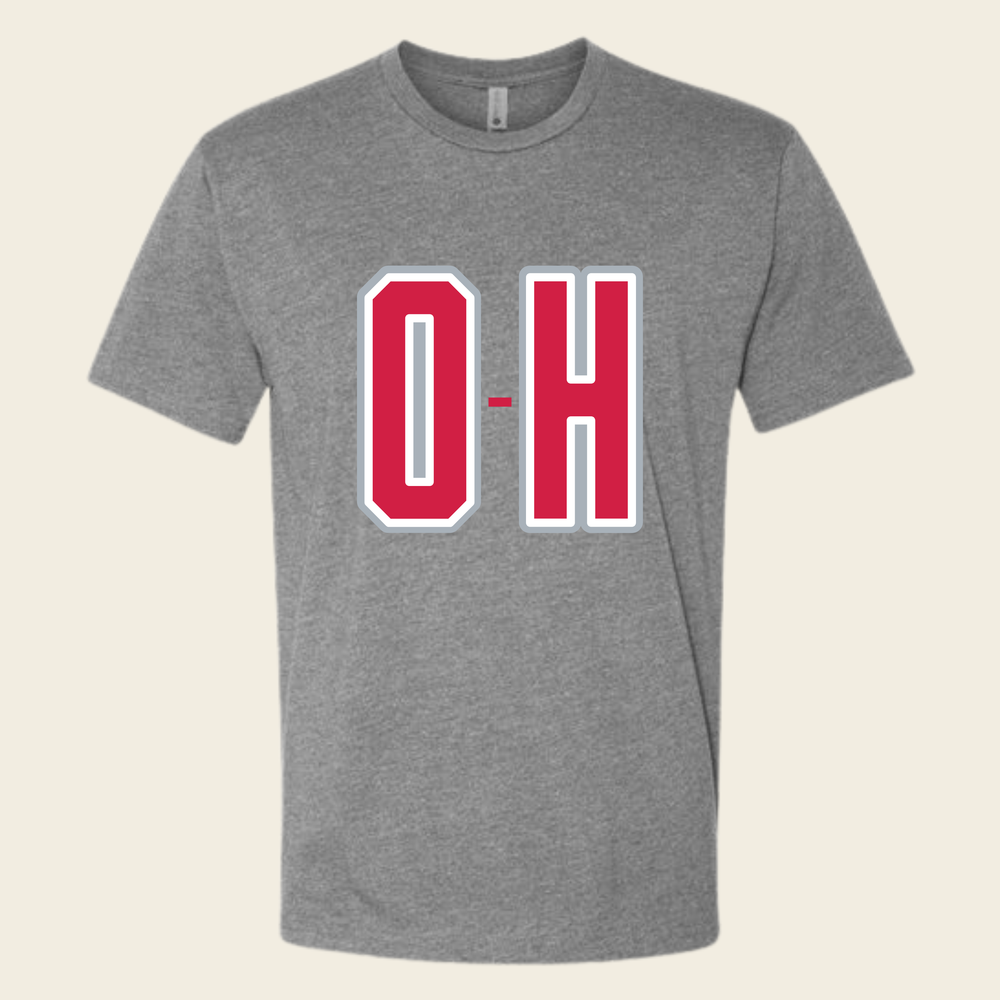
Here is where outsiders miss the point entirely. Yes, "O-H" "I-O" is the Ohio State call and response, and yes, it starts in the Horseshoe on fall Saturdays. But it left the stadium a long time ago.
Shout "O-H" in an airport anywhere on earth and wait. Someone will answer. It happens on trails, at weddings, on the summit of mountains, in line at foreign train stations. It's less a cheer than a password — a way of finding your people when you're far from home. Ohioans scatter widely and never fully leave, and the chant is how they check in with each other.
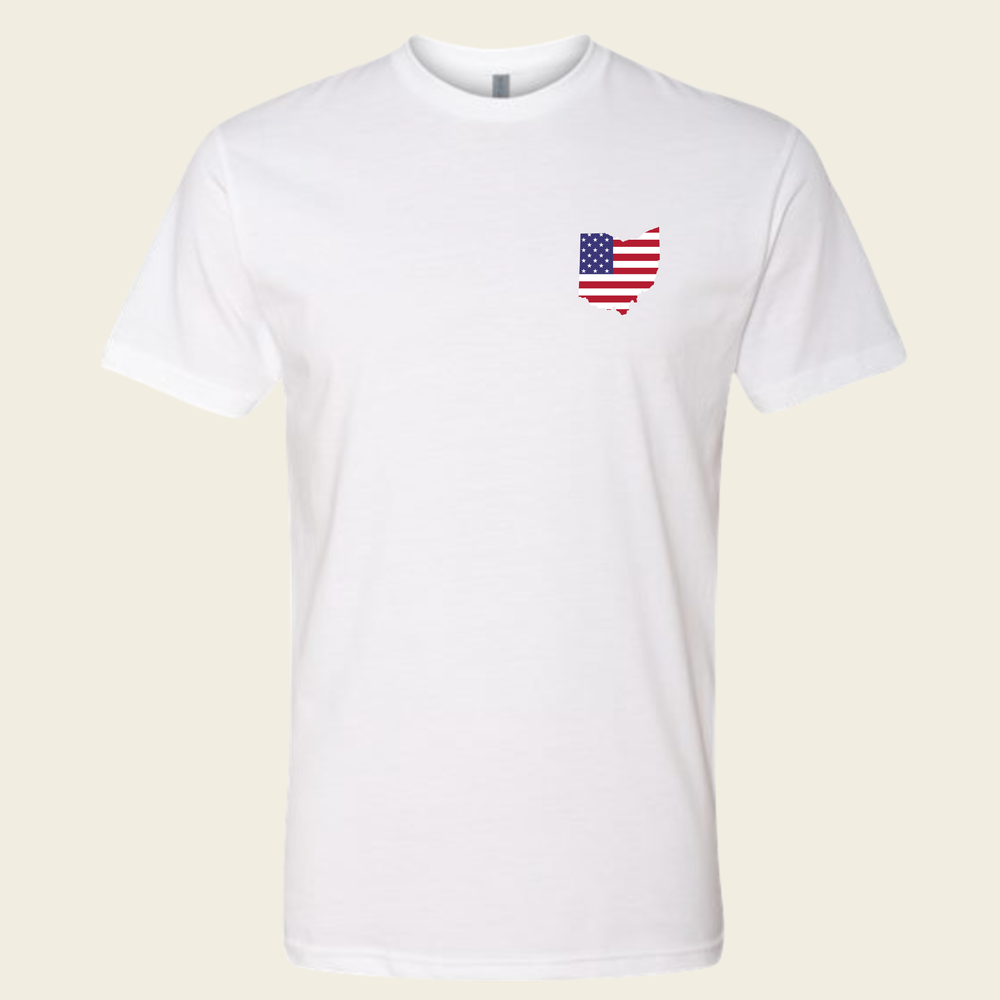
That's the idea behind the O-H Tee. It's one half of a conversation. Wearing it means you're waiting on the other half, and in our experience you rarely wait long. It sits alongside the rest of the Ohio collection, which exists for the same reason — people from this state like to announce it, wherever they end up.
What Ohio actually is
Ohio is a border state in every direction at once. It touches Appalachia, the Great Lakes, the Midwest, and — depending on which Cincinnatian you ask — the South. It's industrial and agricultural, urban and deeply rural, sometimes within the same county.
The people are direct, loyal to specific things (their chili parlor, their high school football team, their side of the Skyline-versus-Gold-Star question), and quietly proud in a way that only shows when you get it wrong. Call the state flat and boring in front of an Ohioan and you'll get a polite correction that lasts twenty minutes. This post is roughly that correction, written down. If you want to wear the short version, the O-H Tee covers it in three letters.
Common questions
Is Ohio actually flat?
Only the northwest part. The southeast third of the state is Appalachian foothills, with gorges, waterfalls, and winding roads — the Hocking Hills region alone disproves the myth.
What food is Ohio known for?
Cincinnati chili served over spaghetti, goetta, buckeye candies, Graeter's ice cream, and Cleveland's Polish Boy sandwich. Each one is fiercely regional, and locals will argue about the details.
What does "O-H" mean when someone shouts it?
It's the first half of the Ohio State "O-H-I-O" chant, and the correct response is "I-O." Ohioans use it worldwide to find each other — answer it and you've made a friend.
Made by Land & Light — American lifestyle apparel with a sense of place and a sense of humor.
See every shirt