
What Texans Say That Nobody Else Does
Fixin' to, all y'all, might could, feeder roads, tanks that hold water, and cokes that might be Dr Pepper. A field guide to Texas talk.
Texans say "fixin' to" for anything about to happen, "all y'all" when one y'all won't cover the room, and "might could" when they're hedging. They call frontage roads feeders, stock ponds tanks, and every soft drink a coke, including the ones that are Dr Pepper. If you grew up there, none of this sounds unusual. That's the point.
Fixin' to
This is the big one. "I'm fixin' to head to the store" does not mean the speaker is repairing anything. It means the trip is imminent, though imminent is doing loose work here. Fixin' to can cover the next thirty seconds or the next hour. It signals intent more than schedule.
Outsiders sometimes hear it as slang and try it on. It rarely lands. The word has a rhythm to it that takes years of Friday night football and church potlucks to get right. Some Texans compress it further to "finna," though that form travels well beyond the state line. "Fixin' to" stays home.
There's a related construction worth noting: "about to" exists in Texas, but it's for emergencies. "The tank's about to overflow" is urgent. "I'm fixin' to check on the tank" means sometime before dark.
Y'all, all y'all, and y'all's
Every Southern state claims y'all, so Texas doesn't get exclusive credit. But Texans run the full conjugation harder than most:
- Y'all — two or more people, or one person you like.
- All y'all — everybody present, no exceptions, often deployed when a group is in trouble. "All y'all need to get out of the kitchen."
- Y'all's — the possessive. "Is that y'all's truck blocking the gate?"
- All y'all's — the possessive of everyone at once, which sounds impossible until you hear a grandmother use it.
The genius of y'all is that it fixes a real gap in English, which lost its plural second person somewhere along the way. Texans didn't invent it, but they treat it like state infrastructure.
Might could, might should, and used to could
Linguists call these double modals. Texans call them talking. "I might could come by Saturday" stacks two verbs of possibility into one soft commitment, and the softness is the feature. It's a way of saying yes without promising yes.
"Might should" works the same way for obligation. "We might should call before we drive out there" means we're not going to call, but we've acknowledged the idea. And "used to could" is the past tense of ability, as in "I used to could throw a football over that barn," which is usually followed by a story you've heard before.
These constructions get red-penned in English class and used at every table in the state anyway. They survive because they're precise. Standard English doesn't have a single clean way to say "there is a possibility that I would be able to," and "might could" does it in two syllables.
The road words
Texas road vocabulary confuses visitors immediately. Some of it:
- Feeder — what Houston calls a frontage road, the surface road running alongside a freeway. Other parts of the state say access road or service road. Say "feeder" in Houston and "access road" in Dallas and you'll pass in both.
- FM roads — farm-to-market roads, part of the state highway system. Locals give directions by FM number without explanation. "Take FM 1431 out past the lake." There are also RM roads, ranch-to-market, mostly out west and in the Hill Country.
- The loop — whatever ring road circles the nearest city. Every metro has one and every local assumes you know which one they mean.
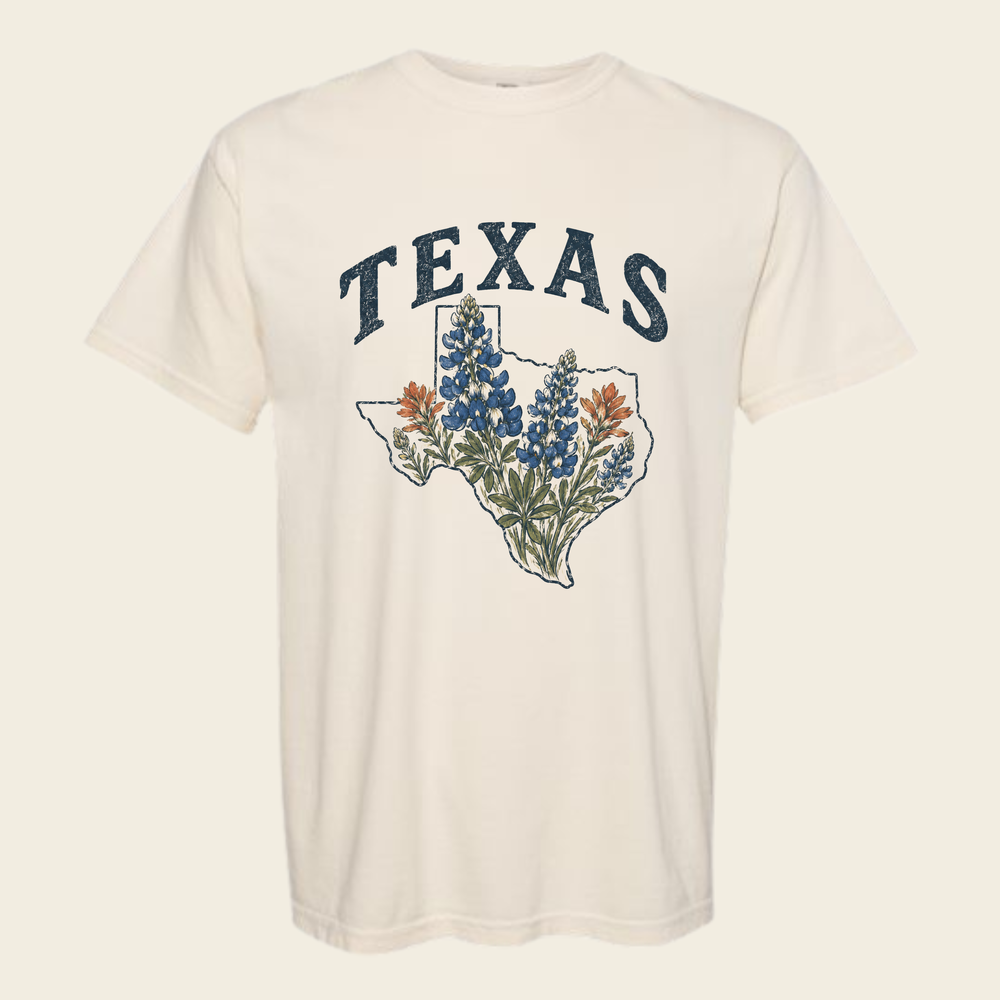
Those FM roads are also where the state does its best spring show. Bluebonnets come up along the shoulders and in the medians, and families pull over to take pictures in them, a ritual so established it barely needs a caption anymore. The Texas Bluebonnet Tee exists for the people who make that pull-over every year without fail.
Coke means coke, unless it doesn't
In much of Texas, "coke" is the generic word for any carbonated soft drink. The exchange goes like this: "You want a coke?" "Sure." "What kind?" "Dr Pepper." Nobody in this conversation finds it strange. Dr Pepper itself was born in Waco, which Texans will mention, and the loyalty runs deep enough that some households treat other sodas as backup.
A few more words from the table and the ranch:
- Tank — a stock pond dug for cattle. If someone says the fish are biting at the tank, do not look for a water tower.
- Tump — to tip over, usually with spillage. "The dog tumped over the trash again." A perfectly useful verb the rest of the country somehow lives without.
- Kolache — the Czech pastry that Texas adopted whole, thanks to the Czech communities in Central Texas. Locals will also tell you the sausage-filled version is technically a klobasnek, then keep calling it a kolache anyway.
- Breakfast taco — not slang, but the phrase itself is a regional marker. In parts of the country people say breakfast burrito. In Texas that gets you a look.
Weather talk and hand signs
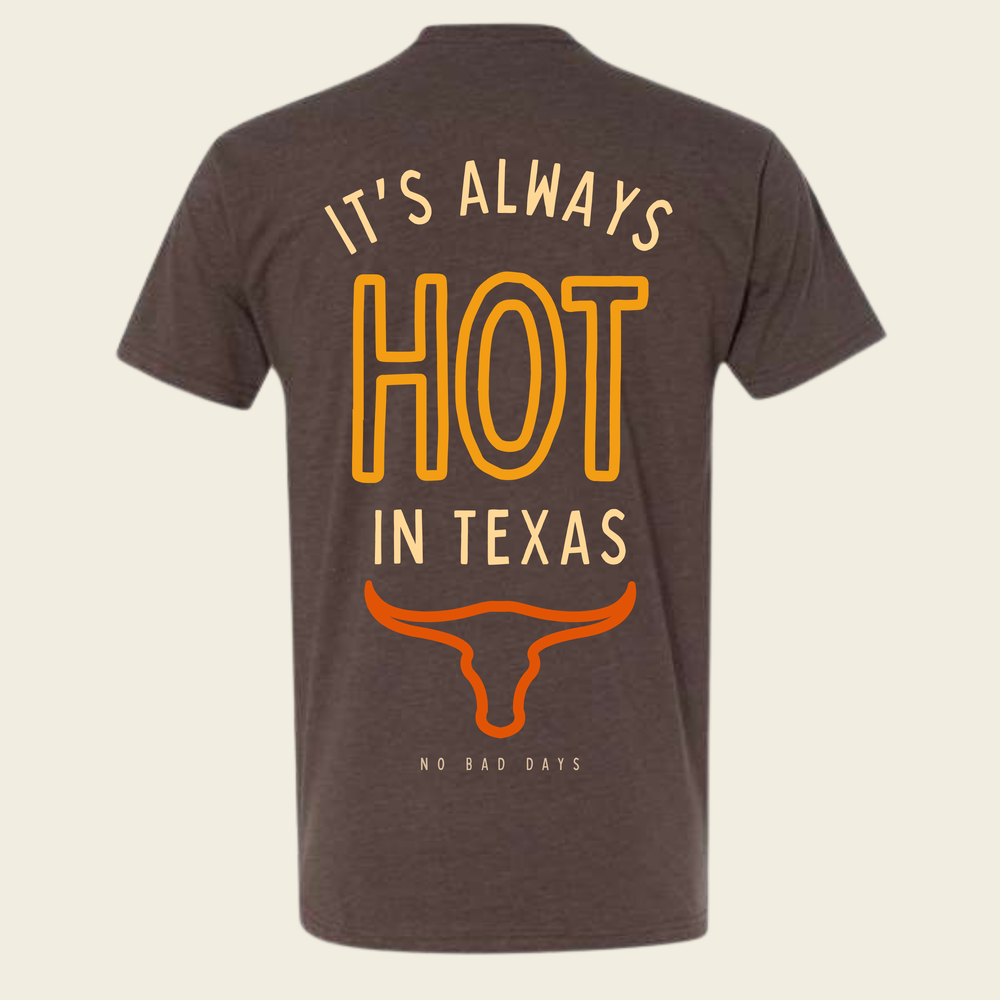
Texans discuss weather the way other people discuss sports, and they have vocabulary for it. A blue norther is a cold front that drops the temperature fast, often on a day that started warm enough for shorts. A gully washer is rain heavy enough to matter. And any conversation in July or August includes some variation of "hot enough for ya," delivered without a question mark, because it isn't a question. Summer heat in Texas is less a season than a shared endurance event, which is roughly what the Hot in Texas Tee is getting at.
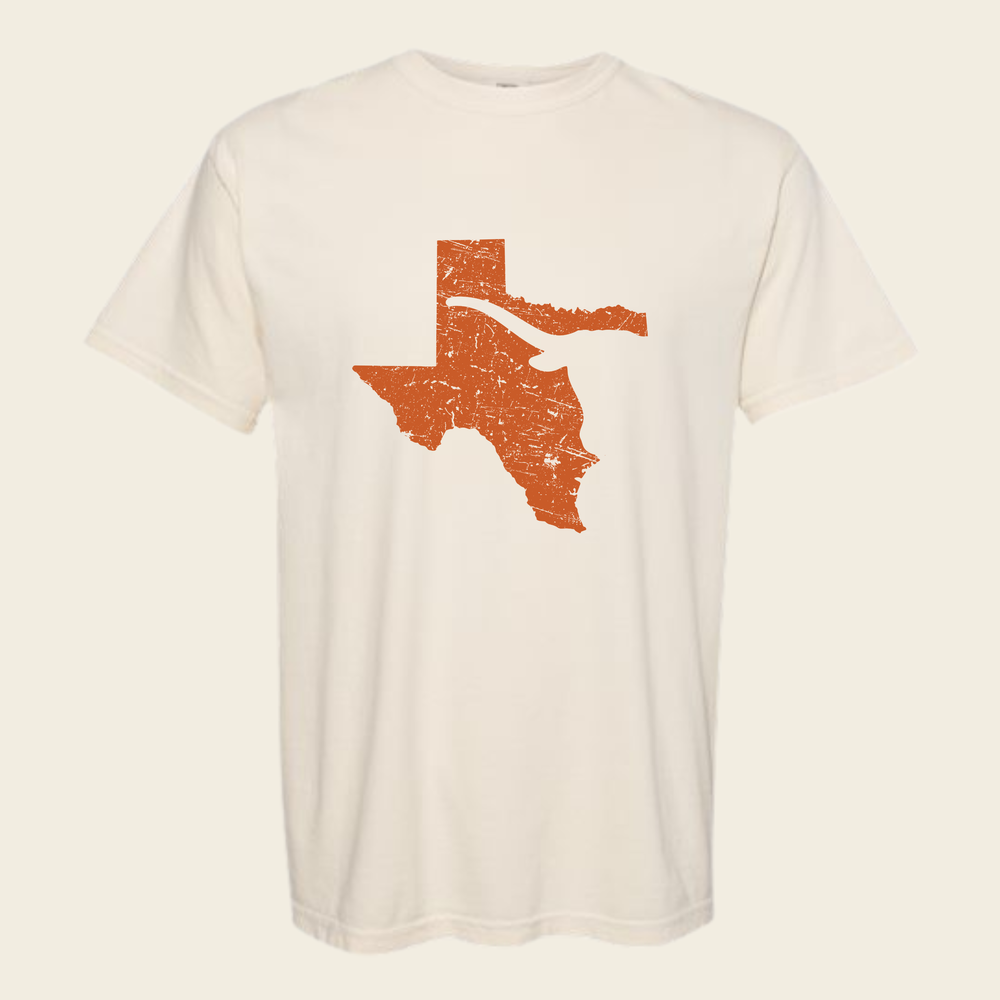
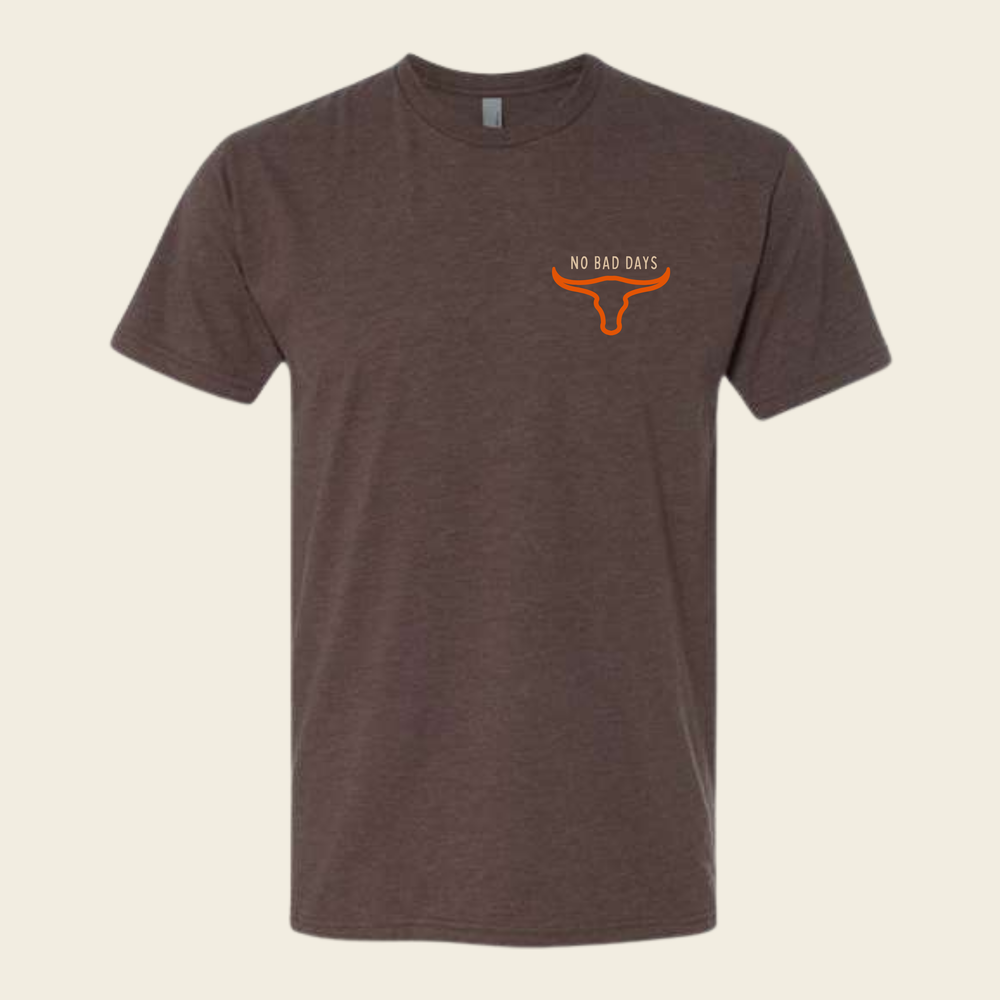
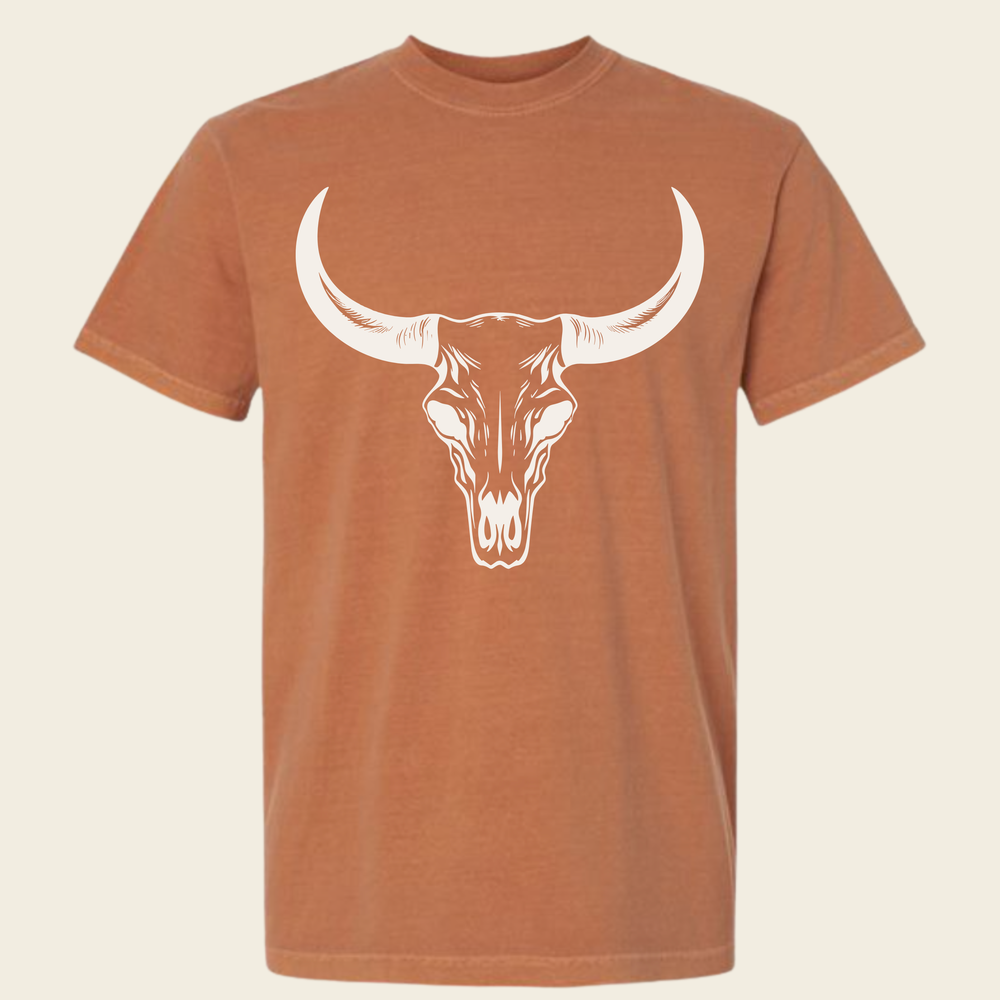
Then there are the things Texans say with their hands. "Hook 'em" comes with two fingers up for the Longhorns, and "gig 'em" comes with a thumbs up for the Aggies, and the two are not interchangeable, and mixing them up in the wrong company is a genuine social error. The horns sign shows up at games, weddings, and graduation photos across the state, which is more or less the territory the Texas Horns Tee covers. Aggies will also "whoop" at appropriate moments, and appropriate is defined by them, not you.
One more: "howdy." Elsewhere it's a costume word, something people say when pretending to be Texan. In Texas it's a functioning greeting, and at Texas A&M it's practically institutional policy.
Why any of this sticks
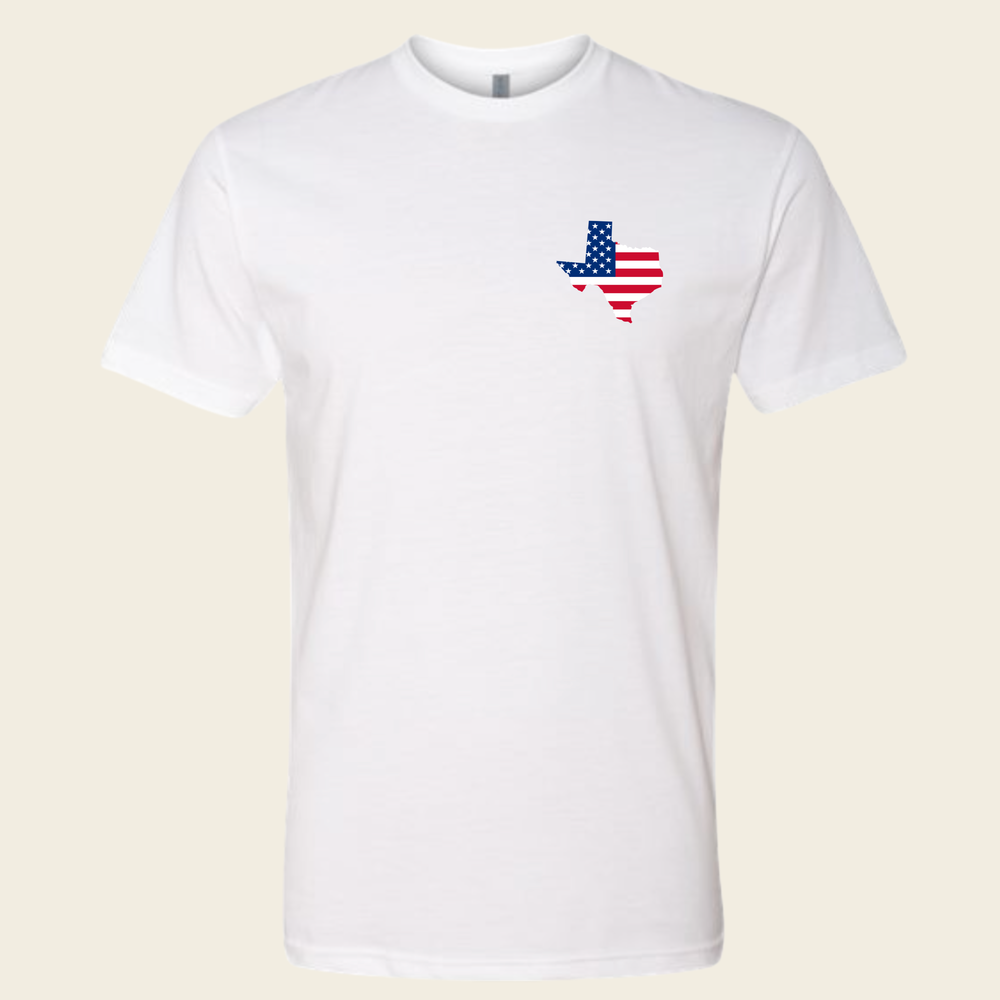
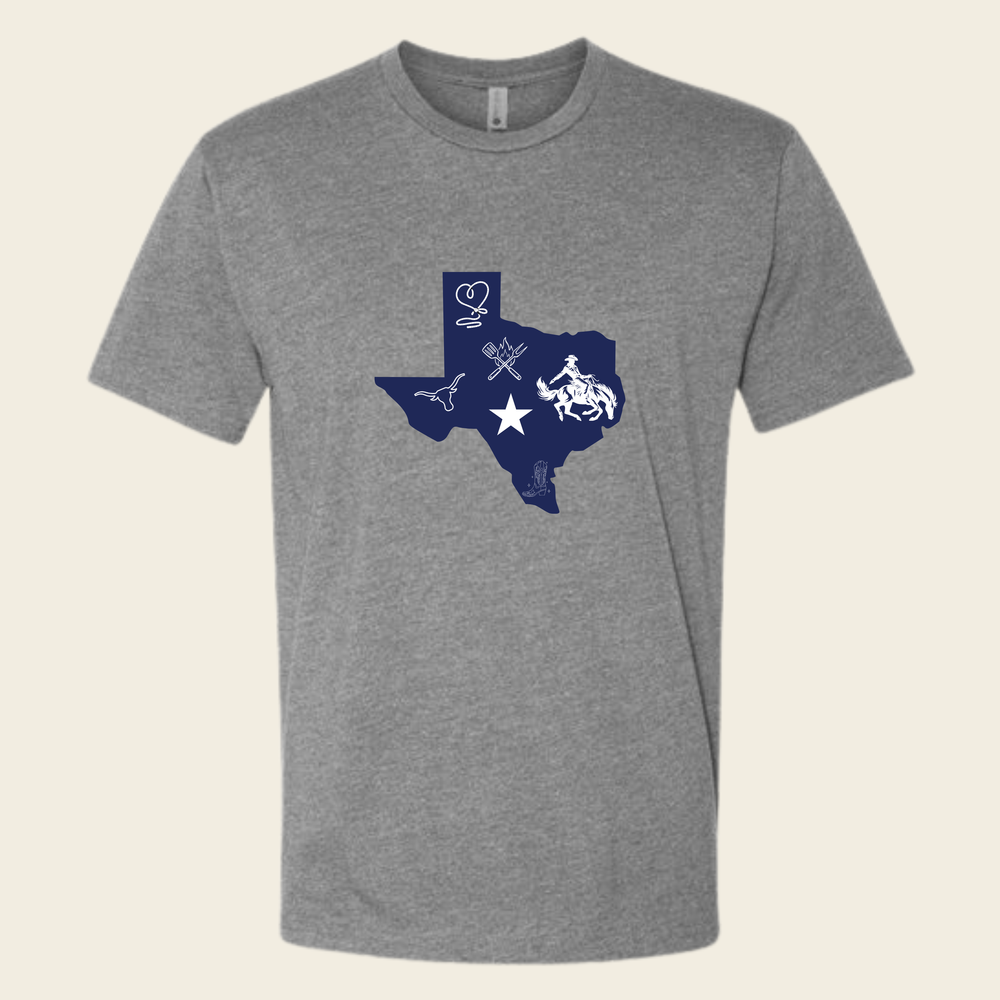
Texas talk survives because Texans like being from Texas, audibly. The state's identity is strong enough that the vocabulary gets passed down on purpose, corrected in grandchildren, and defended in arguments with people from Ohio. Nobody says "fixin' to" by accident. It's a small daily way of saying where you're from, the same instinct behind flying the state flag over a garage or wearing the state on your chest, which is roughly what the whole Texas collection is built around.
You can learn the words in an afternoon. The delivery takes longer. Start with y'all, don't force fixin' to, and never call a Dr Pepper anything but a coke unless someone asks what kind.
Common questions
Is "y'all" only a Texas thing?
No, y'all is used across the South. Texas just uses the full range, including "all y'all" and the possessive "y'all's," with more consistency than most places. It's shared vocabulary that Texans treat as their own.
What does "fixin' to" actually mean?
It means about to, in a loose sense. "I'm fixin' to leave" signals intent to leave soon, where soon can stretch. It expresses a plan more than a timetable.
Why do Texans call every soda a coke?
In much of Texas, "coke" became the generic word for any soft drink, so the follow-up question is always "what kind." The answer is frequently Dr Pepper, which was created in Waco and holds near-official status in the state.
Texas
Made by Land & Light — American lifestyle apparel with a sense of place and a sense of humor.
See every shirt