
What Locals in Kentucky Say That Nobody Else Does
How to say Louisville, why nobody says "the Derby," what a poke is, and other language that marks you as a Kentuckian.
Kentuckians say Louisville like they're swallowing the middle of it, drop the word "the" before Derby, and call a soft drink an Ale-8 even when it isn't one. If you want to sound like you're from the Commonwealth, the vocabulary matters less than the pronunciation, and the pronunciation is not what the spelling suggests.
This is a guide to the words, sayings, and small verbal habits that separate people who live in Kentucky from people who are driving through it on I-65. None of it is official. All of it is real.
Start with Louisville, because everyone gets it wrong
The city's name has more pronunciations than syllables. Out-of-towners say "LOO-ee-ville," like the French king. Locals do not. Depending on who you ask and how fast they're talking, you'll hear something closer to "LOO-uh-vul" or just "Luh-vul," a sound produced mostly in the back of the throat with minimal effort from the lips. The faster and mushier you say it, the more local you sound.
The trick is that there's no single correct version. There's only the wrong version, and the wrong version is the one with a clear "ville" at the end.
Town names that are traps on purpose
Kentucky borrowed a lot of place names from Europe and classical history, then quietly decided to pronounce them however it wanted. If you read these off a road sign the way they look, everyone in the gas station will know exactly where you're from, and it won't be here.
- Versailles — not "Ver-SIGH" like the palace. It's "Ver-SALES." Horse country, just west of Lexington, and locals will correct you gently or not at all, which is worse.
- Athens — the little community near Lexington is "AY-thens," long A. Greece has its version; Kentucky has this one.
- Cadiz — out in western Kentucky near Lake Barkley, it's "KAY-deez." Spain was not consulted.
There are more, and part of living in Kentucky is collecting them. Nobody hands you a list. You learn by saying one wrong in front of the right person.
It's Derby. Not "the Derby."
The first Saturday in May is the biggest day on the Kentucky calendar, and locals talk about it the way other people talk about Christmas. You don't go to "the Kentucky Derby." You go to Derby. You ask people what they're doing for Derby. Companies close early the Friday before, which people call Oaks Day, after the race for the fillies that runs at Churchill Downs the day prior — and plenty of Louisvillians will tell you Oaks is the better day to actually go, because it's more of a hometown crowd.
Related vocabulary: "the track" means Churchill Downs in Louisville or Keeneland in Lexington, depending on where you're standing. Keeneland's spring and fall meets are short, and locals plan around them. Saying you're "going to Keeneland" requires no further explanation, ever.
Ale-8, burgoo, and the food words
Some of the most local language in Kentucky is on the menu.
- Ale-8 — a ginger-citrus soft drink bottled in Winchester, officially Ale-8-One. The name is a pun on "a late one." Locals just say Ale-8, and in parts of central and eastern Kentucky it functions as a general answer to the question "what do you want to drink." Asking for one outside the state gets you a blank look.
- Burgoo — a thick stew, traditionally cooked in huge batches for church picnics and political rallies, especially in western Kentucky. Everyone's recipe is different and everyone's recipe is correct. Asking what's in it is considered slightly rude.
- Hot Brown — an open-faced turkey sandwich drowned in Mornay sauce, invented at the Brown Hotel in Louisville. Locals say it with no explanation attached, as if every state has one.
- Beer cheese — a spread, served cold with crackers or celery, with deep roots in the Winchester area along the Kentucky River. Central Kentuckians treat it as a food group.
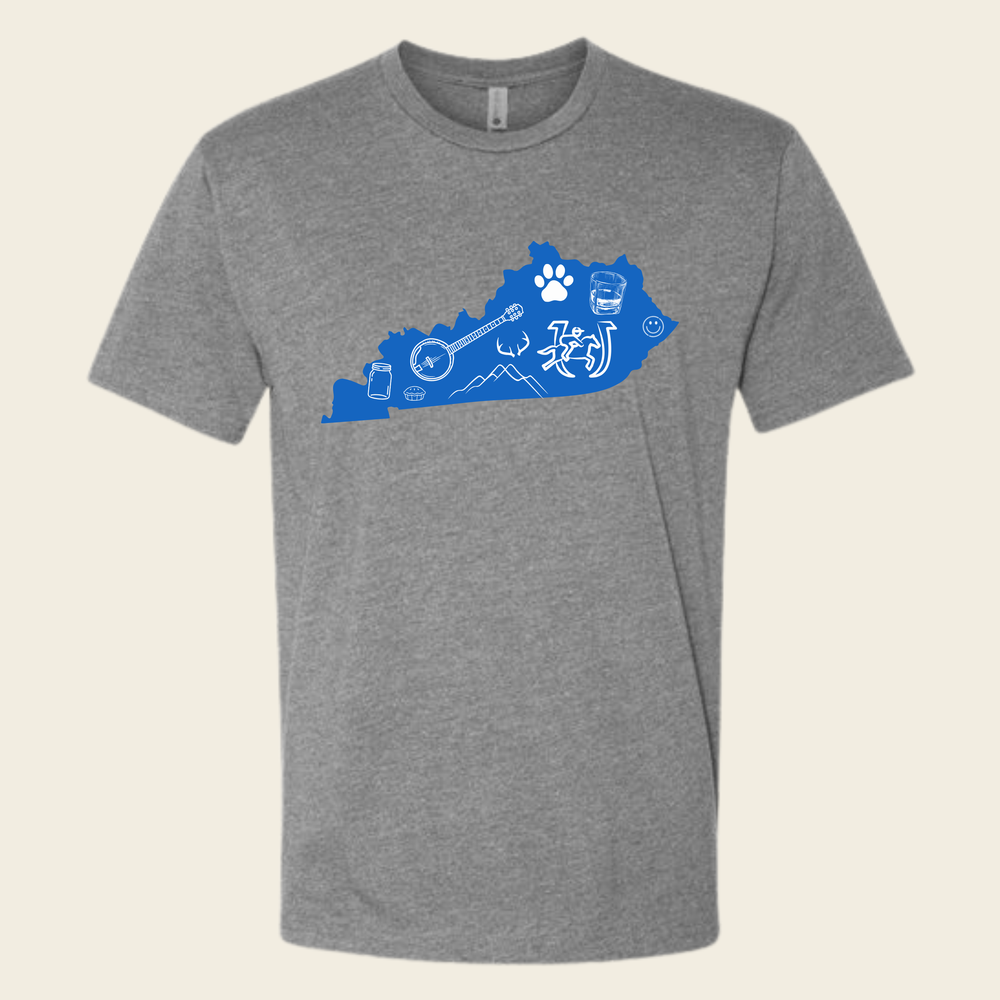
If a design brief ever wanted to sum the state up in pictures instead of words, it would look a lot like the Kentucky Icons Tee — the shorthand version of everything above.
Eastern Kentucky has its own dictionary
Head east into the mountains and the language shifts again. Appalachian Kentucky holds onto words that the rest of the country let go of a long time ago, and locals use them without irony.
- Poke — a bag, usually paper. "Put it in a poke." This one is old, and it survives in the hills.
- Holler — a hollow, meaning the narrow valley between two ridges where a road, a creek, and a family name usually run together. People are from a specific holler and will tell you which one.
- Might could — a double modal, as in "I might could get up there Saturday." It means maybe, softened. Grammarians object; nobody in Pikeville cares.
- Fixin' to — about to. "I'm fixin' to leave" covers any time span from thirty seconds to an hour.
- Mamaw and Papaw — grandmother and grandfather, and often the emotional center of the whole family. Saying "grandma" sounds oddly formal.
You'll also hear "over yonder," "a right smart" meaning a good amount, and "piddling" for doing not much of anything, which is a legitimate weekend plan.
"We" means the Cats
In most of Kentucky, "we" in a sports sentence means the University of Kentucky men's basketball team. "We looked awful last night" requires no antecedent from roughly November through March. The team is "the Cats," the fan base is the Big Blue Nation or just BBN, and the color is a specific royal blue that people can identify from across a parking lot.
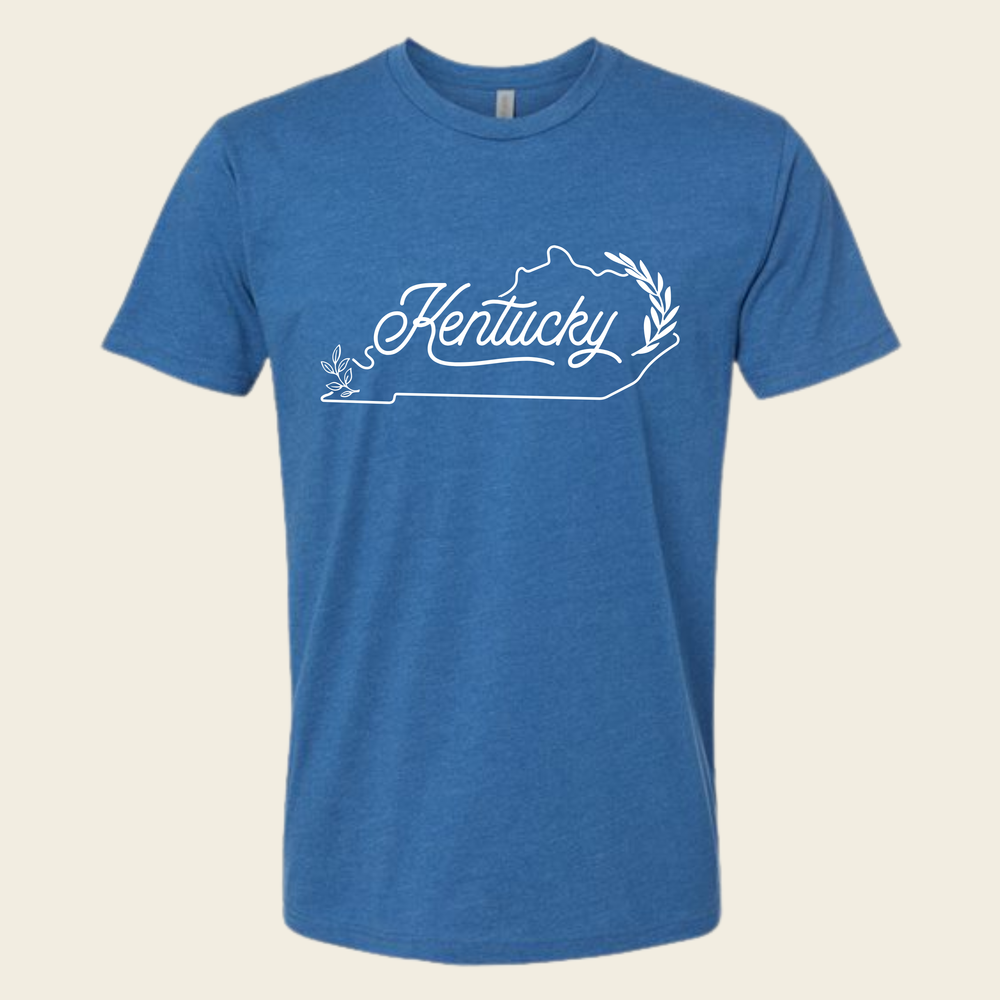
The exception is Louisville, where "we" might mean the Cards, and where the UK–UofL rivalry divides workplaces, churches, and Thanksgiving tables. Asking someone "Cats or Cards?" is a legitimate getting-to-know-you question, and the answer tells you more than a resume would. The rest of the year, the state mostly agrees to be from Kentucky first, which is roughly the sentiment behind the Script Kentucky Tee — the name, written out, no further argument needed.
The Commonwealth, and why the county matters
Kentucky is a commonwealth, not a state, at least on paper, and Kentuckians will mention it. It changes nothing legally meaningful in daily life, but "the Commonwealth" shows up in speeches, courtrooms, and casual conversation, and using it correctly is a small badge.
The other thing outsiders miss: county identity runs deep here. Kentucky has a lot of counties for its size, and people identify with theirs. Ask someone where they're from and you may get a county name before a town name — "Pulaski County," "up in Harlan," "over in Marshall." The county is the unit of loyalty, of high school sports, and of who you know.
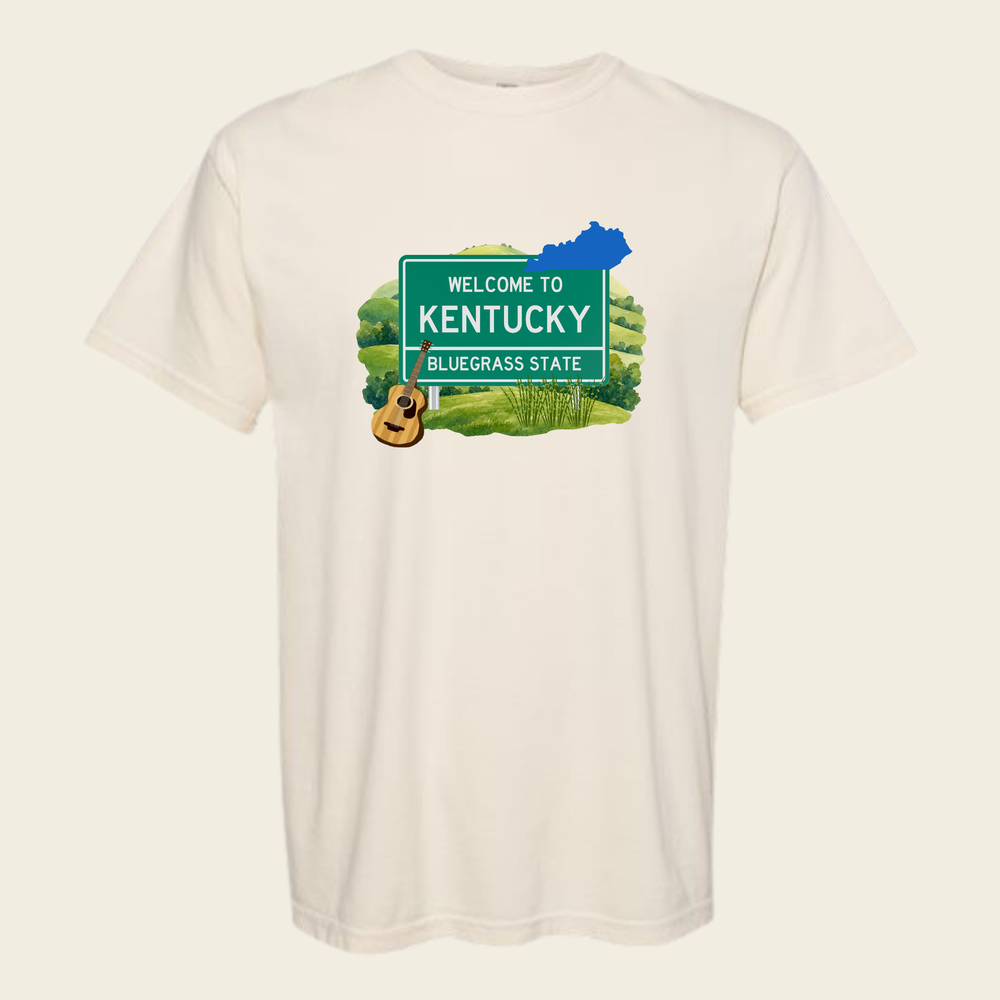
If any of this sounds like home, or like a place you left and still talk about, the whole Kentucky collection was built for you — including the Welcome to Kentucky Tee, which works whether you're arriving or you never left.
Common questions
How do locals actually pronounce Louisville?
Something between "LOO-uh-vul" and "Luh-vul," said quickly and without much enunciation. There's no one official version, but a crisp "LOO-ee-ville" immediately marks you as a visitor.
What is an Ale-8?
A ginger-citrus soft drink bottled in Winchester, Kentucky, officially called Ale-8-One. Locals shorten it to Ale-8, and in much of central and eastern Kentucky it's the default local soft drink.
Do Kentuckians really say "Derby" without "the"?
Yes. Locals say "What are you doing for Derby?" the way other people say "for Christmas." Adding "the" isn't wrong, it just sounds like you're reading from a brochure.
Kentucky

Made by Land & Light — American lifestyle apparel with a sense of place and a sense of humor.
See every shirt