
How to Be Decent at a Trailhead
Trailhead etiquette in plain terms: where to park, what to do with the dog, and why nobody wants your speaker.
Being decent at a trailhead comes down to three things: park like other people exist, keep your noise and your dog to yourself, and don't turn the lot into your living room. Everything else is detail, but the details are where most people fail.
A trailhead is a strange piece of ground. It's half parking lot, half front porch to somewhere better. People arrive at 5 a.m. and people arrive at noon. Some are training for something. Some are walking off a hangover. The lot has to work for all of them, and it mostly does, as long as everyone follows a few unwritten rules. Here they are, written down.
Park like the lot will fill up, because it will
If you've ever tried to park at Old Rag in Virginia on an October Saturday, or at the Grays Peak trailhead off I-70 in Colorado in July, you know how this goes. The lot fills. Then the shoulder fills. Then someone parks somewhere creative and a tow truck earns its keep.
The rules are simple. Pull all the way into the space. Don't straddle two spots because you're worried about your doors. If you're parking on a shoulder, get all four tires off the road and don't block the turnaround, the gate, or the spot where a fire truck would need to swing. Ranchers and forest service crews use those gates. A locked gate with a Subaru in front of it ruins somebody's workday.
If the lot is full, it's full. Drive to the overflow, or pick a different trail. Half the good walking in any range is on the trail nobody posts about anyway.
Do your faffing at home
There's a particular character at every trailhead: hatch open, gear spread across two parking spaces, adjusting trekking poles for twenty minutes while a line of cars idles behind them waiting for the spot. Don't be that character.
- Pack the night before. Fill water at home.
- Put your boots on before you leave the house, or do it fast on the tailgate.
- Sunscreen in the car on the drive, not standing in the middle of the lot.
- If you need to reorganize, pull to the edge, not the center lane.
The lot is a place to arrive and leave, not a staging area. Ten minutes, in and out. The people who are good at this are almost invisible. That's the goal.
The dog situation
Your dog is friendly. Everyone's dog is friendly. That's not the question. The question is whether the person coming down the trail with their own leashed dog, or their kid, or their fear of dogs, gets a vote. They do.
At the trailhead itself, leash up. It's the highest-traffic, highest-chaos stretch of the whole hike: cars moving, dogs meeting, people bending over bootlaces at nose height. If the trail allows off-leash and your recall is genuinely good, let the dog loose once you're past the crowd. If your recall is theoretical, it's a leash trail for you.
And the bags. Bagging your dog's mess and then leaving the bag on a rock beside the trail is worse than doing nothing, because now it's litter with a shelf life. Carry it out. Yes, the whole way. That's the deal you signed when you got the dog.
Noise is a choice
Nobody drove past the last cell tower to hear your playlist. The bluetooth speaker clipped to a backpack has become the number one complaint on trail forums for a reason: it turns a shared place into your place, and everyone within a quarter mile pays for it.
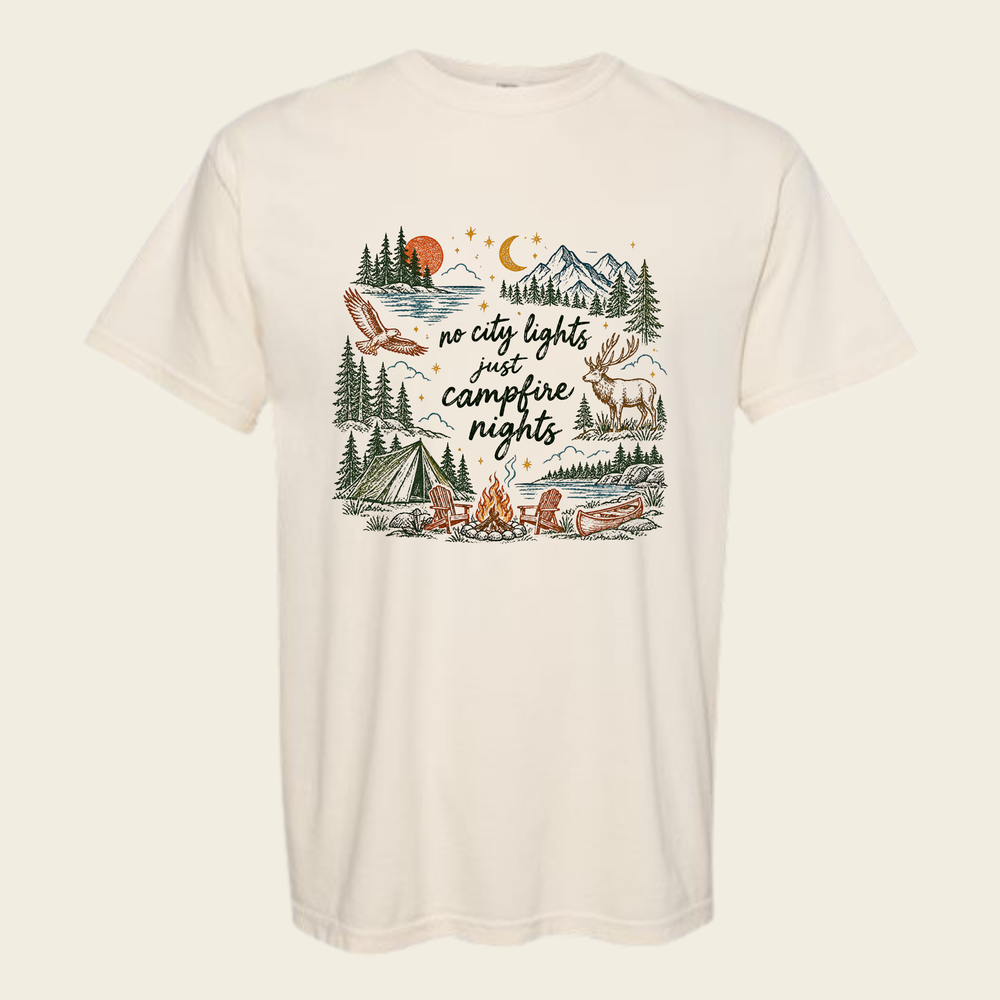
Headphones exist. One earbud if you want to hear what's around you, which in bear country or on a bike-heavy trail you should anyway. The whole point of getting past the pavement is the quiet — the argument made plainly on the No City Lights Tee, which says it in fewer words than this paragraph.
Same logic applies in the lot. Slamming doors and shouting across the parking area at 5:30 a.m. carries a long way in cold air. There are people sleeping in trucks fifty feet from you who drove in late to beat you to the summit. Let them.
Bathrooms, registers, and the little rituals
Some trailhead habits look like bureaucracy but exist for good reasons.
- Use the vault toilet if there is one. It's not glamorous, but it beats the alternative, which is a hundred people a day improvising in the same fifty yards of woods. If there isn't one, get well off trail and away from water, and follow the local rules on packing out.
- Sign the register if there is one. It takes fifteen seconds. If something goes wrong up high, that scrawl is the first thing search and rescue looks at. It's also how land managers justify keeping a trail maintained.
- Read the board. The trailhead kiosk usually has the current information: closures, bear activity, water crossings, fire restrictions. It's more current than whatever app you checked last week.
- Leave the lot cleaner than you found it. Orange peels and pistachio shells are trash. So are the micro-scraps of wrappers that fall out of pockets. If you have room in your pack for a beer, you have room for the empty.
Coming back down
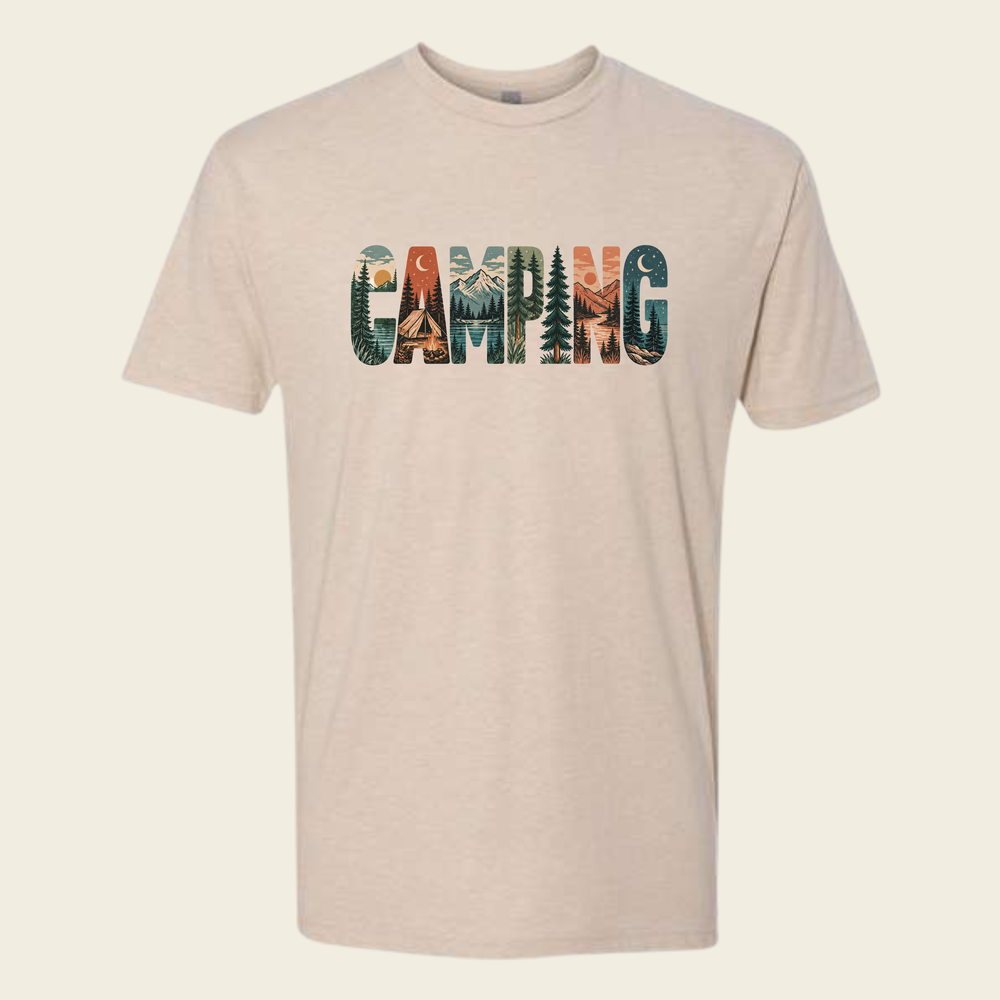
The trailhead at the end of a hike is a better place than the trailhead at the start, and the etiquette loosens a little. Tailgate sitting is fine. Changing socks in the open air is fine. A cooler is encouraged. This is the part of the day the Camping Scenes Tee was drawn about — the low-stakes, post-effort hour where nobody's in a hurry.
Still, a few closing courtesies. Vacate your parking spot before you settle into a long hang if the lot is full; someone circling for a space would trade a lot for it. Give honest trail reports to people heading up — how the snow is, whether the creek crossing is bad — without the sandbagging or the false encouragement. "You're almost there" said at the halfway point helps nobody.
And if you see someone doing it wrong — speaker blaring, dog loose in the lot, car blocking the gate — one polite sentence usually fixes it. Most people aren't jerks. They just haven't been told. Now you can't say the same. If you want more of this sort of thing, the rest of our outdoors collection lives in the same spirit: designs from the places past the last gas station.
Common questions
Who has the right of way on a trail?
Hikers going uphill generally have the right of way over hikers coming down, because they're working harder and have a smaller field of view. Bikers yield to hikers, and everyone yields to horses. When in doubt, step to the downhill side and let the other party pass.
Is it okay to arrive at a trailhead before dawn?
Yes, and for popular peaks it's often the only way to get a parking spot. Just keep it quiet: headlights dimmed when you can, doors closed gently, voices low. People sleep in their vehicles at trailheads, and cold morning air carries sound a long way.
What should I do if the trailhead lot is completely full?
Use the designated overflow if one exists, or pick a different trail rather than inventing a parking spot. Blocking gates, turnarounds, or the road itself can get you towed and can block emergency access. A full lot is also useful information: the trail above it is going to be crowded.
Outdoors


Made by Land & Light — American lifestyle apparel with a sense of place and a sense of humor.
See every shirt