
What Floridians Say That Nobody Else Does
Pub subs, no-see-ums, the cone of uncertainty, and why 73 degrees is sweater weather. A field guide to how Floridians actually talk.
Floridians have a vocabulary built from Publix delis, afternoon thunderstorms, snowbird traffic, and bugs that don't exist anywhere else, at least not by those names. If you've never heard someone say "pub sub," "no-see-ums," or "the cone," you haven't spent real time in the state.
Some of it is practical. Some of it is Miami. All of it marks you as either from here or not, usually within one sentence. Here's the working glossary.
The weather has its own dictionary
Floridians talk about weather constantly, but not the way other people do. Nobody asks if it will rain in summer. It will rain, in the afternoon, hard, for about twenty minutes, and then the sun comes back like nothing happened. Locals just say "it'll pass." And it does.
Then there's hurricane season, which produces a whole second vocabulary:
- The cone. Short for the cone of uncertainty, the forecast graphic showing where a storm might go. "Are we in the cone?" is a complete question and everyone understands it.
- Spaghetti models. The tangle of forecast track lines from different weather models. Floridians read these like other people read box scores.
- Hurricane party. What you throw when the storm turns out to be a Category 1 and you already bought all that ice.
- "It's going to wobble." Said with the confidence of a meteorologist by someone who has watched enough storms to have opinions.
Elsewhere, "it's not the heat, it's the humidity" is a cliché. In Florida it's a diagnosis. People say it with real feeling, usually in August, usually while standing in a parking lot that has reached the surface temperature of a griddle.
Pub sub is a complete sentence
A pub sub is a sub sandwich from the Publix deli counter, and to a Floridian this requires no further explanation. "I'm grabbing a pub sub" is a plan. "The chicken tender sub is on sale" is news you text people about.
Publix itself functions as geography. Directions in Florida frequently route through one: "turn at the Publix," "it's in the plaza with the Publix," "past the Publix, but not that Publix, the other one." This works because there is always a Publix, and it works even though there are usually several. Locals somehow know which one you mean.
Related grocery vocabulary: "BOGO" is pronounced as a word, not spelled out, and "buy one get one" week shapes actual meal planning. None of this makes sense until you live there, and then it makes complete sense.
Miami is its own language
South Florida talks differently than the rest of the state, and Miami talks differently than everywhere on Earth. Linguists have written about Miami English as its own dialect, but you don't need a linguist. You need a ventanita.
- Ventanita. The walk-up window at a Cuban café where you order coffee standing on the sidewalk. A civic institution.
- Cafecito, colada, cortadito. Three different Cuban coffee orders, and getting them confused marks you immediately. A colada is meant to be shared. It often isn't.
- Dale. Pronounced "dah-leh." Means go ahead, let's do it, okay, goodbye, hurry up, and I agree, depending on tone.
- "Pero like." The Miami sentence connector. Untranslatable, indispensable.
- "Getty." A small get-together. Which will not be small.
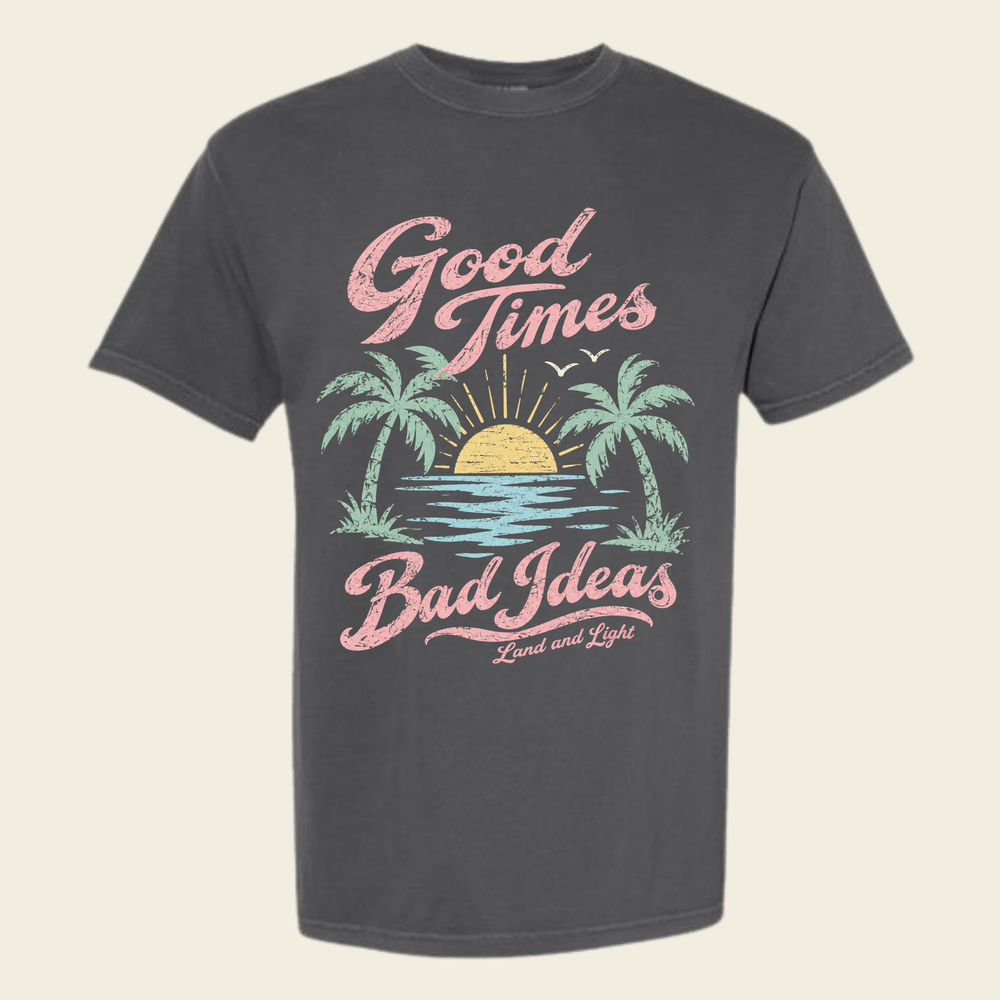
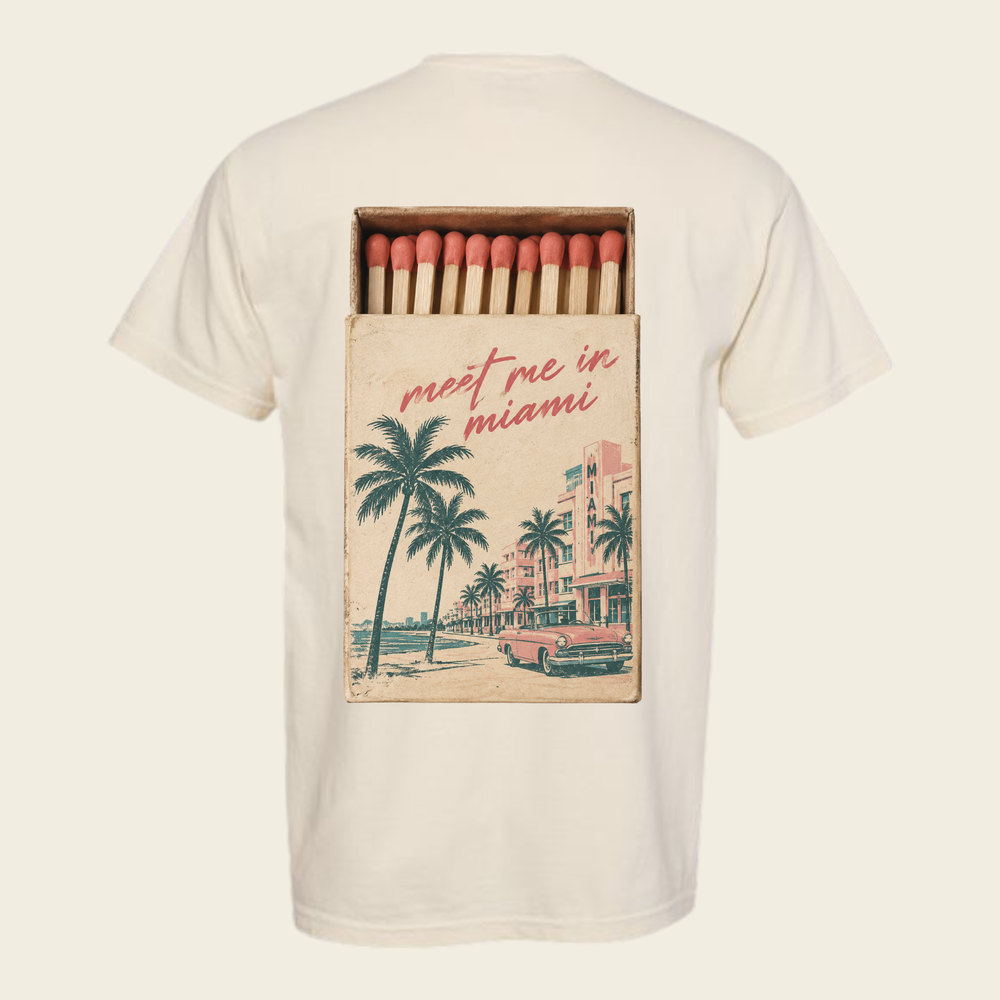
If your Florida is the Miami version, the Meet Me in Miami Tee and the Good Times Miami Beach Tee speak the dialect. So does ordering a colada for the table and drinking most of it yourself.
Directions come with water attached
Florida is long, thin, and surrounded by water on three sides, and locals navigate accordingly. "The Intracoastal" needs no other name. "The beach side" versus "the mainland" is a meaningful distinction in coastal towns. "Down south" often means the Keys specifically, not just southward.
Road names get the local treatment too. A1A is just "A1A," said like an old friend. The Turnpike is "the Turnpike," never its formal name. Alligator Alley is the stretch across the Everglades, and yes, you will see alligators from the car, and no, locals do not slow down for them.
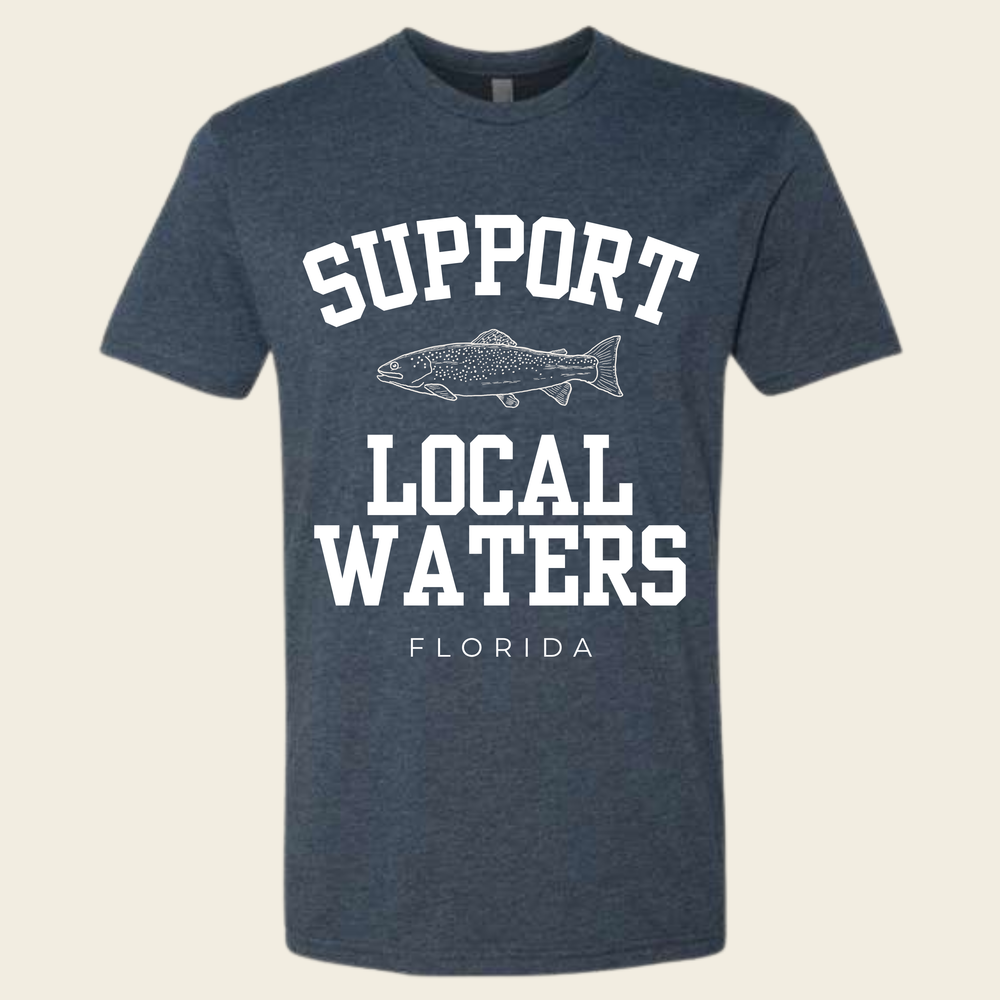
Fishing adds another layer. "The flats" means the shallow water where the bonefish and redfish live. "Backwater" and "backcountry" mean the mangrove side, away from open ocean. People who spend their weekends out there tend to care about what happens to it, which is the whole idea behind the Support Local Waters Tee. In Florida, "local waters" is not an abstraction. It's where you were last Saturday.
Season, snowbirds, and sweater weather
"Season" in Florida does not mean spring or fall. It means the stretch of winter when the snowbirds arrive, restaurants fill up, and the left lane of every road slows to a contemplative pace. "It's season" explains a forty-minute wait for breakfast. "Wait until after season" is genuine local advice.
A snowbird, for the record, is a part-time resident who comes down for the winter and leaves before the humidity returns. Locals say it with a mix of affection and traffic-related grievance.
Then there's Florida cold. When the temperature drops into the 60s, Floridians put on jackets without irony. Anything in the 50s produces boots that have never seen weather. And 73 degrees, the temperature the rest of the country would call a perfect summer day, is what a Floridian calls comfortable, borderline crisp. There's a reason the 73 Degrees Tee exists. That number is a lifestyle position.
The bugs have names you won't find elsewhere
Florida's insect vocabulary is precise because it has to be.
- No-see-ums. Biting midges small enough that you feel them before you see them, hence the name. They own the beach at dusk. Screens do not fully stop them, and locals will tell you this with resignation.
- Lovebugs. The paired black bugs that show up in swarms a couple of times a year and coat the front of every car on the highway. Locals talk about "lovebug season" the way other states talk about pollen.
- Palmetto bug. A very large cockroach, renamed. The rebrand fools nobody, but everyone participates in it anyway. Saying "palmetto bug" instead of the alternative is a small act of collective dignity.
Gators, meanwhile, barely qualify as vocabulary because they barely qualify as remarkable. A gator in the retention pond behind the neighborhood is scenery. Locals mention it the way they'd mention a nice sunset.
Talk like you've been there
None of this is in a guidebook, which is the point. You learn "pub sub" by eating one in a hot parking lot. You learn "the cone" by being in it. You learn 73 degrees is cold by living through your first Florida winter and reaching for a hoodie without shame.
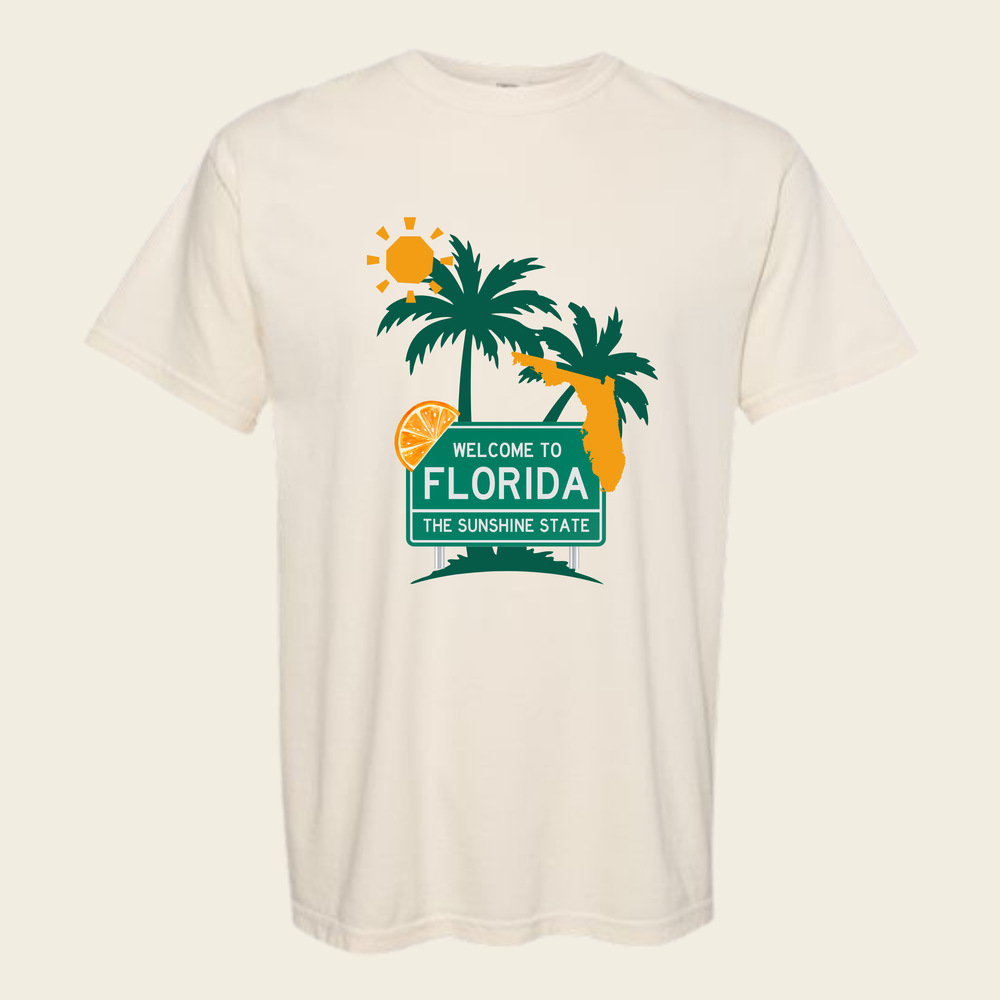
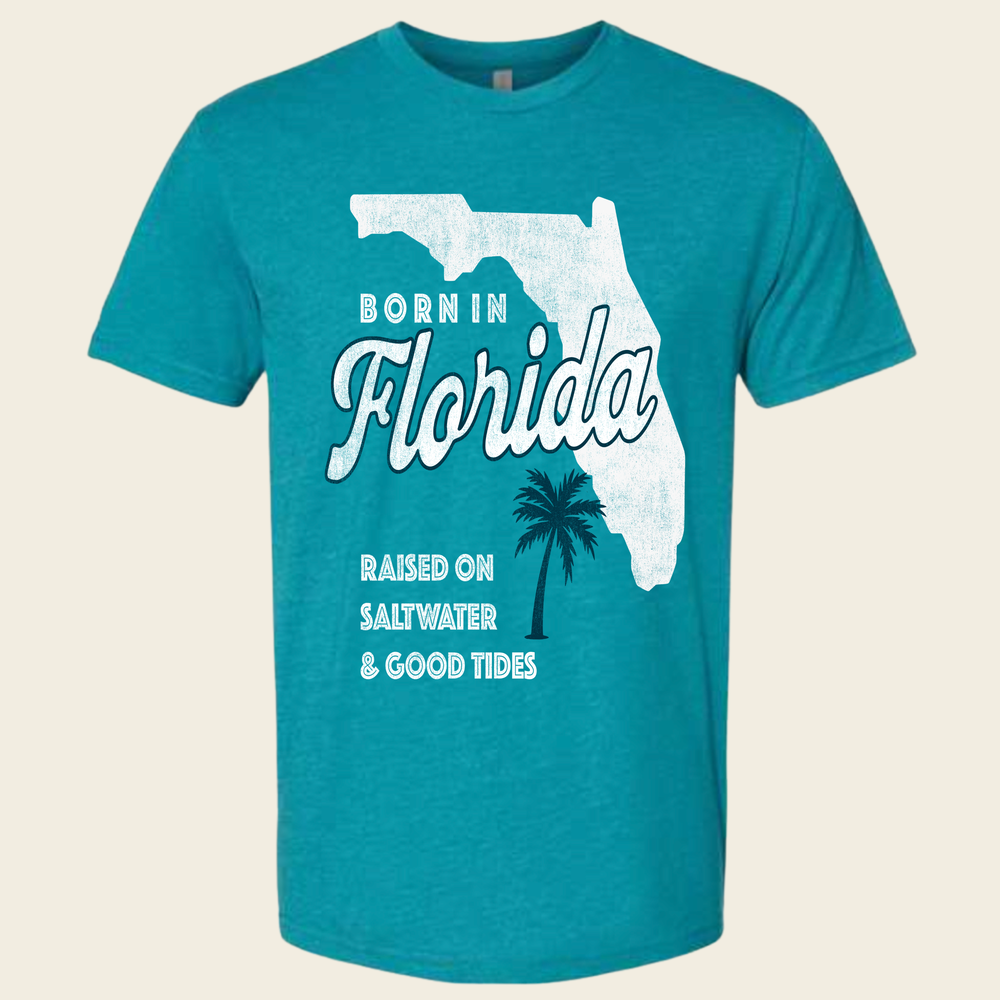
The whole Florida collection comes from that version of the state, the lived-in one, and the Welcome to Florida Tee is about the most honest greeting the place offers. Florida doesn't explain itself. It just hands you the vocabulary and waits to see if you use it right.
Common questions
What is a pub sub?
A pub sub is a made-to-order sub sandwich from the deli counter at Publix, Florida's dominant grocery chain. The name is universal among locals, and the chicken tender sub is the standard order. When it goes on sale, people notice.
What are no-see-ums?
No-see-ums are tiny biting midges common near Florida's coasts and mangroves, most active around dawn and dusk. They're small enough to pass through some window screens, which is how they earned the name. Bug spray helps. Somewhat.
What does "season" mean in Florida?
Season is the winter stretch when snowbirds and visitors arrive in large numbers, filling restaurants, beaches, and roads. Locals use it as shorthand for both the calendar and the crowds. "It's season" explains almost any wait or traffic jam.
Florida

Made by Land & Light — American lifestyle apparel with a sense of place and a sense of humor.
See every shirt