
What People Get Wrong About Texas
It is not all desert, it is not always hot, and picking a bluebonnet will not land you in jail. A correction of the record.
Most of what people get wrong about Texas comes down to one mistake: treating it as a single place. It is not one place, it is closer to five or six, and almost every stereotype about it is true somewhere and wrong almost everywhere else.
If you grew up there, you spend a fair amount of time explaining this to people. If you didn't, here is the short version, from the Piney Woods to the Panhandle.
It is not all desert
The Texas of the movies is West Texas: rock, brush, long horizons, the occasional pumpjack. That Texas exists, and it is beautiful in a way that takes a day or two to adjust to. But it is one corner of the state.
Drive east from Dallas and you hit the Piney Woods, which look like Georgia. Tall pines, red dirt, actual forest. Keep going toward the Louisiana line and you reach Caddo Lake, where bald cypress trees stand in the water draped in Spanish moss. People do not believe that is Texas until they see a photo, and sometimes not even then.
South of Houston you get marsh and Gulf Coast. The Hill Country west of Austin is green in spring, gold in summer, and full of limestone creeks. Up in the Panhandle, Palo Duro Canyon drops out of flat ranchland without warning. One state, several different landscapes that barely acknowledge each other.
It is not always hot
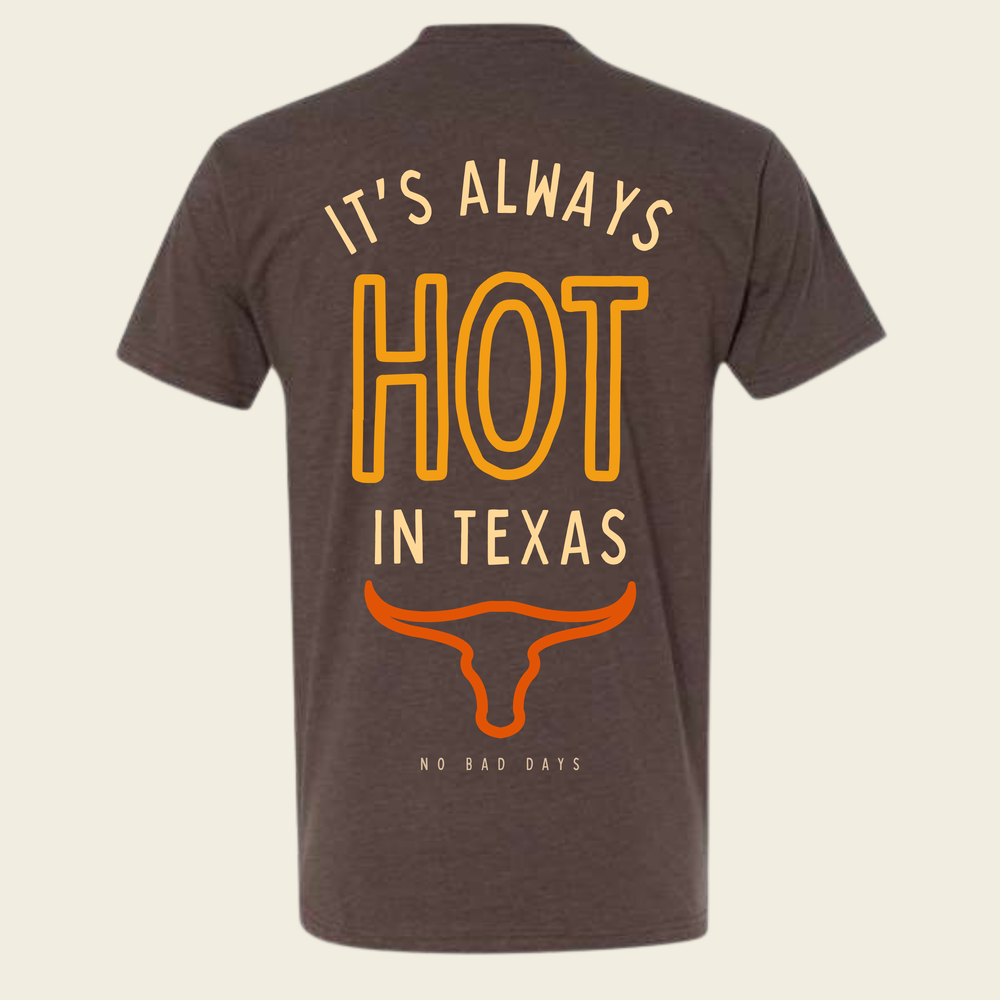
Summer in Texas is a legitimate ordeal, and nobody there will pretend otherwise. From roughly June through September, most of the state lives between air conditioning units and complains about it as a form of small talk. There is a reason our Hot in Texas Tee exists. The joke writes itself every July.
But the flip side gets ignored. Amarillo gets real winters, with real snow. Ice storms shut down Dallas most years. And in February 2021, a winter storm froze the whole state hard enough to knock out power for days, which Texans will bring up unprompted for the rest of their lives.
The honest summary of Texas weather is not "hot." It is "committed to extremes." Hail the size of golf balls, spring tornadoes, hurricanes on the coast, drought, flood, and the occasional week in October that is so perfect it almost makes up for August.
Nobody is riding a horse to work
The great majority of Texans live in metro areas: Dallas–Fort Worth, Houston, San Antonio, Austin, and the sprawl between them. They sit in traffic on I-35 like everyone else. The cowboy is real, but he is a working profession in specific parts of the state, not a costume the whole population wears.
What outsiders also miss is how varied the people are. Houston is enormous and enormously diverse, with some of the best Vietnamese food in the country. El Paso is so far west it runs on Mountain Time, and it has more in common with New Mexico and Juárez than with Dallas. Beaumont leans toward Louisiana. Lubbock and the Panhandle are their own thing entirely. The accent changes, the food changes, the politics change. Texans mostly agree on brisket, football, and the belief that their region is the real Texas.
Barbecue is not the whole menu
Texas barbecue deserves its reputation. But if you only eat brisket, you are missing most of what Texans actually eat week to week.
- Breakfast tacos. The daily fuel of San Antonio and Austin. Ordering one is not an event, it is a reflex.
- Tex-Mex. Its own cuisine, not a lesser version of Mexican food. Cheese enchiladas with chili gravy, fajitas, and queso, which is a food group.
- Kolaches. Czech pastries from the immigrant towns along I-35. The town of West, just north of Waco, is a mandatory road trip stop for them.
- Whataburger. Born in Corpus Christi, open at 2 a.m., and defended with a loyalty that borders on religious.
The barbecue matters. But the everyday food culture is tacos, Tex-Mex, and gas station kolaches, and Texans will correct you on this at length.
The bluebonnet law that does not exist
Every Texan grows up hearing that it is illegal to pick bluebonnets. It is not. It never has been. Trespassing to get to them is illegal, and stomping a patch flat on the roadside for a photo is frowned on, but the flower itself carries no criminal penalty.
The myth persists because it works. It keeps the roadsides blue every spring, which is the point. If you want to see the real show, drive Highway 290 through Washington County around Brenham in late March or April, or take the Willow City Loop outside Fredericksburg. Ennis, south of Dallas, takes its bluebonnet trails seriously enough to map them. The tradition of plopping a toddler in a patch of bluebonnets for a photo is close to a legal requirement, unlike picking the flowers.
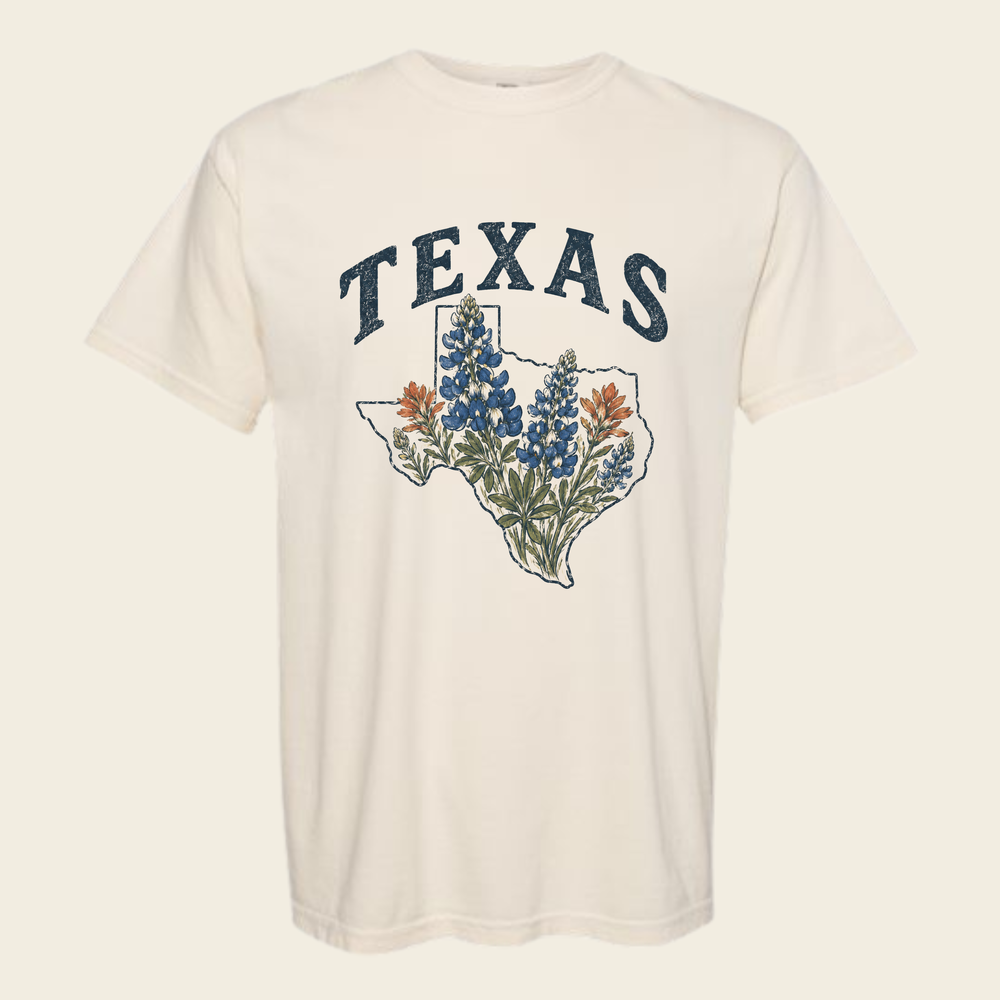
The Texas Bluebonnet Tee came out of exactly this: the one season when the whole state agrees the place is beautiful and pulls over on the shoulder to prove it.
The size is not a brag, it is a logistics problem
People know Texas is big the way they know the ocean is deep: abstractly. Then they try to drive it. Crossing the state on I-10 from the Louisiana line to El Paso takes the better part of a full day of driving, and for long stretches the scenery does not change enough to convince you the car is moving.
This is why Texans think nothing of a three-hour drive for a football game or a wedding. It is also why the regions feel like separate states. Someone in Texarkana and someone in El Paso live closer to other states' cities than to each other. The bluster about size is mostly cover for the practical reality, which is that you should fill up the tank when you see a gas station in West Texas, not when the light comes on.
The stereotypes Texans actually claim
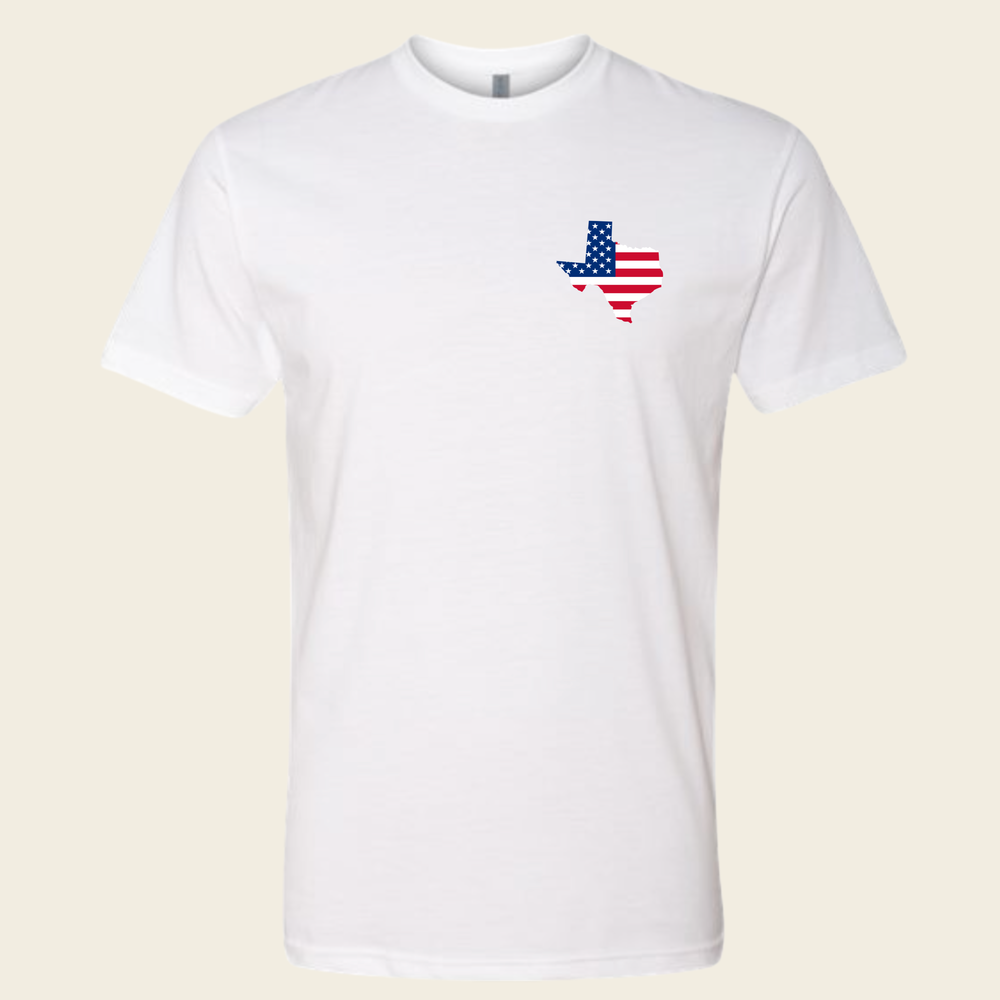
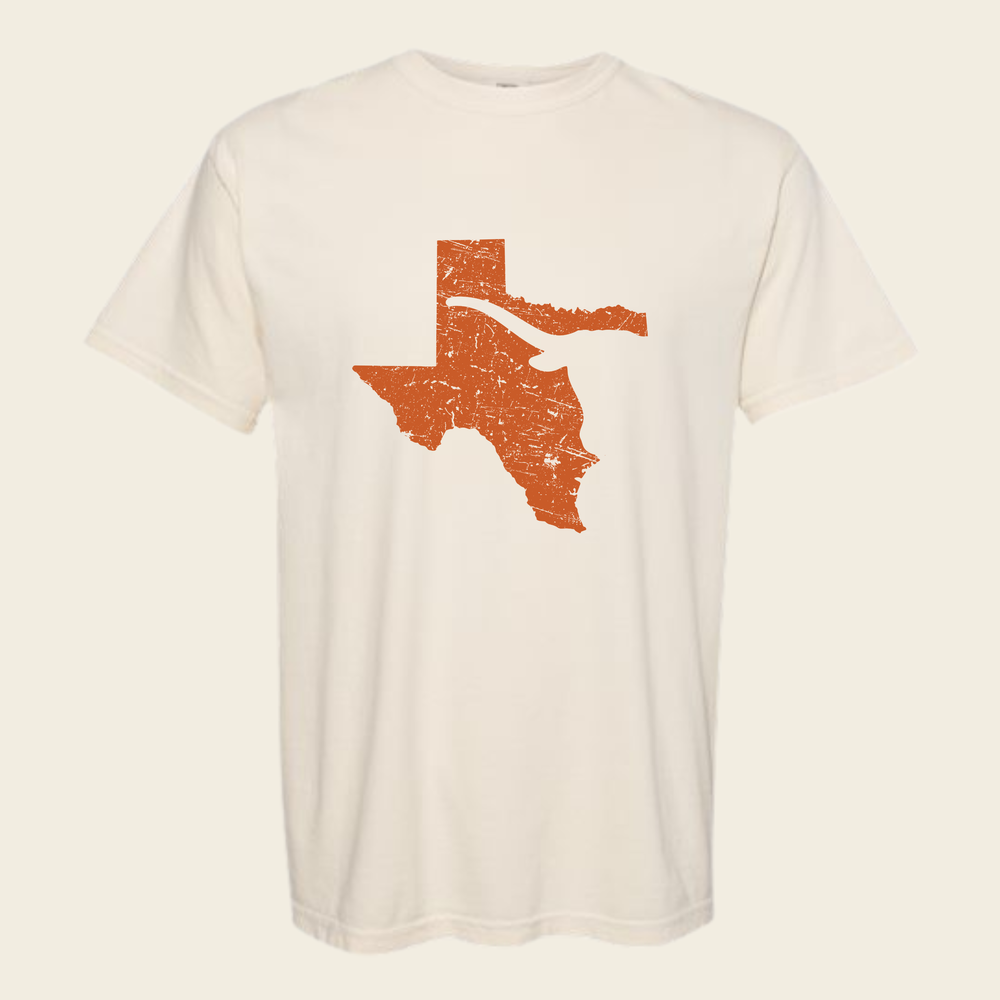
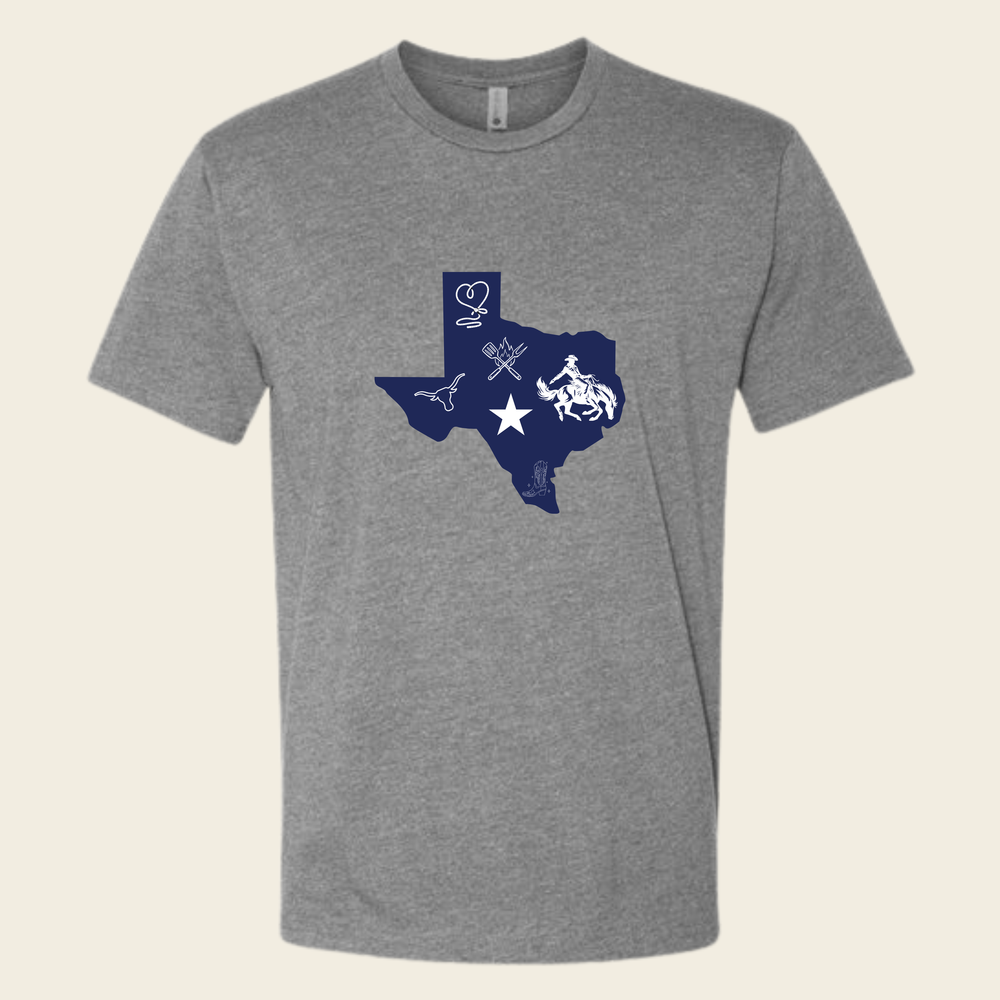
For all the correcting, Texans do lean into some of it on purpose. High school football on Friday nights is genuinely a civic institution, especially in small towns where the stadium is the biggest building for miles. The hand signs, the state flag on everything, the Alamo, the longhorn skull on the wall of every third restaurant: these are self-aware. Texans know the iconography is over the top. That is part of the appeal, which is more or less the whole idea behind the Texas Icons Tee.
The real correction is not that the stereotypes are false. It is that they are a small, deliberately loud slice of a state that also contains cypress swamps, Czech bakeries, Mountain Time, and snow. The rest of the Texas collection works the same territory: the version of the state that people who live there actually recognize.
Common questions
Is it actually illegal to pick bluebonnets in Texas?
No. There is no law against picking bluebonnets, though trespassing on private land to reach them is illegal. The myth survives because it keeps the roadside patches intact every spring.
Does it snow in Texas?
Yes, regularly in the Panhandle, where Amarillo gets real winter weather, and occasionally everywhere else. Ice storms hit Dallas most years, and the February 2021 freeze reached the entire state.
When is the best time to see Texas bluebonnets?
Late March through April in most years, depending on winter rain. The Hill Country around Fredericksburg and the stretch of Highway 290 near Brenham are reliable places to start.
Texas
Made by Land & Light — American lifestyle apparel with a sense of place and a sense of humor.
See every shirt