
What People Get Wrong About Florida
Florida is not one place, the beach is not the point, and winter is the good season. A correction from the inside.
The biggest thing people get wrong about Florida is thinking it's one place. It's at least three or four, and the parts barely resemble each other, which is why almost every generalization about the state falls apart the moment you drive an hour in any direction.
People picture Miami, or they picture Disney, or they picture a man wrestling an alligator in a gas station parking lot. All of those exist. None of them is the whole thing, or even most of it.
It's not one state, it's several wearing a trench coat
The Panhandle west of the Apalachicola River runs on Central Time. Sit with that. Pensacola is closer to New Orleans than it is to Miami, and it feels like it. The oysters, the accents, the college football loyalties up there belong to the Gulf South, not to anything you'd recognize from a South Beach postcard.
Then there's North Central Florida, which is the actual American South, live oaks and Spanish moss and towns like Micanopy where the antique shops outnumber the traffic lights. Central Florida along I-4 is its own thing, a theme park economy grafted onto old cattle land. South Florida is a Caribbean and Latin American capital that happens to have a US zip code. These regions do not agree on food, politics, music, or what counts as cold.
Ask someone from Sopchoppy and someone from Hialeah what Florida is like. You'll get two answers that share almost no nouns.
Winter is the season, not summer
Outsiders assume Florida is a summer destination. Floridians know summer is the season you endure. From roughly June through September the pattern is the same: brutal humidity in the morning, a thunderstorm you could set a watch by in the afternoon, mosquitoes on cleanup duty at dusk. You plan your day around the 3 p.m. downpour the way northerners plan around snow.
Winter is the payoff. That's when the air dries out, the highs settle into the low-to-mid 70s, and the whole state exhales. It's why snowbirds come, why the strawberry stands open in Plant City, why anyone with a boat suddenly remembers they have a boat. The 73 Degrees Tee exists because that number is not a marketing slogan down here. It's a season, and it's the good one.
Florida Man is mostly a paperwork situation
The Florida Man headline is real, but it says less about the people than people think. Florida has famously broad public records laws. Arrest reports, mugshots, incident narratives — a lot of it is easy for reporters to get, quickly, in a way that isn't true in many other states.
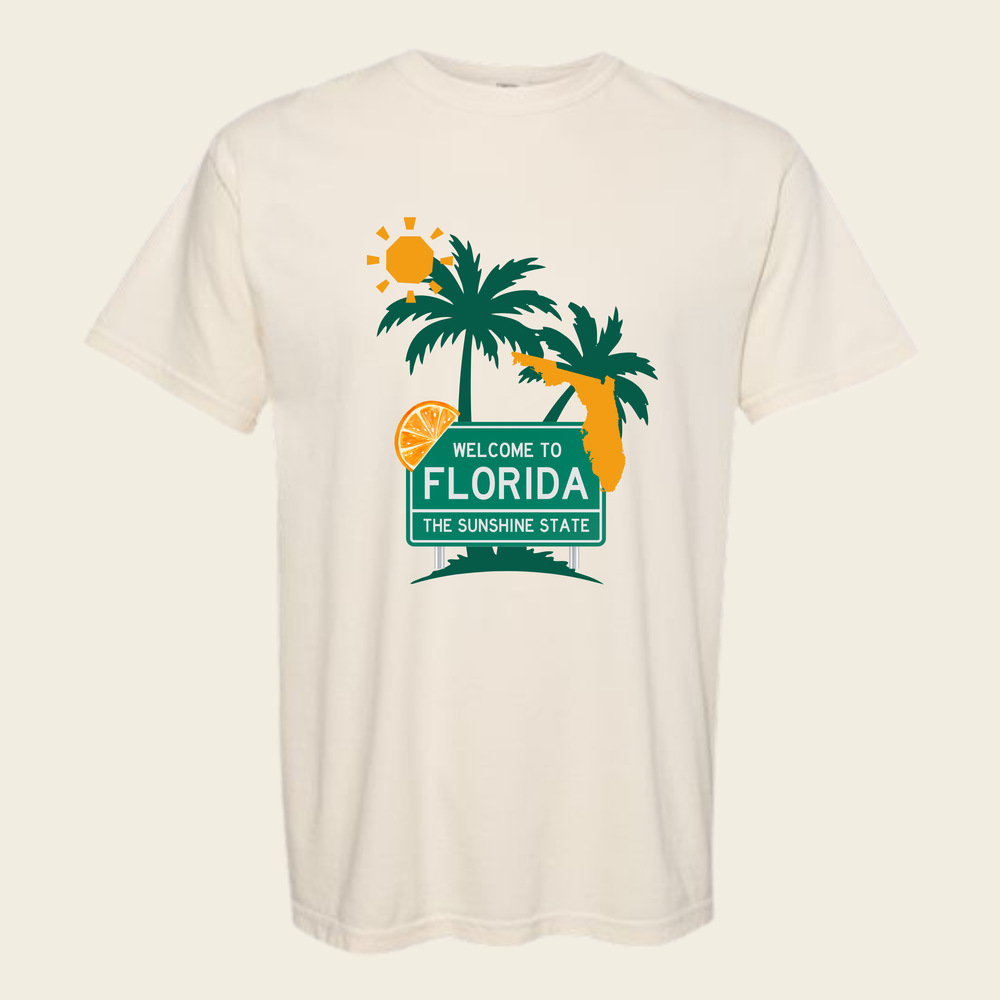
So when a man in Ohio does something strange, it may never leave the police blotter. When a man in Ocala does the same thing, it's a headline by lunch. Add a huge population, tourists in unfamiliar situations, heat, and wildlife that occasionally wanders into a Wawa, and you have a content machine. Floridians mostly find the whole genre funny, which is roughly the spirit of the Welcome to Florida Tee. Nobody down here is offended. Half the state has a story of their own.
The freshwater is better than the beach
Here's the one that surprises people most: the best swimming in Florida might not be the ocean. The state sits on top of the Floridan Aquifer, and it leaks out everywhere in the form of springs — Ichetucknee, Rainbow, Wakulla, Ginnie, Alexander, dozens more. The water comes out of the ground at around 72 degrees year-round, clear enough to read a license plate on the bottom.
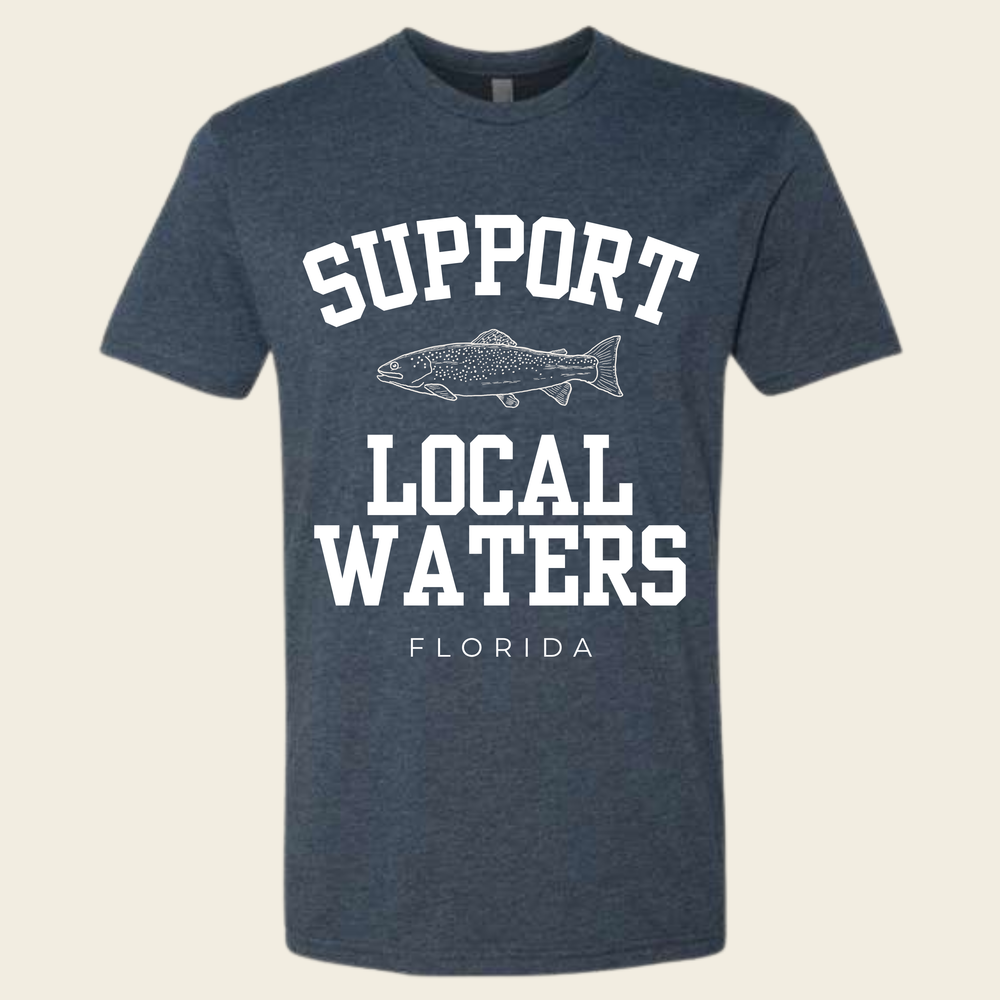
Tubing the Ichetucknee on a July Saturday is a rite of passage. So is jumping into a spring in January and yelping, because 72 feels very different when the air is 60. These places are fragile — the springs run on the same aquifer everyone's lawn does, and the clarity you see in old postcards is not guaranteed. That's the plainspoken case behind the Support Local Waters Tee: the water is the whole point of the place, and it needs people paying attention to it.
There are cowboys, and there always have been
People know Texas has cattle. They don't know Florida does. Drive US 27 or the roads around Okeechobee and Kissimmee and you'll pass ranchland that goes to the horizon, egrets standing around the cows like small supervisors. Florida's cow-hunting tradition is old — the cracker cowmen worked cattle in palmetto scrub with whips and dogs long before the state had a single roller coaster.
The middle of the state is the part tourists fly over on the way to the coasts, and it's where a lot of the actual Florida lives: cattle, citrus where the groves have held on, fish camps, small towns with names like Yeehaw Junction and Two Egg that sound made up and aren't.
The food is not just key lime pie
Key lime pie is real and worth arguing about (the topping question — meringue or whipped cream — has ended friendships). But the state's food map is wider than the dessert menu suggests:
- The Cuban sandwich, and the eternal Tampa-versus-Miami dispute over whether salami belongs on it. Ybor City says yes. Miami says absolutely not.
- Smoked mullet along the Gulf Coast, especially around Cedar Key and the fish shacks of the Nature Coast.
- Apalachicola oysters, the Panhandle's pride, eaten as close to the water as possible.
- Boiled peanuts from a roadside cooler in North Florida, which is the South, as established.
- Datil peppers in St. Augustine, a local heat you won't find in grocery stores two counties over.
- Cafecito in Miami, served in a thimble, strong enough to reset your afternoon.
If your Florida food experience is a chain restaurant near a theme park, you ate in Florida without eating Florida.
Locals go to the beach less than you'd think
The stereotype is that Floridians live on the sand. The reality is that the beach is like a famous museum in your hometown — you go when relatives visit. Locals are more likely to be on a river, in a spring, at a boat ramp at dawn, or in air conditioning like sensible people.
When they do go, they go early or late, off-season, to the less famous stretches: the dog beach, the state park end, the spot with no parking that you have to know about. A1A at sunrise in February with nobody on it is the version of the beach locals actually love. If any of this sounds like your version of the state, the Florida collection was made with that Florida in mind — the one with springs and fish camps in it, not just the postcard.
Common questions
When is the best time to visit Florida?
Winter and early spring, roughly November through April. The humidity drops, the daily thunderstorms stop, and highs sit in the 70s. Summer is hot, wet, and the start of hurricane season.
Is Florida all beaches and theme parks?
No. The interior is ranchland, springs, rivers, and small Southern towns, and the Panhandle is culturally closer to Alabama than to Miami. The famous coastal strips are a thin edge on a much bigger, stranger state.
Why do so many weird news stories come from Florida?
Largely because Florida's public records laws make police reports unusually easy for journalists to access, so odd incidents become headlines fast. Combine that with a big population and a lot of tourists and wildlife, and the stories write themselves.
Florida
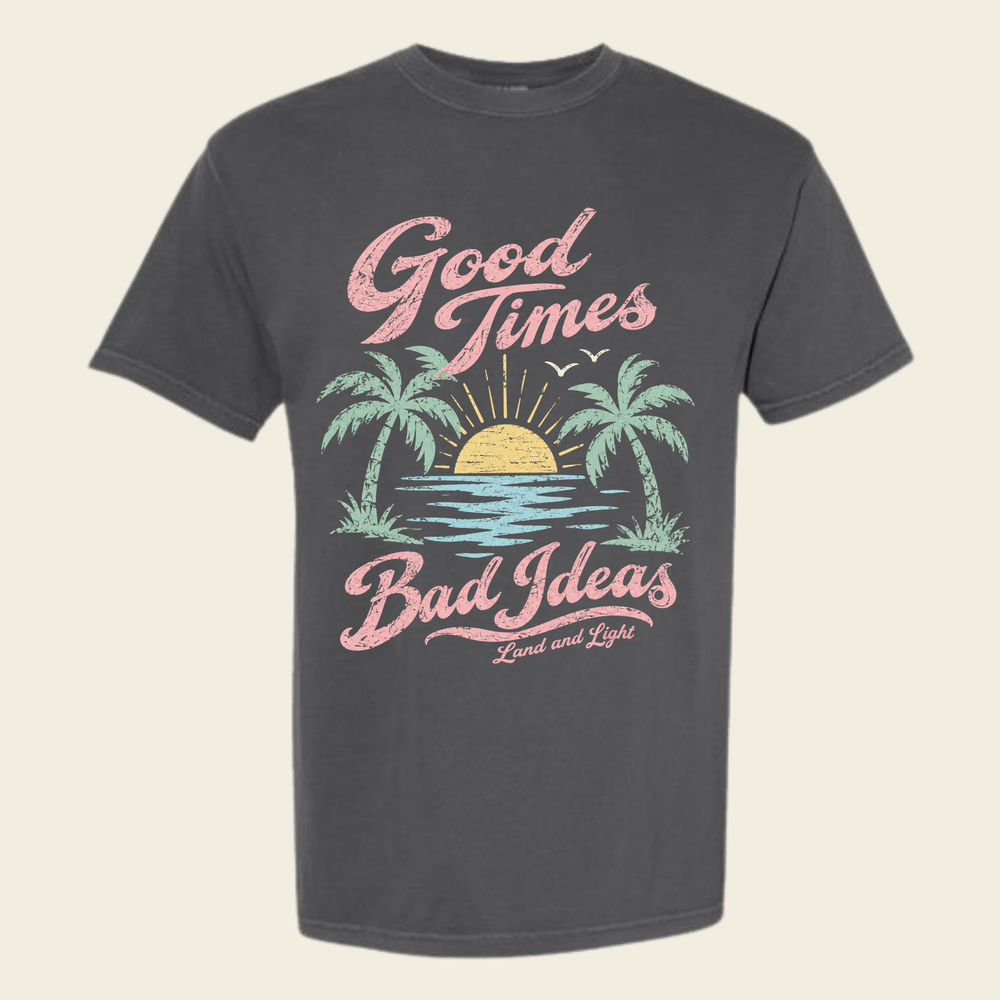
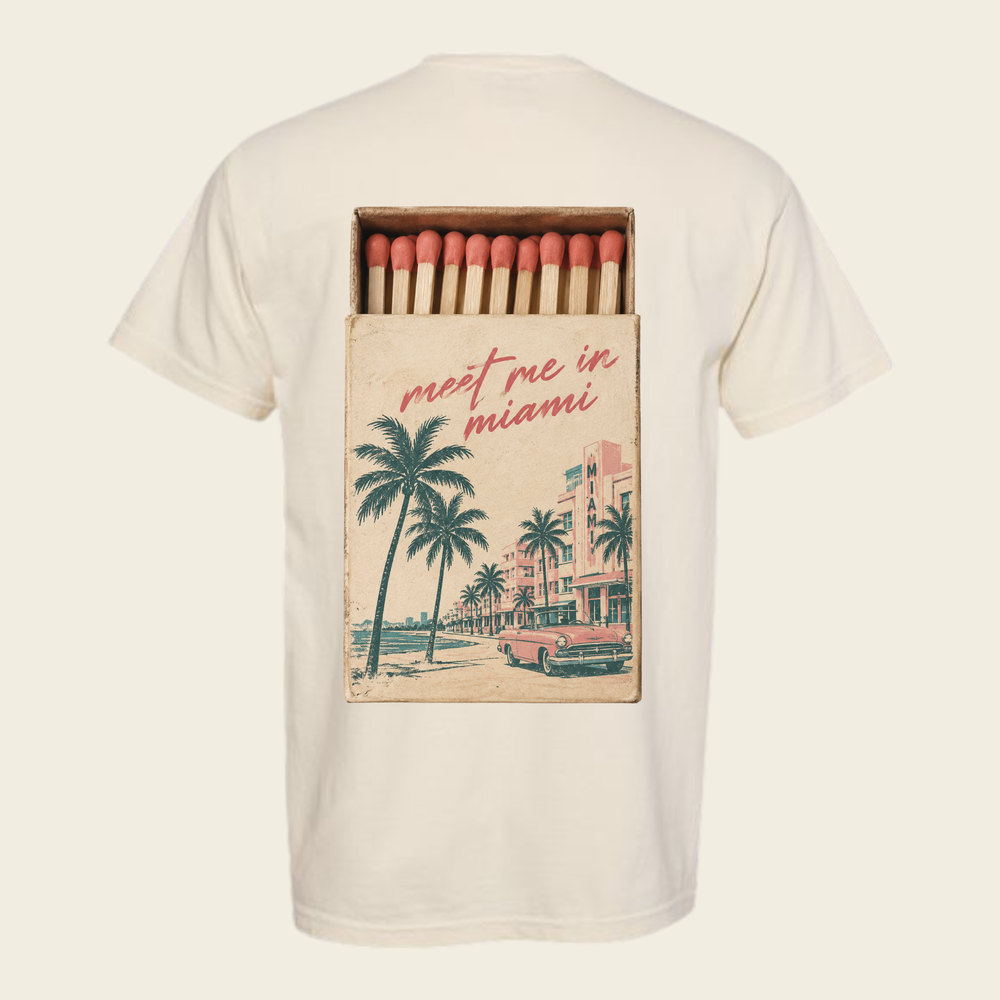

Made by Land & Light — American lifestyle apparel with a sense of place and a sense of humor.
See every shirt