
Ohio in the Summer, and How to Survive It
Ohio summers are humid, loud with cicadas, and full of sweet corn. Here is how people who live there actually get through them.
Surviving an Ohio summer comes down to three things: respect the humidity, get near water when you can, and eat what the season hands you. The heat itself is manageable; it's the air that gets you, thick from June through early September, and the trick is to stop fighting it and plan around it.
The humidity is the main event
People from drier states hear "Ohio" and picture mild Midwest weather. Then they land in Columbus in July and step outside into something that feels like a greenhouse. The state sits in a corridor where Gulf moisture rolls up and parks itself, and there are stretches in midsummer where the air doesn't cool off much overnight. You wake up, the windows are fogged from the outside, and the day is already committed.
The locals adapt in predictable ways:
- Yard work happens before 9 a.m. or after 7 p.m. Nobody mows at 2 in the afternoon unless they lost a bet.
- Errands get bundled so you're only in and out of air conditioning a few times.
- Everyone develops a strong opinion about which grocery store has the coldest produce section.
The upside is that the humidity is why everything is so green. The corn, the soybeans, the maples, the impossibly lush ditches along the county roads — that's the payoff. Ohio in July looks like someone turned the saturation up. You pay for the view in sweat.
Get on or near the water
Ohio has a north coast, and people who forget that miss the best part of the season. Lake Erie is warm by midsummer — genuinely swimmable, unlike some of the other Great Lakes — and the shoreline towns run on a summer economy. Put-in-Bay fills up with boats on weekends. Marblehead has the lighthouse everyone photographs. Vermilion and Huron have that small-harbor feel where the walleye charters come in around midday and you can watch the fish get cleaned on the dock.
If you're inland, the substitutes work fine. The reservoirs and state park lakes — Alum Creek, Indian Lake, Grand Lake St. Marys, take your pick by region — are where the pontoon boats live. Down south, Hocking Hills stays cooler than everywhere around it because the gorges hold shade and moving water. Ash Cave and Old Man's Cave on a 90-degree day feel about ten degrees kinder than the parking lot did.
The rule is simple: water or shade, ideally both. Ohio summer punishes people who spend it on asphalt.
Eat what the season gives you
Ohio summer food is a roadside economy. The sweet corn stands appear along the state routes sometime in July, usually a folding table, a scale, and a coffee can for cash. If the sign says the corn was picked that morning, believe it, and buy more than you think you need. Ohio sweet corn eaten the day it was picked is a different food than what sits in a grocery bin.
Then there's the rest of it:
- Tomatoes from someone's backyard, handed to you in a plastic grocery bag whether you asked or not.
- Ice cream stands with lines out to the parking lot, most of them seasonal, most of them cash-friendly, all of them non-negotiable stops on the way home from the lake.
- Zucchini in such volume by August that leaving it on a neighbor's porch becomes a mild form of aggression.
Nobody in Ohio talks about "farm to table" in the summer. It's just the table.
The county fair circuit
Every county in Ohio runs a fair, and the season stretches across the whole summer into fall, capped by the Ohio State Fair in Columbus in late July and early August. If you want to understand the state, a county fair on a hot evening will teach you more than any museum. There are 4-H kids sleeping in the barns next to their steers. There's a demolition derby or a tractor pull, depending on the night. There's lemonade shaken in front of you and fried food that has no defensible nutritional argument and needs none.
The fair is also the great equalizer of Ohio summer clothing. Everyone is in a t-shirt, everyone is sweating, and half the crowd is wearing something scarlet and gray regardless of the season. Football is never far from an Ohioan's mind, even in July — which is roughly the audience the Ohio State Pride Tee was made for. Fair season is scarlet season with a head start.
Storms, cicadas, and other summer noise
Ohio summer has a soundtrack. In the daytime it's cicadas — the annual ones every year, droning from the trees like a power line, and in certain years the periodical broods emerge and turn the whole thing up to a volume that has to be heard to be believed. At night it's crickets, katydids, and somewhere a window air conditioner working harder than it should.
Then there are the storms. Ohio thunderstorms tend to arrive in the late afternoon after the heat has been building all day. The sky goes green-gray, the wind flips the leaves silver-side up, and everyone on a porch says some version of "here it comes." Twenty minutes of real weather, then it's over, the streets are steaming, and the humidity somehow survived intact. A few practical notes:
- If the leaves flip and the birds go quiet, get the lawn chairs in.
- Never trust a forecast that says 30 percent chance. In Ohio that means it will rain on your cookout specifically.
- The mosquitoes after a wet week are serious. Standing water is their whole business plan.
Lean into it
The honest answer to "how do you survive an Ohio summer" is that you stop treating it as something to survive. The season is short. By mid-September the pools close, the corn stands fold up, and the whole state pivots to football with an enthusiasm that borders on relief. So the people who do summer well pack it in: lake weekends, fair food, corn on the grill, a storm watched from a garage with the door up.
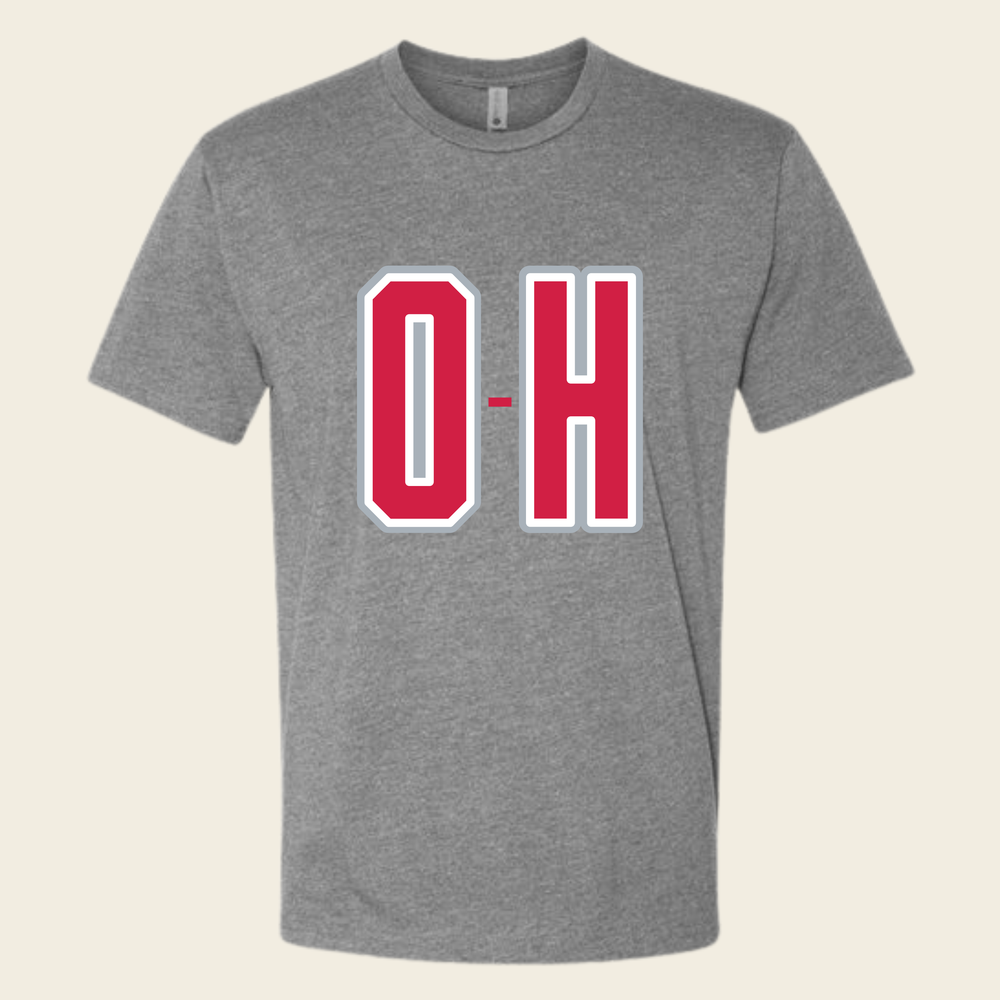
It's a season with a strong identity, which is why it shows up so often in what we make. The Ohio collection is built around the state's particular habits and inside jokes, and no habit is more Ohio than the call-and-response. Yell "O-H" across a beach on Lake Erie in July and a stranger will answer "I-O" before they've thought about it. The O-H Tee exists because that reflex doesn't take summers off.
Sweat through it, eat the corn, answer the call. That's the whole survival guide.
Common questions
What are the hottest months in Ohio?
July and August are the peak, with June close behind. The humidity is usually a bigger factor than the raw temperature, and late-day thunderstorms are common through the whole stretch.
Can you actually swim in Lake Erie?
Yes. Erie is shallow compared to the other Great Lakes, so it warms up nicely by midsummer and the beaches along the north coast get real use. Check local water advisories after heavy rain, as conditions can change.
When is county fair season in Ohio?
Fairs run across the summer and into early fall, with different counties on different weeks. The Ohio State Fair in Columbus typically lands in late July and early August and is the biggest of the bunch.

Made by Land & Light — American lifestyle apparel with a sense of place and a sense of humor.
See every shirt