
Florida in the Summer: How to Survive It
Florida summer runs roughly May through October, and surviving it is about timing, shade, cold water, and respecting the afternoon storm.
Surviving a Florida summer comes down to four things: do your outdoor business before 10 a.m., respect the afternoon thunderstorm, find cold water, and treat air conditioning as a public utility. The season runs long, roughly May into October, and the people who live there don't fight it so much as schedule around it.
This is not a beach-brochure version of the state. This is the version where your sunglasses fog up when you walk out the door and the steering wheel is too hot to touch. It's survivable. Locals do it every year, and most of them stay on purpose.
The humidity is the real opponent
The temperature in a Florida summer is honestly not that impressive. Plenty of places get hotter. What Florida has is humidity that sits on you like a wet towel from sunrise to well after dark. The air holds so much water that sweat stops doing its job. You don't cool off; you just get damp and stay damp.
The practical consequences:
- Morning is the day. If you want to run, fish, walk the dog, or mow anything, do it early. By mid-morning the sun has committed.
- Shade is not optional. A parking spot under a tree is worth circling the lot for. Floridians will pass ten open spots to get the one under the live oak.
- Hydrate before you feel like it. By the time you're thirsty in July, you're behind.
- Nothing dries. Towels, swimsuits, car seats after a storm. Accept it.
People who move down from up north spend their first summer confused about why 92 degrees feels like a personal attack. It's the dew point. Once you stop expecting the air to help you, things get easier.
The afternoon storm runs on a schedule
Most summer afternoons, especially inland and in Central Florida, a thunderstorm shows up somewhere between lunch and dinner. It builds all morning as sea breezes push in from both coasts, collides over the middle of the state, and dumps rain like the sky lost a bet. Then, often within an hour, it's over and the roads are steaming.
How to live with it:
- Plan outdoor things for morning, indoor things for mid-afternoon, and evening things for evening. That's the whole trick.
- Lightning is serious here. Central Florida has a reputation for it, and when a pool closes or a beach clears out, that's not caution theater. Go inside.
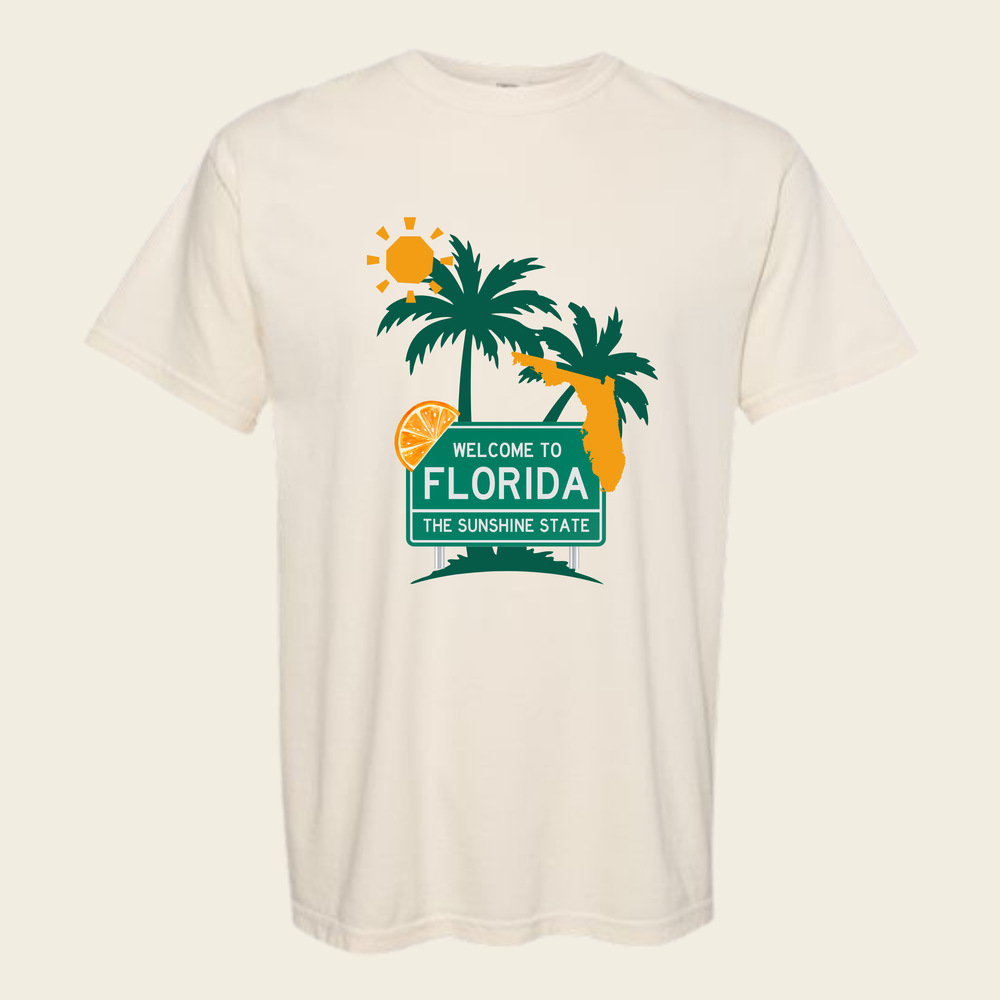
- Keep something dry in the car. An umbrella helps less than you'd think when the rain is horizontal, but a dry shirt in the back seat is a small luxury. Something like the Welcome to Florida Tee stashed in the trunk has bailed out more than one afternoon.
- Don't cancel your evening. The storm usually clears, the temperature drops a few merciful degrees, and sunset after a rain is the best light of the day.
Find cold water: the springs
The ocean in a Florida summer is warm. Pleasantly warm at the beach, bathwater warm by August. If you actually want to cool down, you go inland to the springs. North and Central Florida are full of them, and the water comes out of the ground cold enough to make you gasp, right around 72 degrees no matter what the air is doing.
A few names worth knowing: Ichetucknee, where people float the river on tubes for hours; Rainbow Springs near Dunnellon; Ginnie Springs, which skews younger and louder; Wekiwa Springs outside Orlando; Blue Spring on the St. Johns, better known for winter manatees but still a good summer swim. Get there early on a summer Saturday, because the parks cap capacity and the gates close when they're full.
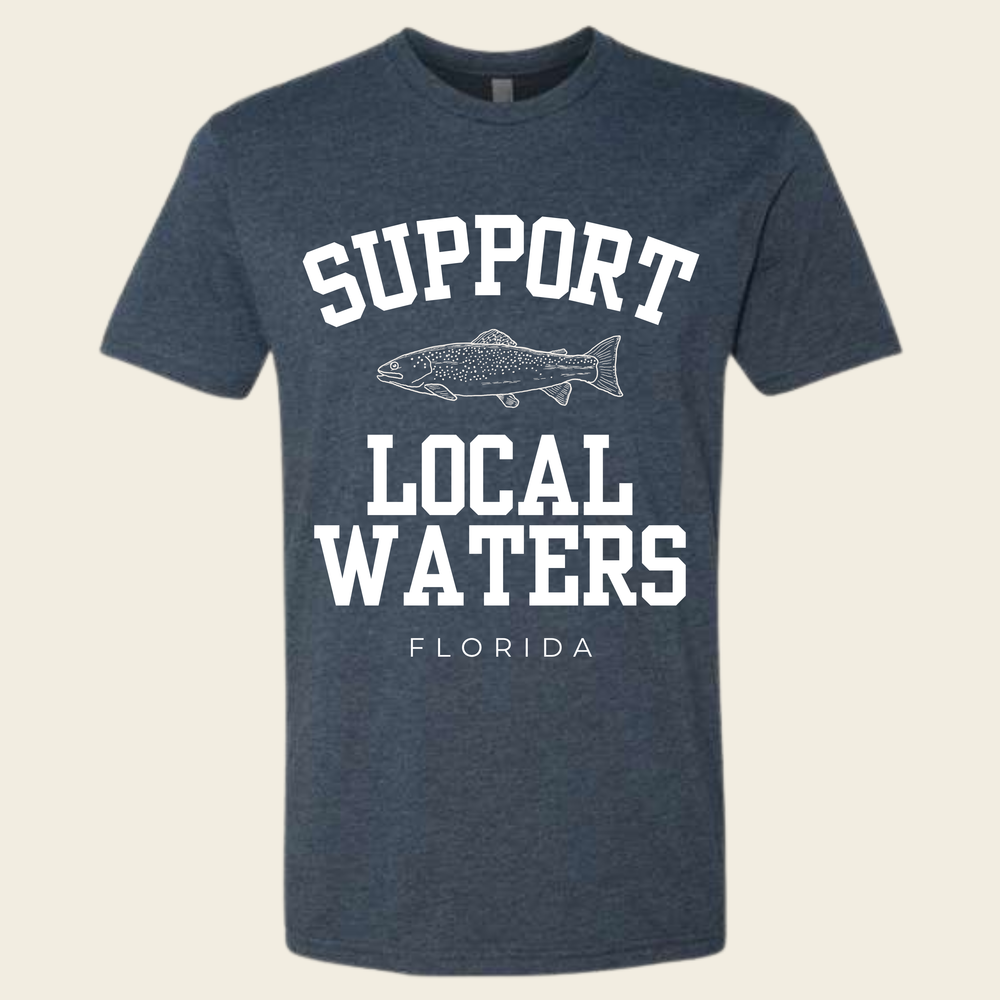
The springs are also the part of Florida most worth protecting, which is a big part of why we made the Support Local Waters Tee. Clear water coming straight out of the aquifer is not something every state gets, and it only stays clear if people care about it.
Air conditioning is a civic institution
Floridians did not settle the state in meaningful numbers until air conditioning made it reasonable, and they have not forgotten. The indoors is its own climate, and it is aggressively cold. Restaurants, movie theaters, grocery stores, churches: all of them are kept at a temperature that requires a layer.
This produces the great Florida paradox: you carry a sweater in July. Not for outside. For the Publix. Speaking of which, the Publix is a legitimate midday destination in summer. It's cold, the sub counter exists, and nobody is in a hurry.
There's a running joke among Floridians that the ideal thermostat setting is somewhere in the low 70s, defended with religious intensity against anyone who touches it. The 73 Degrees Tee exists for exactly this person. You know one. You may be one.
Small enemies: sun, bugs, and hot cars
The big stuff, heat and storms, you can see coming. The small stuff sneaks up.
- Sunscreen, every day, even the cloudy ones. Florida sun through haze still burns, and the worst sunburns happen on overcast beach days when people get comfortable.
- Mosquitoes come out at dusk and mean it, especially near standing water, which in summer is everywhere. No-see-ums at the beach in the evening are worse and less avoidable.
- Lovebugs, twice a year, drift across the highways in clouds and end up on your bumper. Wash them off sooner rather than later.
- Your car becomes an oven. Sunshades work. Cracked windows help. Never leave anything alive in there, and be careful with anything that melts, which in a Florida car in July is most things.
- Flip-flops on hot asphalt in a beach parking lot is a rite of passage. Once.
Hurricane season, without the panic
Hurricane season overlaps summer, running from June into the fall. Most of the season, nothing happens near you. The locals' approach is calm and procedural: know your evacuation zone, keep some water and batteries around, top off the gas tank when a storm enters the Gulf, and don't be the person fighting over plywood the night before landfall.
The odd cultural detail visitors notice: hurricane prep in Florida often looks like a block party. Neighbors help board windows, grills come out to cook down the freezer, and there's a specific dark humor to the whole thing. That humor is a survival tool too. Take the storm seriously, take yourself less so.
The reward for putting up with it
Here's what the brochures skip: summer is when Florida belongs to Floridians. The snowbirds are gone, the roads are lighter, restaurant waits shrink, and the beach at 7 a.m. in July, before the heat and the crowds, is as good as the state gets. Mangoes are in season. Afternoon storms cool the evenings. The springs run cold no matter what.
If you come out of the season with a good farmer's tan and a few stories about the rain, you did it right. And if you want the shirt to prove you were there, the Florida collection is where we keep ours.
Common questions
What months are the worst for Florida heat?
July and August are the peak, though the humidity is fully installed by June and hangs on through September. Real relief usually doesn't arrive until sometime in October, and even that varies by year and by how far south you are.
Is it worth visiting Florida in the summer?
Yes, if you plan around it. Mornings and evenings are genuinely pleasant, crowds are thinner than winter, and the springs are at their best. Just accept the afternoon storm as part of the daily schedule rather than a ruined day.
Do the afternoon thunderstorms really happen every day?
Not literally every day, but often enough that locals plan around a mid-to-late-afternoon rain window, especially inland. Most storms are intense but short, and the evening after one is usually the nicest part of the day.
Florida


Made by Land & Light — American lifestyle apparel with a sense of place and a sense of humor.
See every shirt