
Florida in the Summer: How to Survive It
Florida summer runs hot, wet, and long. Here is how locals actually get through it: timing, cold water, and respect for the 3 p.m. storm.
Florida in the summer is hot, humid, and roughly six months long, and you survive it the way locals do: by rearranging your day around the heat instead of fighting it. Mornings and evenings belong to you; the hours between noon and five belong to the sun and the thunderstorm that usually follows it.
That is the whole framework. Everything else in this post is detail, but if you remember nothing except early, inside, then out again, you will do better than most visitors who show up to Orlando in July with a full-day itinerary and a pair of black jeans.
The schedule is the whole trick
Floridians do not tough out summer afternoons. They avoid them. Anyone who fishes, runs, gardens, walks a dog, or works outside in Florida operates on the same clock, and it looks like this:
- Dawn to about 10 a.m.: the good hours. Cooler, calmer wind, better light, fewer people. This is when you do the beach, the trail, the run, the yard work.
- 10 a.m. to noon: tolerable if you are in shade or on the water. Getting sticky.
- Noon to roughly 5 p.m.: indoor Florida. Lunch, air conditioning, a museum, a long grocery run, a nap. This is not laziness. It is the correct response to a heat index that regularly sits above 100.
- After 5 or 6 p.m.: the storm has usually passed, the temperature drops a few degrees, and everything smells like wet pavement. Locals come back outside. Dinner outdoors is possible again.
Visitors get in trouble by inverting this: sleeping in, hitting the beach at 1 p.m., then wondering why they feel like a boiled shrimp by three.
Respect the afternoon thunderstorm
Most summer days in Florida, sea breezes push in from both coasts, collide somewhere over the middle of the state, and produce a thunderstorm with real intent. It often arrives mid-to-late afternoon, dumps rain sideways for thirty to ninety minutes, and moves on. It is loud, it is dramatic, and it is mostly predictable.
The rain is not the problem. The lightning is. Florida sees a lot of it, and locals take it seriously in a way that surprises people from drier states. When the sky goes green-gray and the wind flips direction, get off the water, off the golf course, and out from under the lone tree. Wait it out under a real roof. The storm passes, the birds start up again, and the evening it leaves behind is often the best part of the day.
Plan around it rather than against it. Book the fishing charter for morning. Save the movie, the outlet mall, or the long lunch for the window when the radar turns red.
Find the cold water
Florida's real summer secret is not the beach. It is the springs. North and central Florida sit on limestone full of them, and the water comes out of the ground at about 72 degrees all year. In January that feels warm. In August it feels like a miracle.
- Ichetucknee Springs, near Fort White, is the classic summer tube run. Rent a tube, float a few hours down clear water under oak canopy, done.
- Rainbow Springs, near Dunnellon, has swimming areas and a river worth paddling.
- Ginnie Springs, on the Santa Fe River, runs rowdier on summer weekends. Know what you are signing up for.
- Weeki Wachee and Blue Spring round out the list, though Blue Spring is better known for winter manatees.
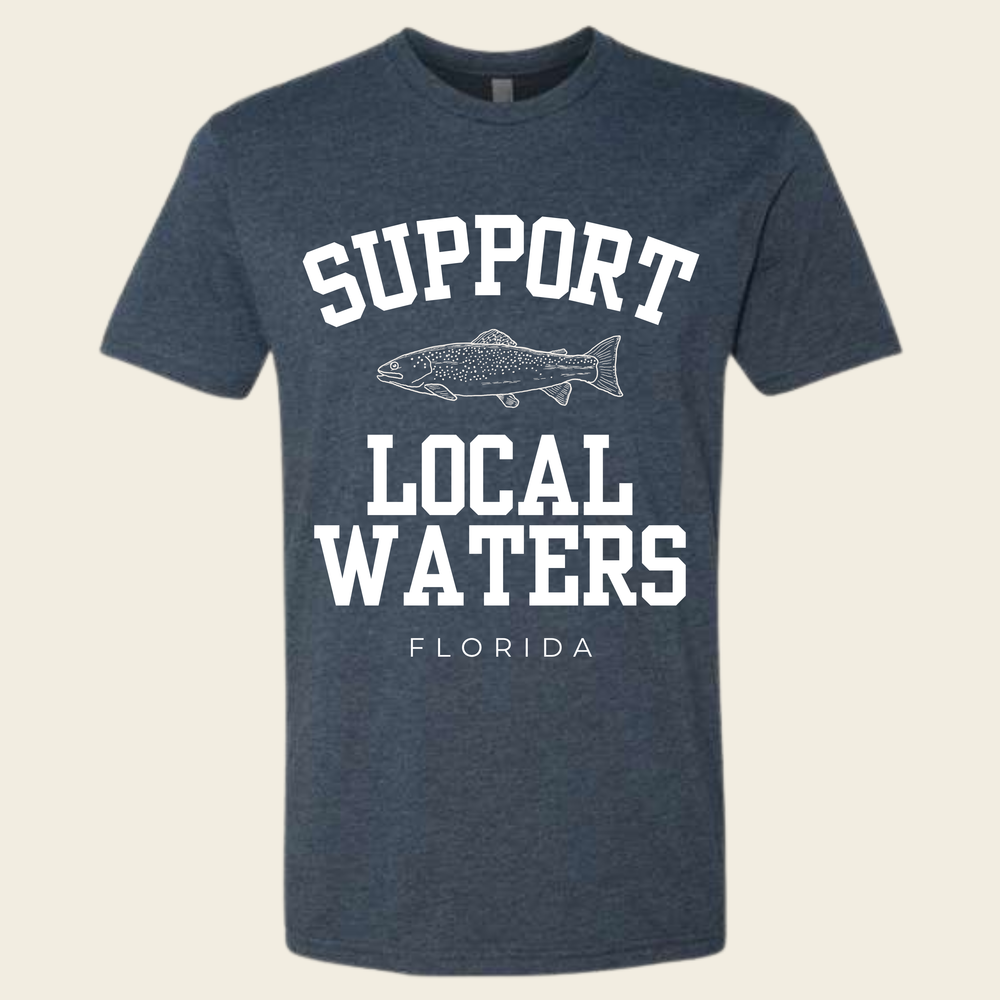
Go on a weekday if you can, arrive when the gates open, because the popular ones hit capacity by mid-morning in July. If you have ever climbed out of a spring run shivering in 95-degree air, you understand why we made the 73 Degrees Tee. The springs are also the best argument for keeping Florida's water clean, which is more or less the entire point of the Support Local Waters Tee.
The beach has summer rules
The beach in summer is a morning activity or an evening one. By noon the sand is genuinely painful to walk on barefoot, the parking lots are full, and the Gulf can feel like a warm bath rather than a relief.
A few things worth knowing:
- The Gulf side generally means calmer, warmer water and better sunsets. The Atlantic side means actual waves and a slightly cooler ocean.
- Check the flags. Rip currents on the Atlantic coast are a real summer hazard, and purple flags mean stinging marine life, usually jellyfish or man-o'-war.
- Bring more water than seems reasonable, and shade if you can carry it. Umbrella rental is money well spent.
- Watch for posted advisories on the Gulf coast. Some summers bring algae problems to certain stretches; conditions change week to week, so check locally rather than assuming.
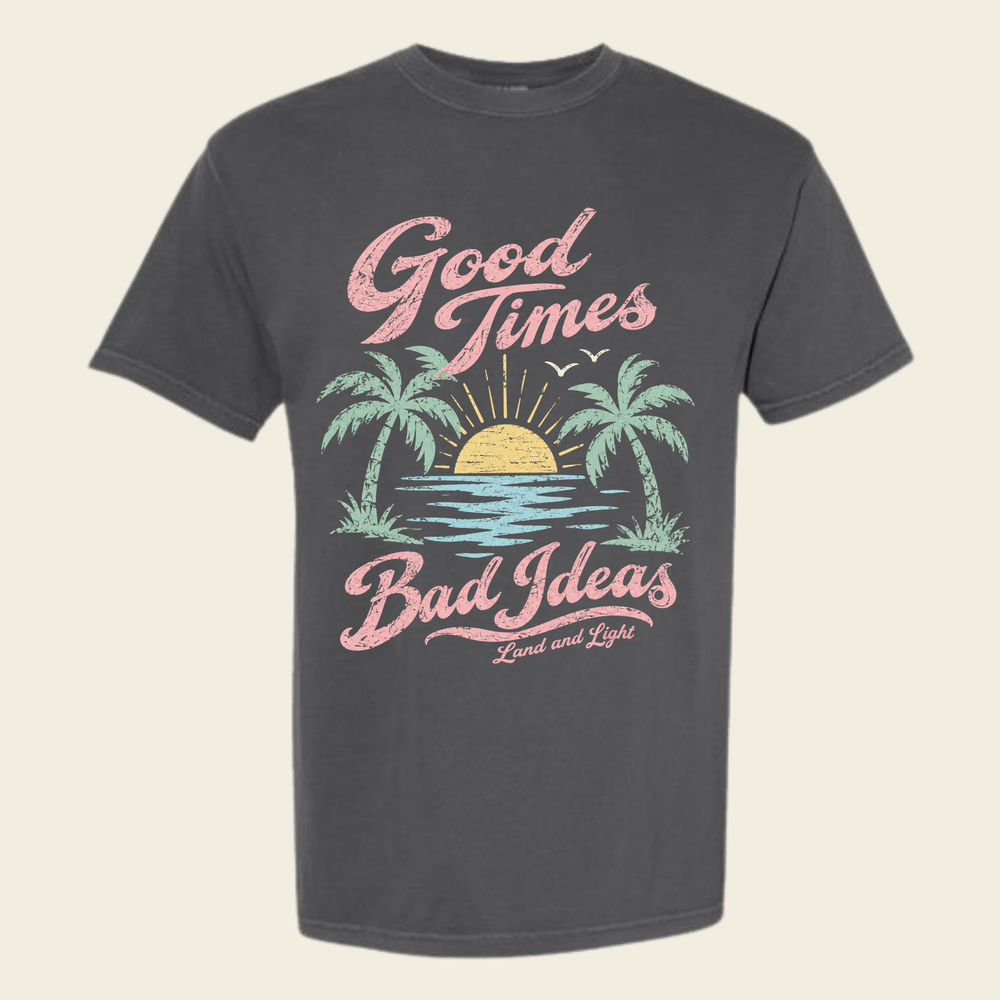
Miami plays by its own rules, as usual. South Beach in August is hot but alive, and the ocean at 7 a.m. followed by a cafecito is a legitimately great morning. That specific feeling is what the Good Times Miami Beach Tee is about.
Eat and drink like it's hot, because it is
Florida summer food is built for the weather, and it works. A rough shortlist:
- Cafecito or café con leche in South Florida, taken standing at a walk-up window. Yes, hot coffee in the heat. It works, ask anyone in Miami.
- Key lime anything. Pie is the obvious one. Cold, tart, correct.
- A Pub Sub. The Publix deli sandwich is a genuine piece of Florida culture, and eating one in an air-conditioned car during the 3 p.m. storm is a rite of passage.
- Boiled peanuts from a roadside stand in the north half of the state. Cajun style if offered.
- Fresh Gulf seafood at a place with plastic tables and a screened porch. If they have smoked fish dip, order it.
Hydration is not optional. Locals drink water constantly and without ceremony. If you feel thirsty in a Florida August, you are already behind.
What to wear, and what to accept
Light colors, loose clothes, a real hat, sunglasses you do not mind sweating on. Sunscreen goes on before you leave the house, not at the beach. And accept the central truth of Florida summer: you will sweat, everyone is sweating, and pretending otherwise is a losing game.
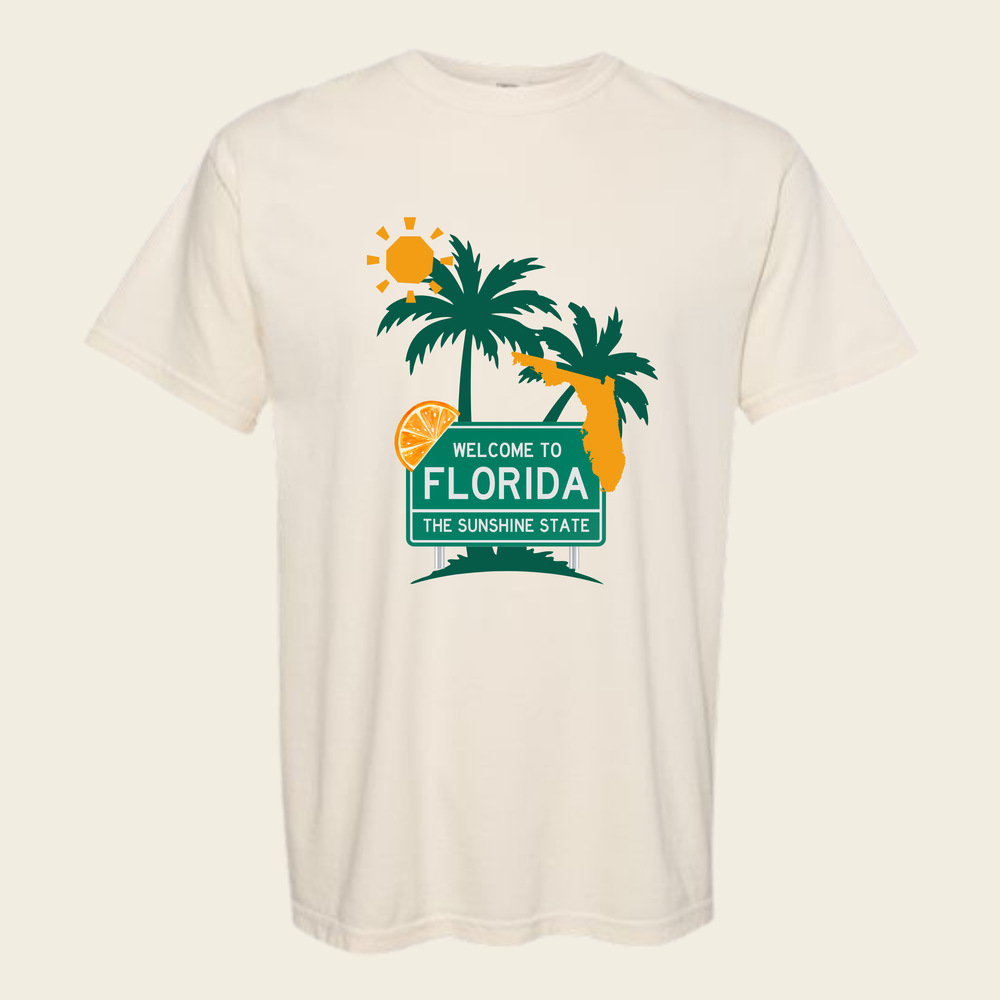
The counterintuitive part is the air conditioning. Restaurants, grocery stores, and offices in Florida are kept aggressively cold, so a light layer in the car is a genuine local move even in August. Browse the Florida collection if you want something that says you were here on purpose; the Welcome to Florida Tee covers the general mood of the whole enterprise.
Hurricane season, honestly
Hurricane season runs June through November, with the busiest stretch typically late summer into early fall. Most summer days involve nothing more dramatic than the afternoon storm, but pretending the season does not exist is not a survival strategy.
The practical version: if you live here, keep water, gas, cash, and a plan sorted before anything is on the map, because the stores empty out fast once a storm has a name. If you are visiting, buy travel insurance for a late-summer trip, watch the forecast in the week before you fly, and take evacuation orders literally. In between storms, do not let the season scare you off entirely. September beaches are empty, hotel rates drop, and the locals finally get their state back.
Common questions
When does summer actually end in Florida?
Later than the calendar says. Real heat typically holds through September and often well into October, especially in South Florida. The first genuinely pleasant stretch usually shows up sometime in fall, and locals treat it like a holiday.
Is it worth visiting Florida in the summer?
Yes, if you plan around the heat instead of through it. Mornings and evenings are excellent, crowds are thinner than winter in many places, and the springs are at their best. Just build your days around the early hours and the afternoon storm.
Does it really rain every day in the summer?
Not every day, but often enough that you should assume an afternoon storm and be pleasantly surprised when it skips you. The storms are usually short and localized. Rain in the morning is less common; that is your window.
Florida

Made by Land & Light — American lifestyle apparel with a sense of place and a sense of humor.
See every shirt