
How to Survive a Texas Summer
A practical guide to Texas summer: which heat you're dealing with, where the cold water is, and how to get through August.
You survive a Texas summer by rearranging your whole day around the heat: mornings and evenings are for living, and the middle of the day is for air conditioning, cold water, or both. The people who struggle are the ones who try to keep a normal schedule from June through September, as if the sun were negotiable.
Everything below is what actual Texans do, not what a travel brochure says. It works whether you're in Houston humidity, Hill Country limestone glare, or the dry furnace of the west.
First, figure out which Texas heat you have
Texas is big enough to have several different summers running at once, and the survival strategy changes depending on which one you're standing in.
- Gulf Coast and East Texas. Houston, Beaumont, Corpus Christi. The temperature is bad but the humidity is the real opponent. You step outside at 8 a.m. and your shirt is already committed. Shade helps less here than anywhere else in the state.
- Central Texas and the Hill Country. Austin, San Antonio, the towns along the rivers. Hot and bright, with limestone and caliche bouncing the sun back up at you. The saving grace is spring-fed water, which we'll get to.
- North Texas. Dallas–Fort Worth gets long stretches of triple digits with enough humidity to keep it honest. Parking lots become a specific kind of punishment.
- West Texas. Midland, Odessa, out toward Marfa and El Paso. Dry heat, which people defend until they experience it. The upside is real: it actually cools off at night, which almost nowhere east of the Pecos can say.
Dry heat versus wet heat is a genuine distinction, not a joke. In El Paso, shade and evening are relief. In Houston, they are slightly less bad versions of the same thing.
Move your day to the edges
Every functional Texan quietly becomes a morning person from June to September. Runners are out before sunrise. Yard work happens at 7 a.m. or not at all. Contractors pour concrete at dawn. Dogs get walked early and late, because sidewalk temperatures in the afternoon will burn their pads, and any vet in the state will tell you the back-of-the-hand test: if you can't hold your hand on the pavement for a few seconds, your dog can't walk on it.
The middle of the day, roughly 11 to 6, belongs to air conditioning. This is not weakness. It is the entire reason cities like Houston and Dallas function at their current size. Errands, movies, the mall, the good barbecue line — all of it gets scheduled around the sun like you're on the surface of a hostile planet, because in August, you are.
Evenings come back to you around 8. That's when neighborhoods reappear: porches, patios, kids on bikes, high school two-a-days winding down on practice fields. Friday night football starts in late August heat, and the stands are full anyway, because some things outrank comfort.
Cold water is the whole strategy
Texans didn't build a summer culture around rivers by accident. When the air won't cooperate, you get in the water, and the state has an unusual amount of the good kind — spring-fed, cold year-round, cold enough to make you gasp in July.
- Barton Springs in Austin, a spring-fed pool in the middle of the city that stays cold no matter what the air is doing.
- The Comal River in New Braunfels, short, clear, and built for a lazy float with a cooler.
- The Guadalupe below Canyon Lake, the classic tubing river, complete with the classic tubing sunburn if you skip the sunscreen.
- The Frio at Garner State Park, which lives up to its name — frio means cold, and it delivers.
- The San Marcos River, spring-fed and clear enough to see your own regrettable choice of footwear.
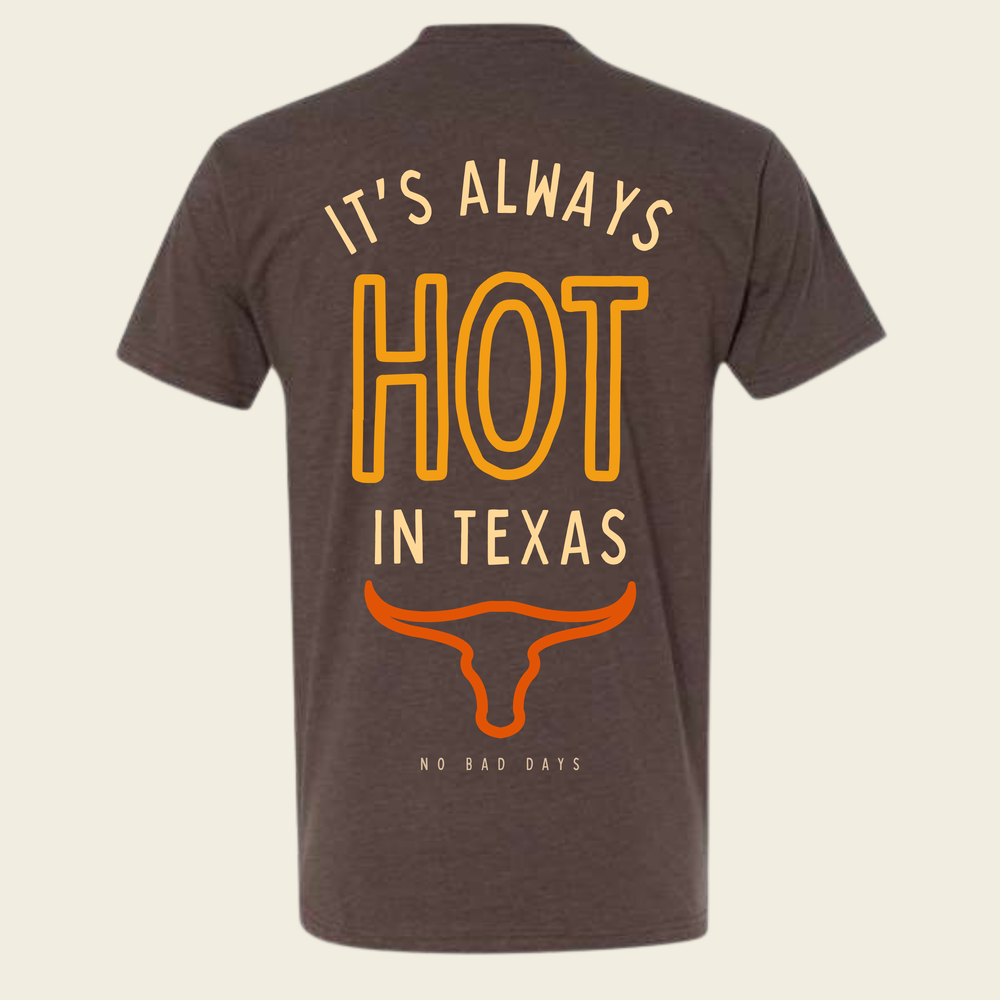
If you can't get to a river, the hierarchy continues downward: a friend's pool, the neighborhood pool, a splash pad, a sprinkler, a cold shower. There is no shame anywhere on that list. The Hot in Texas Tee exists because this entire situation deserved to be acknowledged in print.
Your car is trying to hurt you
A parked car in a Texas summer becomes an oven fast, and everyone who lives here has been branded by one. The specifics matter:
- Use a windshield sunshade. It looks fussy until the first time you touch a steering wheel that's been baking since noon.
- Metal seatbelt buckles get hot enough to burn. Check them before a kid clicks in.
- Crack the windows if you're parked somewhere it's safe to. It won't make the car cool, but it takes the edge off.
- Park in shade even if it means walking farther. Every Texan does this math automatically by July.
- Never, under any circumstances, leave a kid or a pet in a parked car. Not for a minute. It goes from uncomfortable to fatal faster than people believe.
- Keep water in the car. Warm water in a breakdown beats no water.
Leather seats in a black truck are a lifestyle decision the way smoking is a lifestyle decision. People still make it. That's Texas.
Eat and drink like it's a hundred degrees, because it is
Summer food in Texas is its own genre. Raspas and snow cones from stands that only exist four months a year. Aguas frescas — the watermelon one, agua de sandía, is the correct answer in August. Paletas from the freezer case at the corner store. Blue Bell out of Brenham, eaten fast before it loses the fight with the ambient temperature. A Whataburger drive-through run made entirely because the car has AC and the drink comes with a lot of ice.
For the adults, ranch water — Topo Chico, tequila, lime — has become the unofficial drink of the season, and it earned it. It's cold, it's fizzy, and it doesn't slow you down the way beer does when it's 103 outside. Iced tea remains the year-round default, sweet or unsweet depending on which part of the state raised you.
The general rule: cold, wet, and salty wins. You're sweating out more than you think, and the raspa stand knew that before sports science did.
What August actually feels like, and the signs it's ending
By August, the lawns have surrendered, the lakes are low, and the weather forecast is a copy-paste job. People stop remarking on the heat because there's nothing left to say about it. This is the stretch that tests you — not one bad day, but the fortieth identical one.
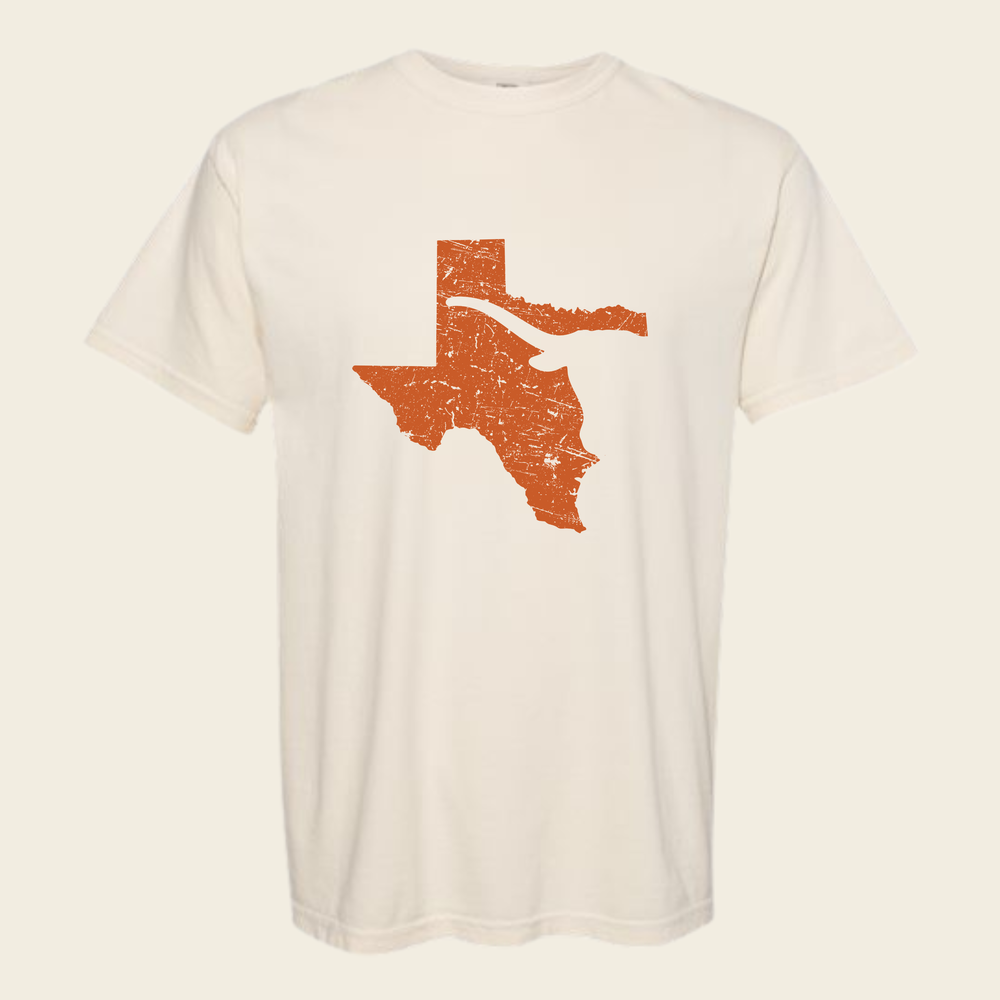
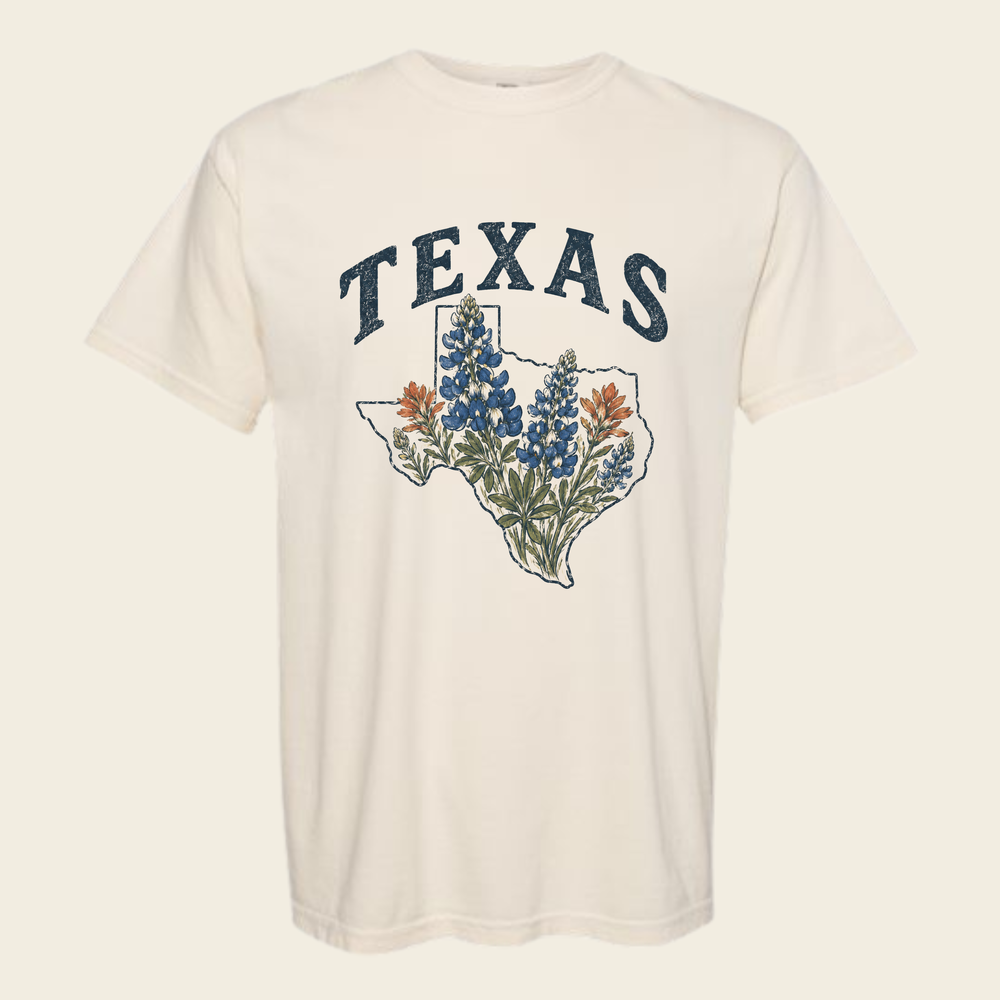
Then, sometime in September or October, a front comes through. The first real one. It might only drop things into the 80s, but Texans respond like it's a holiday: windows open, patios full, someone lighting a fire pit at 78 degrees out of pure optimism. Fall in Texas is short and beloved, and the bluebonnets that carpet the highways in spring are the other end of the same deal — the reward for getting through. If you want the flowers without waiting for March, the Texas Bluebonnet Tee keeps them in season year-round, and the rest of our Texas collection covers the state's other moods, including the Lone Star Longhorn Tee for people whose loyalty doesn't take the summer off.
The honest truth is that surviving a Texas summer isn't a trick. It's a rhythm: early mornings, cold rivers, shaded parking, ice in everything, and the shared understanding that complaining about it is a social activity, not a solution.
Common questions
When does the heat actually break in Texas?
Usually not until late September or October, when the first real cold front arrives. Until then, expect hot days straight through, with August typically the worst stretch. West Texas cools off at night sooner than the eastern half of the state.
Is dry heat really better than humid heat?
Yes, noticeably. In dry West Texas heat, shade and evenings bring real relief, and sweat actually cools you. In Gulf Coast humidity, the air holds the heat all night and sweat just sits there.
What's the best way to cool off outdoors in a Texas summer?
Spring-fed water. Places like Barton Springs, the Comal, the Frio, and the San Marcos River stay cold all year, so they're genuinely refreshing even in August. A float with a cooler is the closest thing Texas has to an official summer sport.
Texas
Made by Land & Light — American lifestyle apparel with a sense of place and a sense of humor.
See every shirt