
Texas in the Summer: How to Survive It
Texas summer runs hot from June through September. Here is how locals actually get through it: water, shade, timing, and low expectations.
You survive a Texas summer by rearranging your whole day around the heat: mornings and evenings are for living, afternoons are for air conditioning, and every free weekend is for water. The people who struggle are the ones who try to keep a normal schedule from June through September, and the people who do fine are the ones who accept that 100 degrees is not an emergency, it is a season.
Know which heat you have
Texas is big enough to have several different summers, and they punish you in different ways. Houston and the Gulf Coast run humid. The air sits on you like a wet towel, and stepping outside at 8 a.m. can fog your sunglasses. El Paso and the far west run dry, which sounds better until you realize how fast the sun drains you when there is no moisture to slow it down. Dallas and Fort Worth get long stretches where the temperature just refuses to move, day after day, and the concrete holds it overnight. The Hill Country splits the difference, hot days with evenings that occasionally soften up enough to sit outside.
The advice below works everywhere, but the humidity people need to worry more about pacing themselves, and the dry heat people need to worry more about water. In Houston you feel the heat immediately. In El Paso you sometimes don't feel it until you're already in trouble.
Water is the entire strategy
Texans did not invent floating a river, but they may have perfected it. If you are within driving distance of moving water, that is your summer plan, repeated as often as possible.
- The Comal in New Braunfels. Short, spring-fed, cold, and busy on any Saturday from Memorial Day forward. Go on a weekday if you can.
- The Guadalupe below Canyon Lake. Longer floats, more room to spread out, water temperature that will wake you up.
- The Frio near Garner State Park. The name means cold and it is not lying. Families have been going back to the same stretch of the Frio for generations.
- Barton Springs in Austin. A spring-fed pool in the middle of the city that stays cold all year. Locals treat it as a public utility.
- Balmorhea, out in West Texas. A spring-fed pool in the desert, deep and clear. Worth the drive if you're already out that way.
If none of those are close, a neighborhood pool, a stock tank, a sprinkler, or a garden hose all count. The point is the same: get wet, cool your core temperature down, repeat.
Shift your schedule and don't apologize for it
The Texas summer day has two usable ends and a long dead middle. Yard work, running, dog walks, and errands on foot happen before 10 a.m. or after 7 p.m. Between those hours, you are indoors or in water, and nobody will judge you for it. Restaurants with good air conditioning do a steady afternoon business for exactly this reason.
Evenings are where summer actually happens. Porch sitting, backyard grilling, snow cone runs, minor league baseball, late swims. If a cold front stalls out or a thunderstorm rolls through and knocks ten degrees off the evening, people come outside like something is being given away.
Eat and drink like you mean to last until October
There is a whole food economy built around Texas heat, and it is worth participating in.
- Raspas and snow cones. Shaved ice stands appear in parking lots across the state every summer. Order something with too much syrup and eat it fast, because it is losing the fight with the sun.
- Agua fresca. Watermelon or cantaloupe blended with water and a little sugar. Taquerias sell it by the styrofoam cup and it does more for you than soda ever will.
- Blue Bell. The homemade vanilla goes on peach cobbler, and in July that combination qualifies as a meal.
- Breakfast tacos early. Get them before the heat sets in, when the day still feels possible.
- Actual water. The unglamorous one. Carry it in the car, drink it before you're thirsty, and drink more than feels necessary if you're in the dry half of the state.
Barbecue still happens in the summer, but note that the serious pit lines form early in the morning. Standing in a midday line on asphalt in August is a choice you make once.
Your car is the real enemy
The most dangerous heat in Texas is inside a parked car. A few habits every Texan develops without thinking about it:
- Windshield sunshade, always. It looks fussy right up until you touch a steering wheel that spent two hours in direct sun.
- Park by shade, not by distance. A far spot under a live oak beats a close spot in the open, every time.
- Check the seatbelt buckle before you press it against a child. The metal gets hot enough to matter.
- Crack the windows if you can. It won't make the car cool, but it takes the edge off.
- Never leave anything alive in the car, even for a minute. This one is not a tip, it is a rule.
Leather seats in a Texas summer are a lesson you learn through your legs. Cloth seats are the quiet, unfashionable, correct answer.
Dress for it
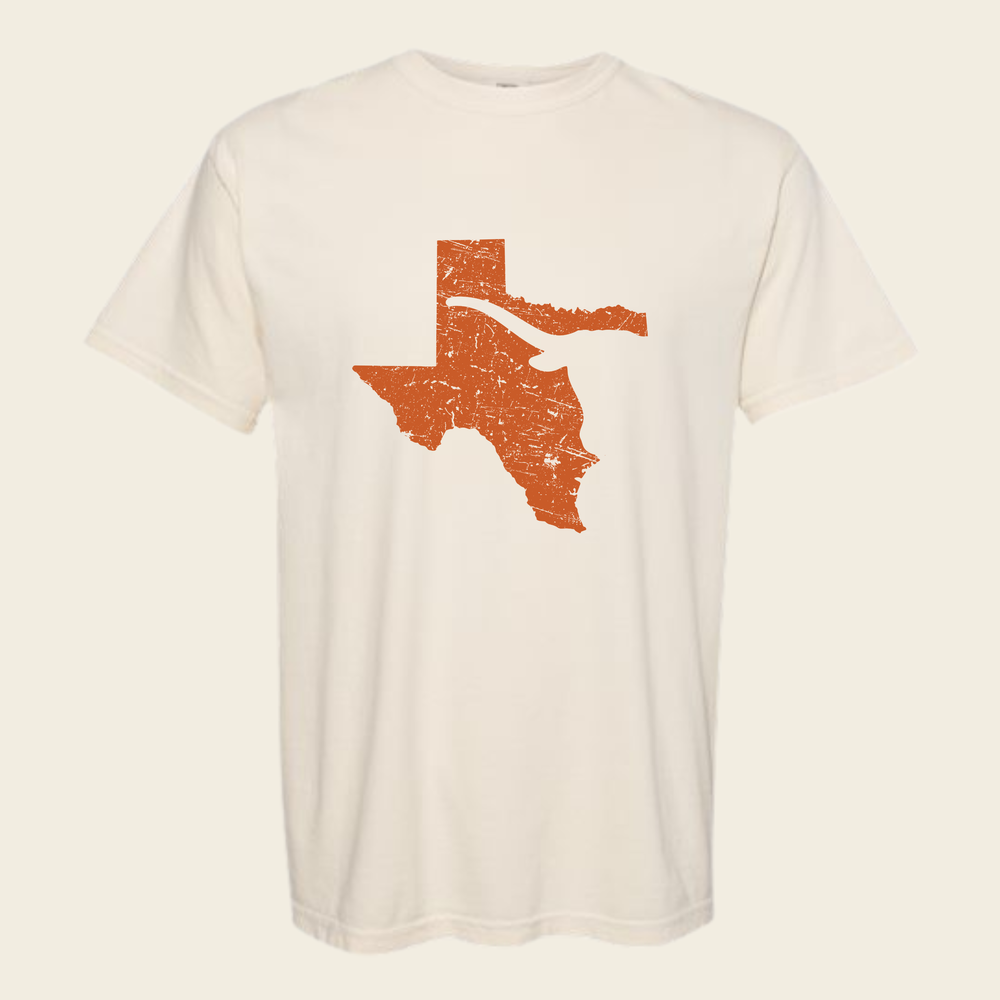
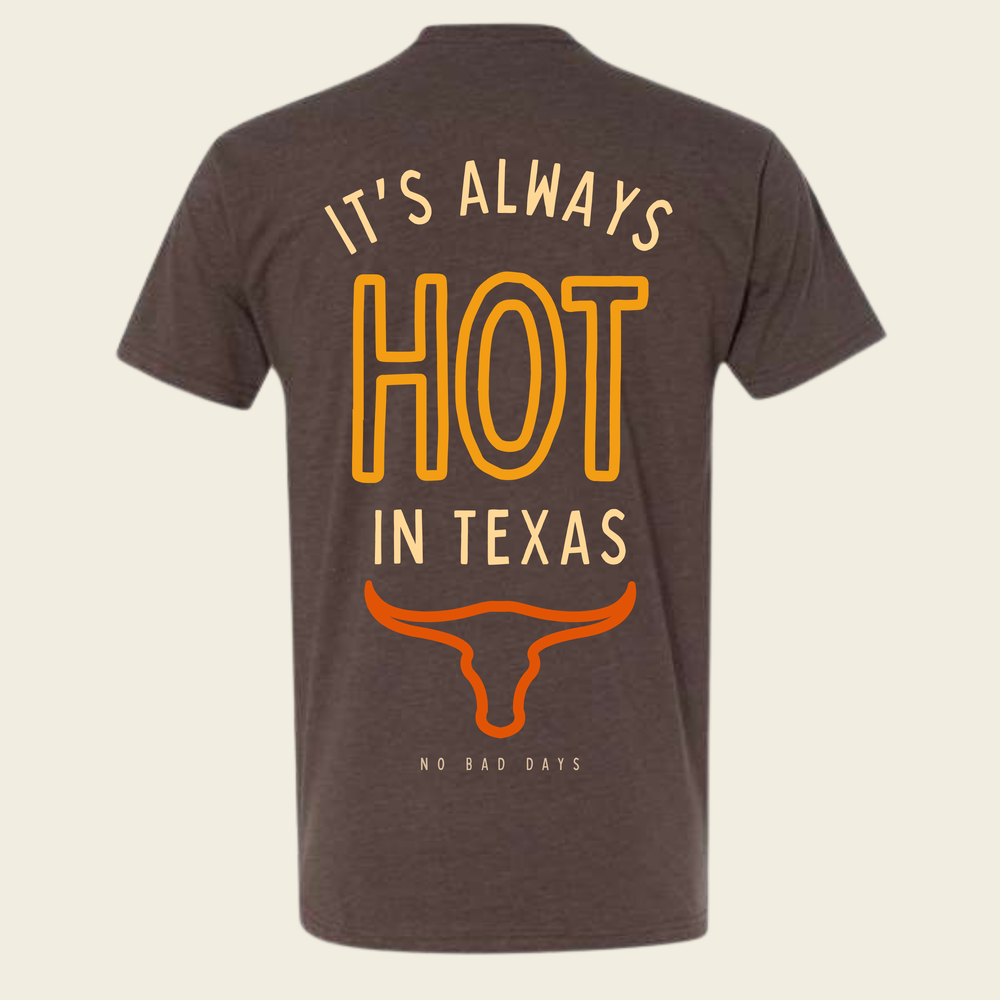
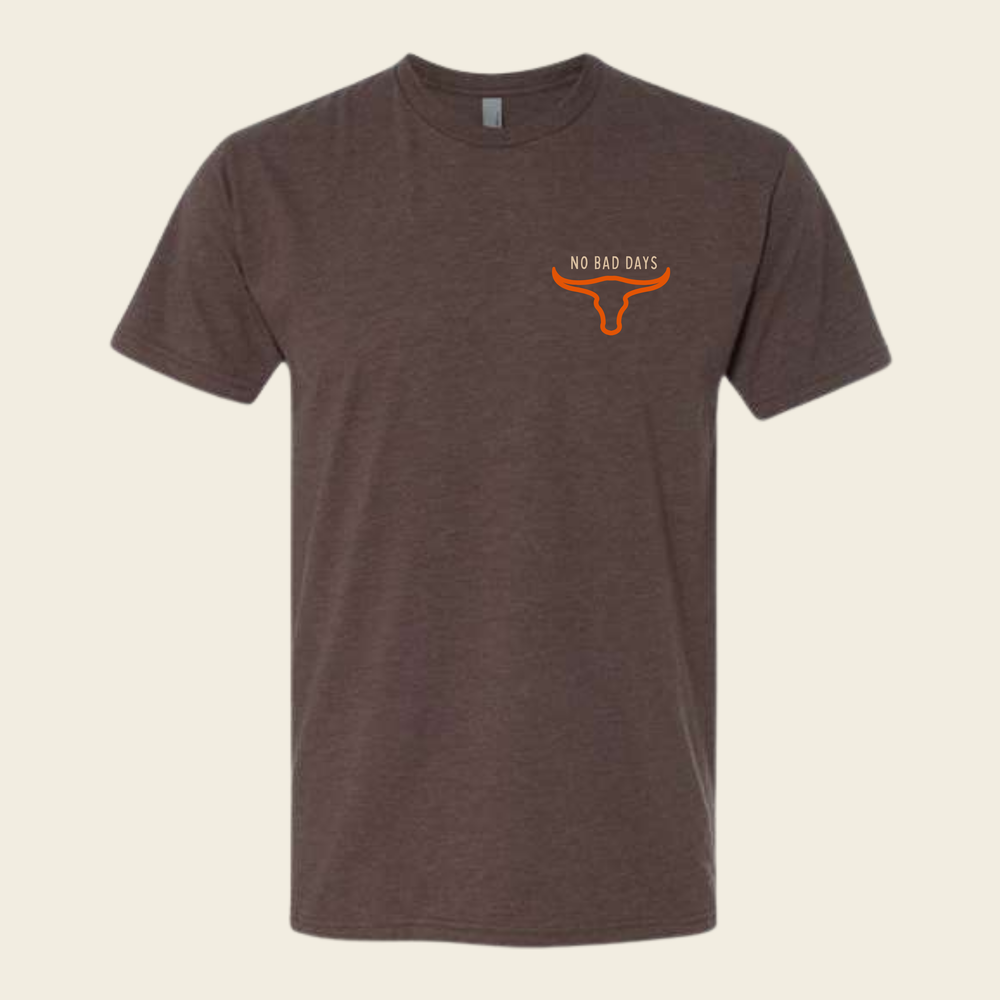
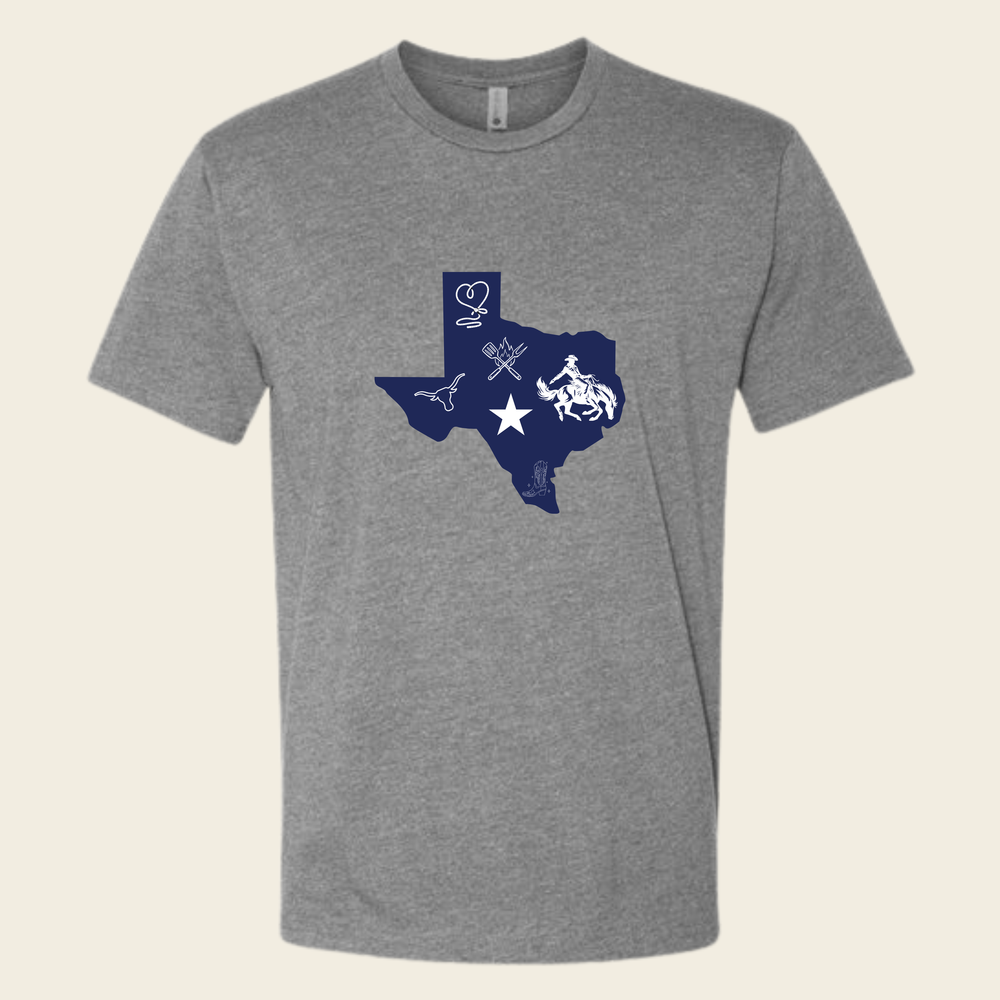
Light colors, loose clothes, a real hat with a brim, sunglasses you actually wear. Dark colors soak up sun and heavy layers hold it against you, so most of the state spends four straight months in a t-shirt and means it. If you want the shirt to say something true, the Hot in Texas Tee is not editorializing, it is reporting. There is a full run of designs in the Texas collection for people who want their summer uniform to admit where they are.
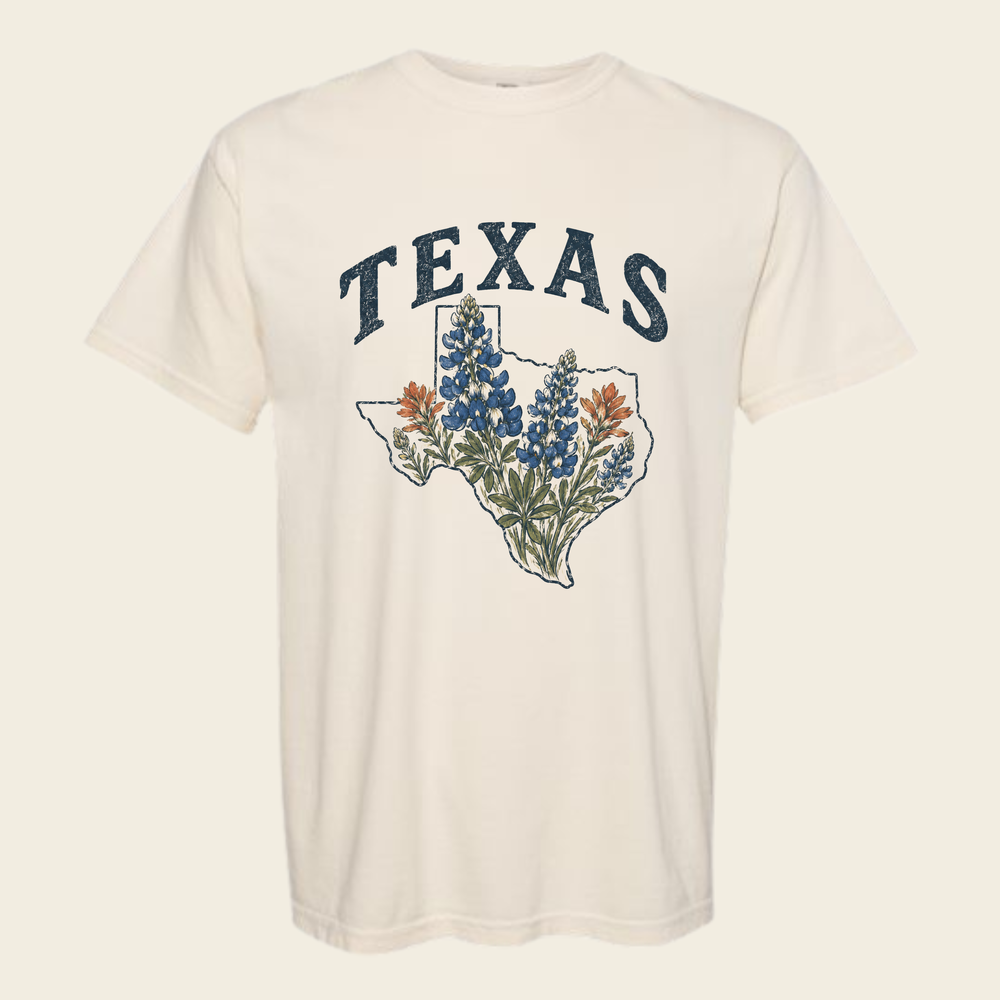
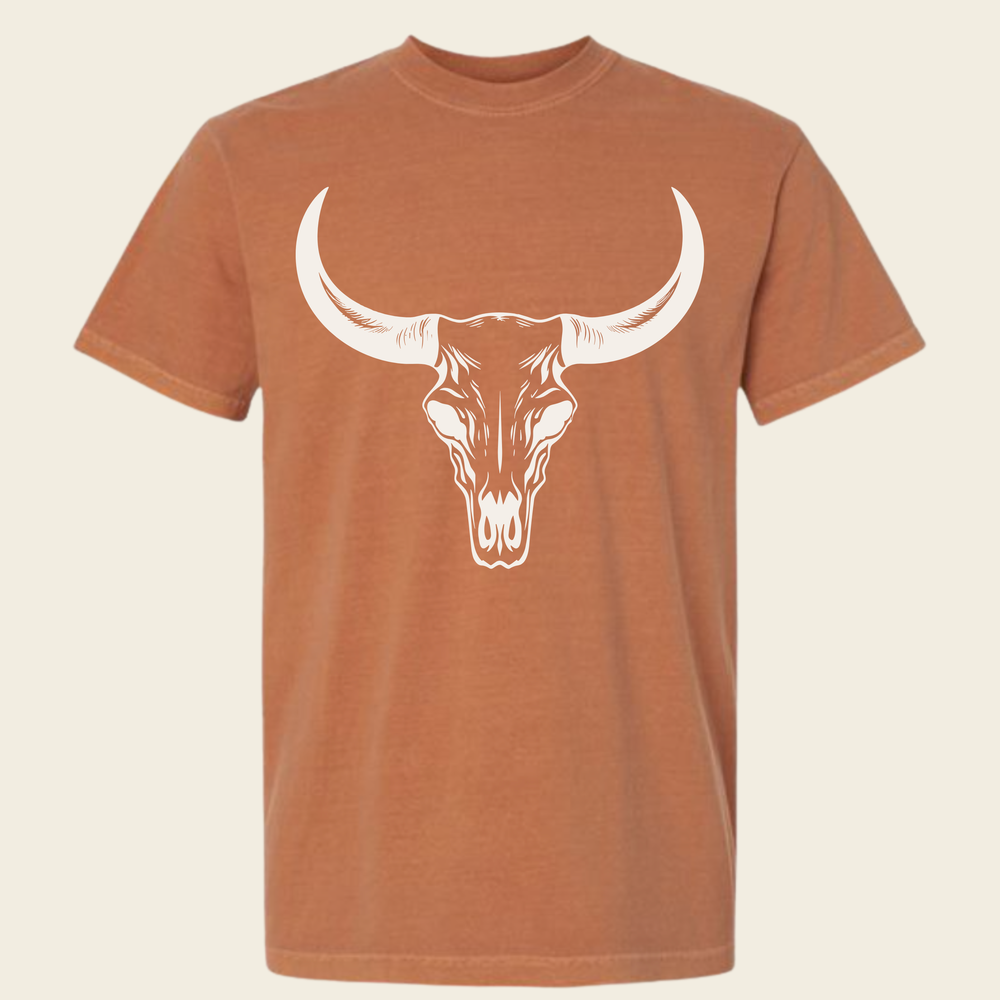
One note on timing: the bluebonnets are a spring event. By the time real summer heat arrives, the roadside blooms along the Hill Country highways are long gone, which is part of why people photograph them so obsessively in March and April. Wearing a Texas Bluebonnet Tee in August is less about the flowers and more about remembering that the state is capable of mercy. The Lone Star Longhorn Tee works year-round, since longhorns handle the heat better than the rest of us.
Remember that it ends
The trick to the mental side of a Texas summer is knowing it is finite. Sometime in the fall, a real cold front comes through, the air changes overnight, and the whole state acts like it has been let out of school. Porches fill up, football takes over, and people start saying things like "beautiful out" about weather that is merely not hostile. Every Texan carries that first front around in the back of their mind from July onward. It is coming. Drink your water, float your river, park in the shade, and wait it out.
Common questions
When does summer heat actually start and end in Texas?
Serious heat typically settles in by June and holds through September. Relief usually arrives with the first real cold front in the fall, though the exact timing varies by year and by region.
Is dry heat really better than humid heat?
It is easier to sit in, harder to survive carelessly. Dry heat in West Texas dehydrates you fast without warning, while Gulf Coast humidity is miserable but keeps you constantly aware of it. Both demand water and shade; the dry side just hides the danger better.
What is the single best way to cool off in Texas?
Spring-fed water. Places like Barton Springs, the Comal, and the Frio stay cold regardless of the air temperature, and getting your body into cold water does more than any fan or shade ever will.
Texas

Made by Land & Light — American lifestyle apparel with a sense of place and a sense of humor.
See every shirt