
Texas in the Summer: How to Survive It
A practical guide to getting through a Texas summer: when to go outside, where the cold water is, and what to eat when it's 102.
You survive a Texas summer by treating the sun like weather you schedule around, the same way northerners schedule around snow. Do your living before ten and after seven, find cold water in the middle, and accept that from June through September the outdoors is something you visit in shifts.
People who move to Texas in April think they understand. They do not. April is a bluff. The bluebonnets are out along Highway 290, the evenings are soft, and everyone is pleasant. Then sometime in late May the state flips a switch, and it stays flipped until a cold front finally limps in around October. What follows is what actually works, learned the way everyone learns it: by doing it wrong first.
Understand what you're dealing with
Texas summer is not one thing. Houston summer is a wet towel. You step outside at 7 a.m. and your glasses fog. El Paso summer is dry and honest; it hits hard in the afternoon but lets go at night. Austin and San Antonio sit in between, humid enough to matter, hot enough that triple digits stop being news by July. The Panhandle gets the heat with wind attached. Everybody argues about whose version is worse. The correct answer is Houston, but don't say that in Houston.
The other thing to understand is duration. This is not a heat wave. Heat waves end. Texas summer is a season with a beginning you notice and an end you stop believing in. By mid-August the local news anchors have run out of ways to say it's hot, and the forecast graphic is just the same number five days in a row. You stop checking. It's hot. It will be hot tomorrow.
Rearrange your day, not your life
The people who do well in a Texas summer don't fight the sun. They go around it. The state effectively runs on a split shift from June to September, and once you adopt it, the whole thing gets easier.
- Run, walk the dog, or mow before 9 a.m. The trail around Lady Bird Lake in Austin is packed at 6:30 for a reason, and the reason is physics.
- Grocery runs, errands, and anything involving a parking lot happen in the morning or not at all.
- Noon to five is for air conditioning, movie theaters, HEB, museums, or doing absolutely nothing with the blinds closed. Nothing is a legitimate activity in July.
- The evening shift starts around 7:30, when the sun quits trying so hard. Porches, patios, and little league all come back to life.
You'll notice older Texans already live this way. They've been doing it since before air conditioning, when houses had sleeping porches and everyone knew which side of the street had shade at 3 p.m. The knowledge didn't go anywhere. It just moved indoors with everyone else.
Find the cold water
Texas built its entire summer culture around rivers that stay cold no matter what the air is doing, and this is the single best survival tool the state offers. Barton Springs in Austin runs cold enough year-round that getting in is a decision you commit to. The Comal in New Braunfels and the San Marcos River are tubing rivers, meaning the activity is floating slowly past other people floating slowly while a cooler bobs between you. The Frio out near Garner State Park is the Hill Country classic, and the name is not a joke — it means cold, and it delivers.
A few notes from experience:
- Weekends on the Comal and Guadalupe in July are crowded. Go on a weekday if your schedule allows it, or go early.
- Water shoes are not optional. River rock does not care about your feet.
- Sunscreen before you get in, not after. The float is longer than you think and the sun is directly above you the whole time.
- If rivers aren't your thing, the Gulf Coast works too. Port Aransas and Galveston won't be confused with cold water, but the breeze is real and the shrimp is fresh.
Eat like it's hot, because it is
Texas summer food is its own category. Raspas — shaved ice from a roadside stand, usually in a flavor dye never found in nature — are a border-town institution worth driving for. Aguas frescas do what soda can't. A cold Topo Chico with lime has quietly become the official beverage of standing in a driveway at dusk.
Barbecue still happens in the summer, but the smart move changes: you eat it indoors, or early, and you let the pitmaster stand over the fire instead of you. Backyard grilling shifts to after sunset. Breakfast tacos remain correct at any temperature, which is one of their many virtues. And nobody will judge you for a 10 p.m. Whataburger run, because the drive-through line at 10 p.m. in July is half the town.
Respect the car
Your car in a Texas parking lot becomes an oven in about fifteen minutes, and everything in this section is learned through pain.
- The windshield sunshade is not a suggestion. The alternative is a steering wheel you cannot touch and a seatbelt buckle that brands you.
- Park facing away from the afternoon sun if you can, under a tree if you're lucky, and never leave anything that melts, including crayons, chocolate, lipstick, and candles. Especially candles.
- Keep water in the car, but know that a bottle left in a hot car tastes like the car.
- Open both front doors for thirty seconds before you get in. It looks odd. Do it anyway.
Dress for the long haul
Summer in Texas is a light-colors, loose-everything, hat-always situation. Dark clothes in August are a choice you make once. A good hat does more than sunscreen alone, and sunglasses stop being an accessory and start being equipment somewhere around June 15.
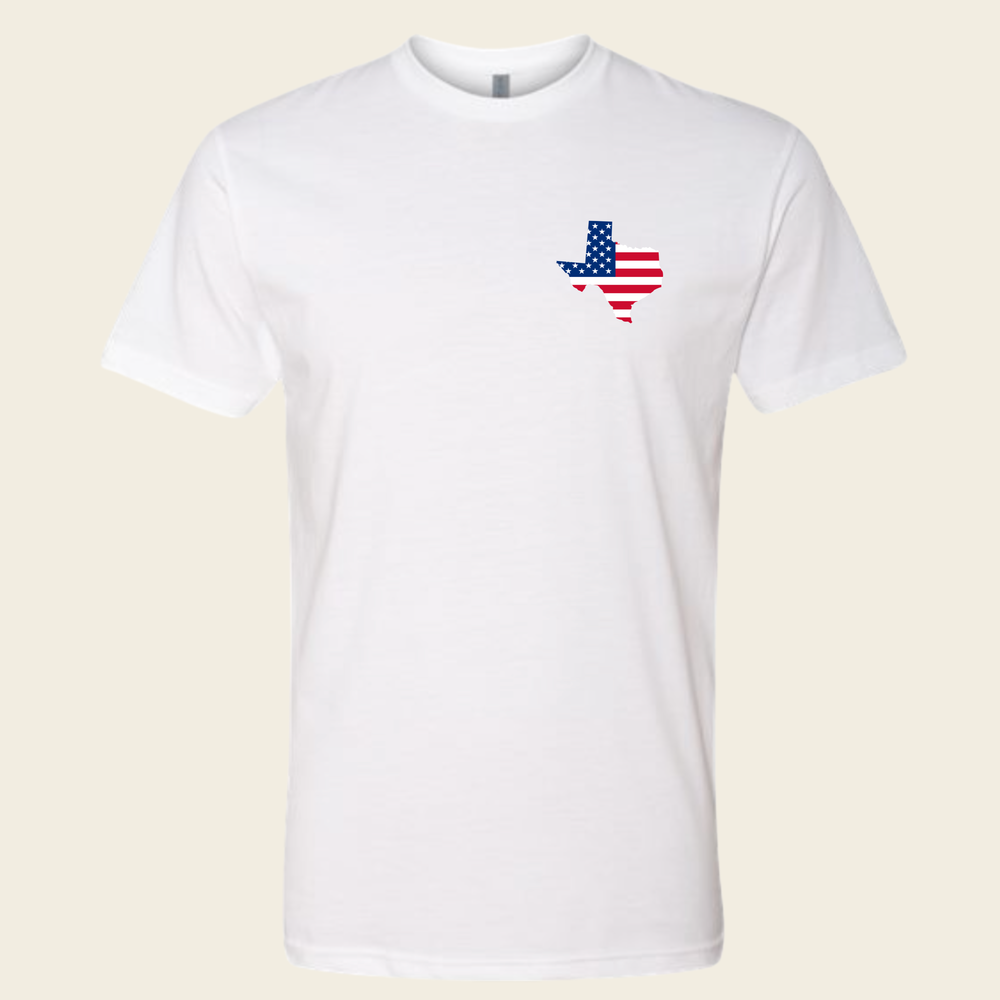
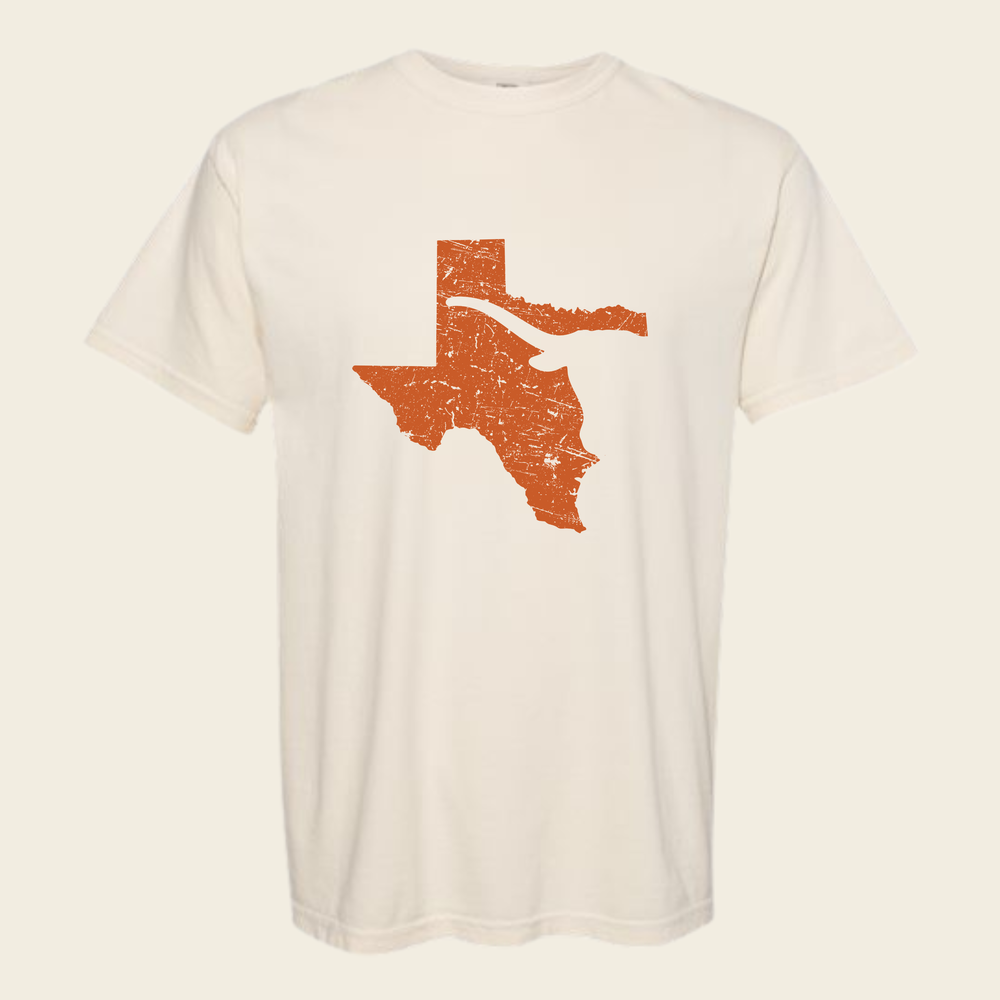
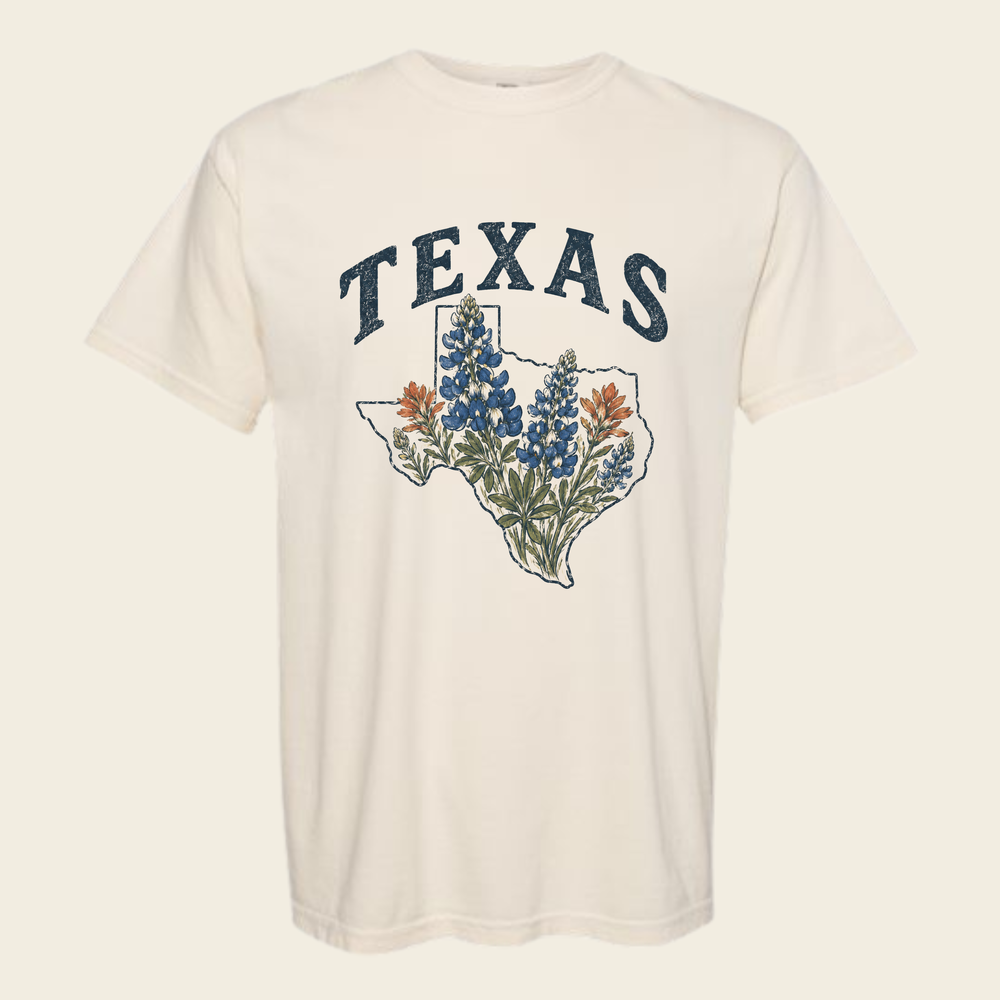
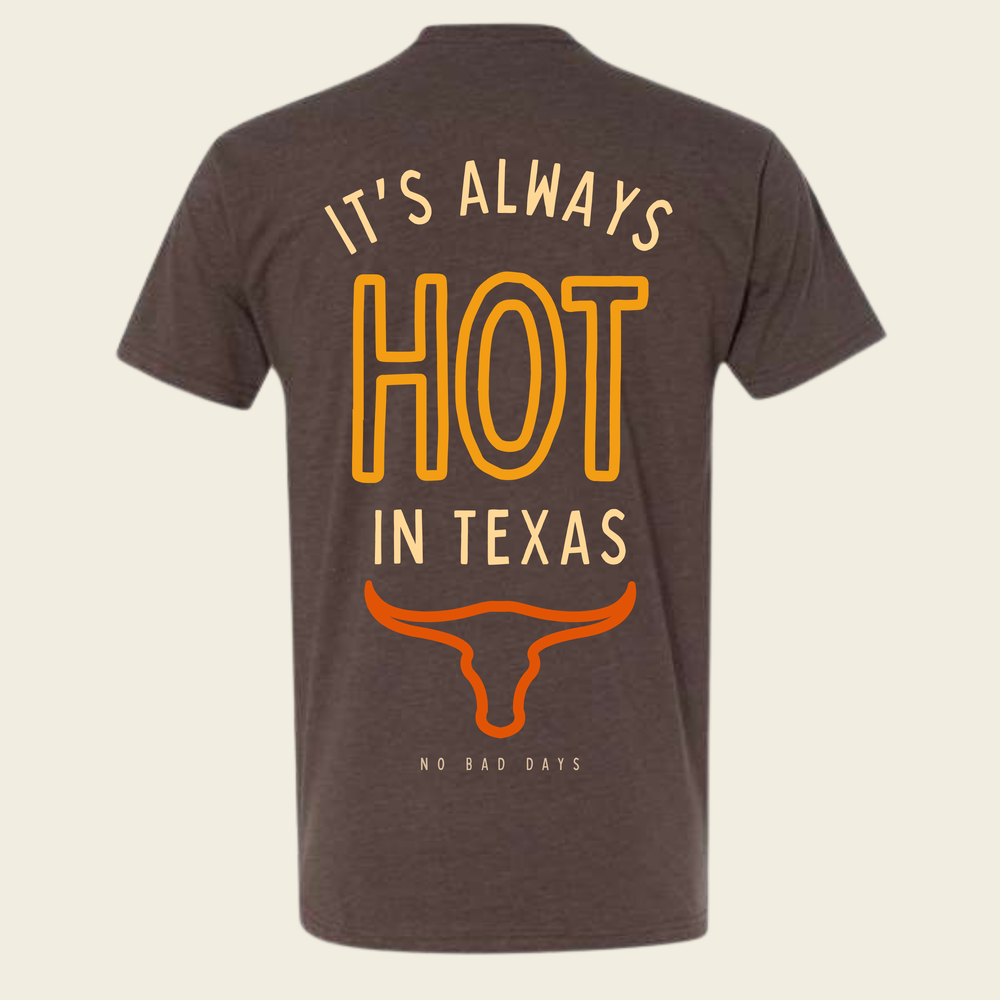
And since this is a state that likes to announce itself, Texans tend to wear the heat like a credential. Our Hot in Texas Tee exists for exactly this reason — it's less a complaint than a statement of fact. If you'd rather commemorate the good months, the Texas Bluebonnet Tee nods to that brief, perfect window in spring when the whole Hill Country pretends summer isn't coming. The rest of the Texas collection covers the state's other obsessions, heat included.
Know when the end is coming
Here is the thing nobody tells transplants: the end of a Texas summer is a rumor long before it's a fact. September looks like fall on the calendar and feels like August outside. High school football starts in heat that would cancel games elsewhere. Then one morning in October you walk outside and the air has changed — not cold, just no longer hostile — and the entire state goes a little giddy. Patios fill. Everyone pretends 85 degrees is sweater weather. It's earned.
Until then, the rules hold. Morning and evening shifts. Cold rivers. Shade like it's currency. Raspas on the drive home. The heat is not going to beat you if you stop pretending it isn't there.
Common questions
When does summer actually start and end in Texas?
Practically speaking, the heat arrives sometime in late May or early June and doesn't reliably break until October. September is still summer no matter what the calendar says, especially in Houston and San Antonio.
Is it a dry heat or a humid heat?
Depends where you are. East Texas and the Gulf Coast are humid, West Texas and El Paso are dry, and the middle of the state splits the difference. Humid heat feels worse at the same temperature, which is why Houstonians have strong opinions.
What's the best way to cool off outdoors?
Spring-fed water. Barton Springs, the Comal, the San Marcos, and the Frio all run cold through the hottest months. Go early or on a weekday, wear water shoes, and put sunscreen on before you float.
Texas
Made by Land & Light — American lifestyle apparel with a sense of place and a sense of humor.
See every shirt