
Tees, and the Shirts That Came Out of It
How our tee designs get made: dark skies, campground mornings, Texas roads, and the rule that every graphic has to earn its two seconds.
Tees are where Land & Light started, and they're still where most of the ideas end up. A graphic tee is a small space, so everything that goes on one has to earn it — a real place, a real habit, or a joke that survives a second reading.
This is a walk through the full tees collection and the thinking behind the designs in it. Not the shirts themselves — the stuff that got printed on them, and why.
A shirt is a short sentence
A graphic tee gets about two seconds. That's how long the person behind you in line at the gas station looks at your chest before deciding whether to say something. Two seconds at the trailhead. Two seconds in the hardware store.
So the design has to work like a short sentence. Specific beats clever. "I like the outdoors" is not a sentence anyone needs to read. "I drove three hours past the last streetlight to see the sky do the thing" — that's a sentence. It just has to fit on cotton.
Every design in the collection started as one of those sentences. Some are about places. Some are about habits. A few are jokes that held up after we slept on them.
Where the dark still works
Most people in this country have never seen the Milky Way. Not because it left — because the glow from town swallows it. You have to drive out from under the dome of light, and in most of the East that's a real drive.
West Texas still has it. So does the high desert across Nevada, the mountain country in Idaho, northern Maine, and a stretch of rural Pennsylvania where people show up with red flashlights and lawn chairs on new-moon nights specifically to look up. The routine is the same everywhere: kill the headlights, let your eyes adjust for twenty minutes, and try not to say anything dumb when the sky opens up.
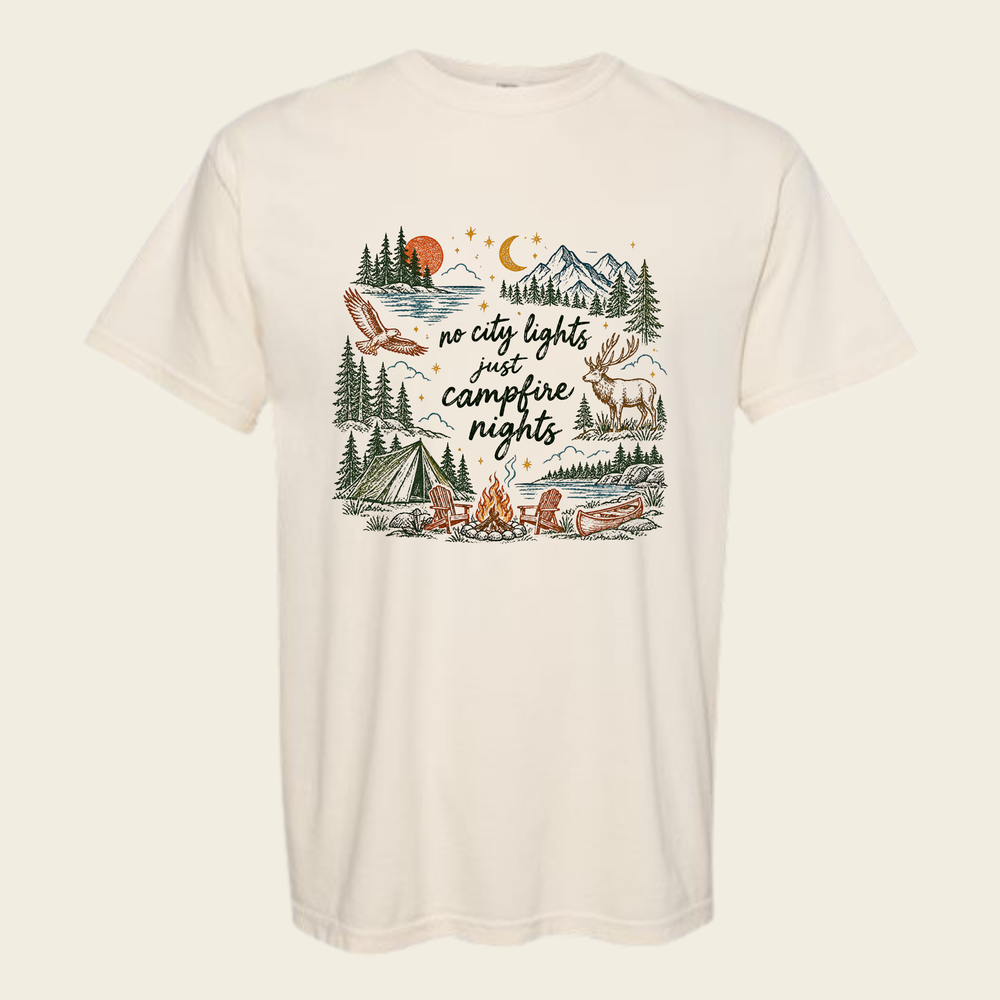
The No City Lights Tee came out of that. It's for the people who check the moon phase before they check the weather, and who consider a streetlight at a campground a personal insult.
The parts of camping worth printing
Camping is mostly small scenes. Nobody remembers the middle of the hike. They remember the specific stuff:
- The hiss of a camp stove before the first coffee, when it's still cold enough to see your breath.
- Driving the campground loop road twice, judging every site, then taking the first one you saw.
- Moths committing to the lantern.
- Tent stakes hitting rock two inches down, every time, at every site, in every state.
- The one camp chair that's been broken for three seasons and still makes the trip.
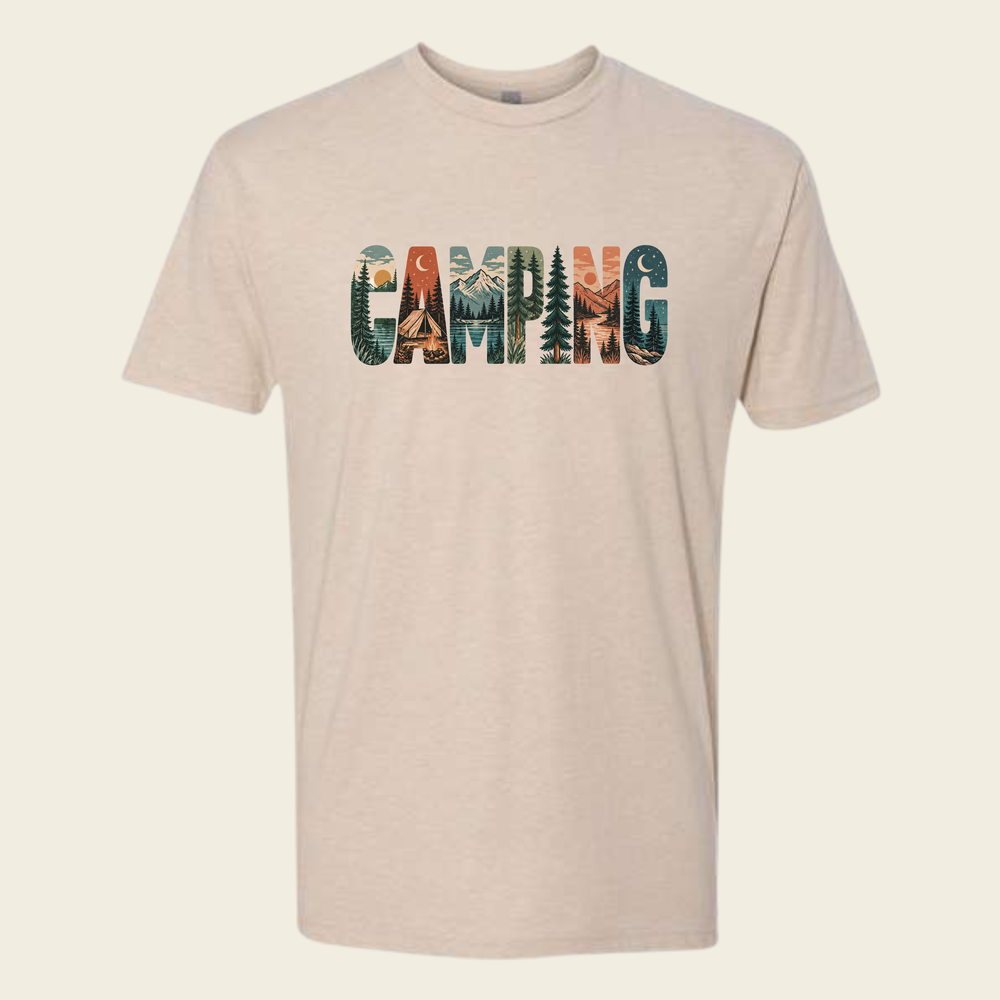
The Camping Scenes Tee is built from those moments. Not the postcard version of camping — the actual version, where half the trip is fiddling with gear and the other half is worth it.
Texas gets its own shirt
Some states are quiet about themselves. Texas is not one of them, and honestly it has the material. Bluebonnets along the roadside in spring, because the highway department plants wildflowers on purpose. Farm-to-market roads that go on long enough to make you check the gas gauge. Buc-ee's stops that take forty-five minutes even when you only needed the bathroom. Friday night football in towns where the stadium is the biggest building for miles. Brisket arguments that end friendships.
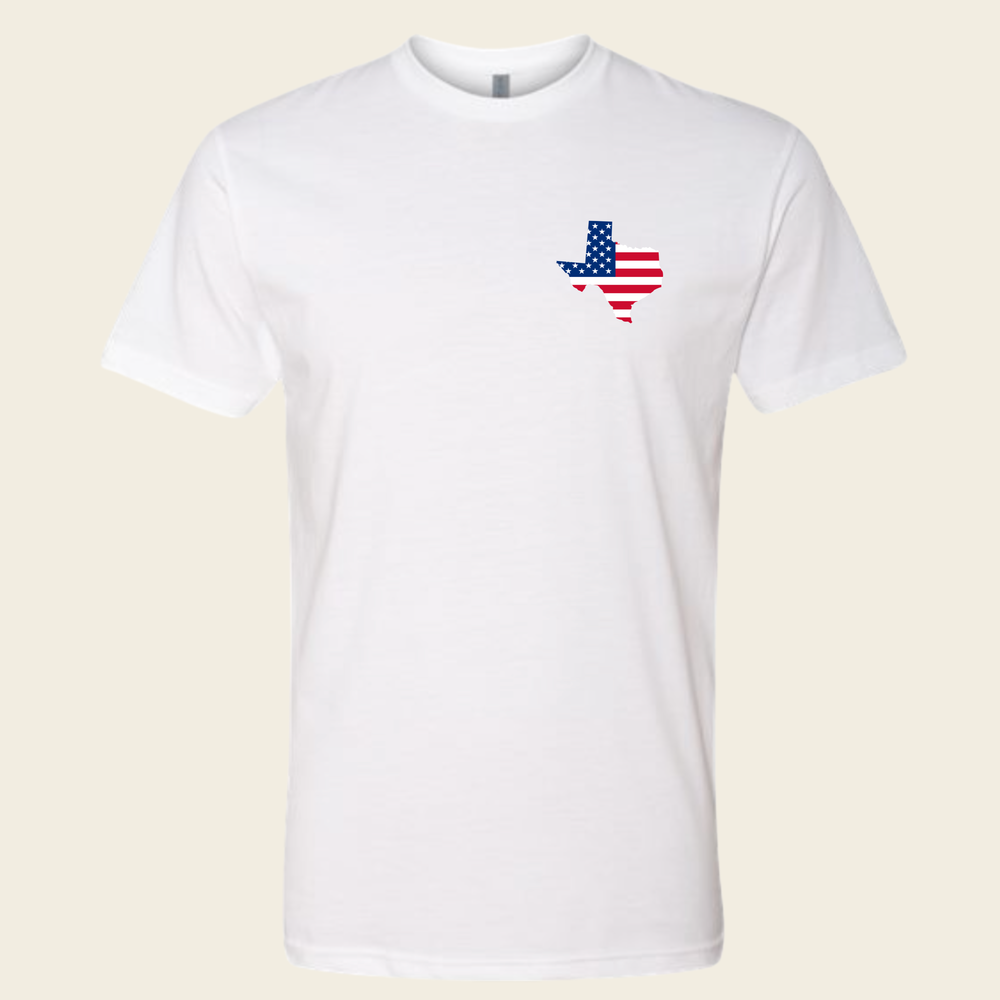
It's also the only state that was its own country first, and it has never stopped acting like it. Texans wear the state outline the way other people wear their college. The Texas State Pride Tee exists because pretending Texas would be satisfied sharing a generic "state pride" design was never realistic.
Two designs that say it plainly
A couple of the tees don't lean on a place. They lean on a sentiment, said flat.
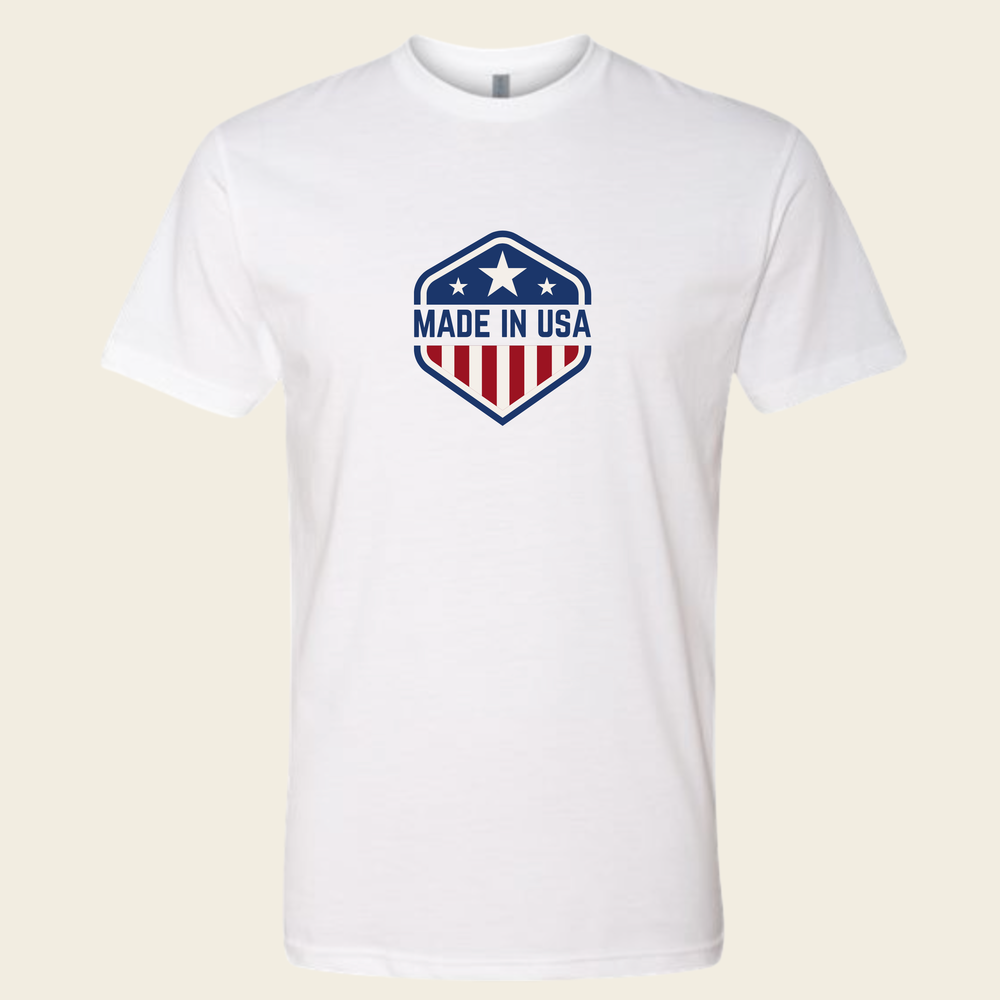
The Made in USA Tee is the plain version — a phrase people have strong feelings about, printed without a wink. It reads differently in a machine shop parking lot than it does at a farmers market, and that's part of the appeal. Same three words, and everyone brings their own weight to them.
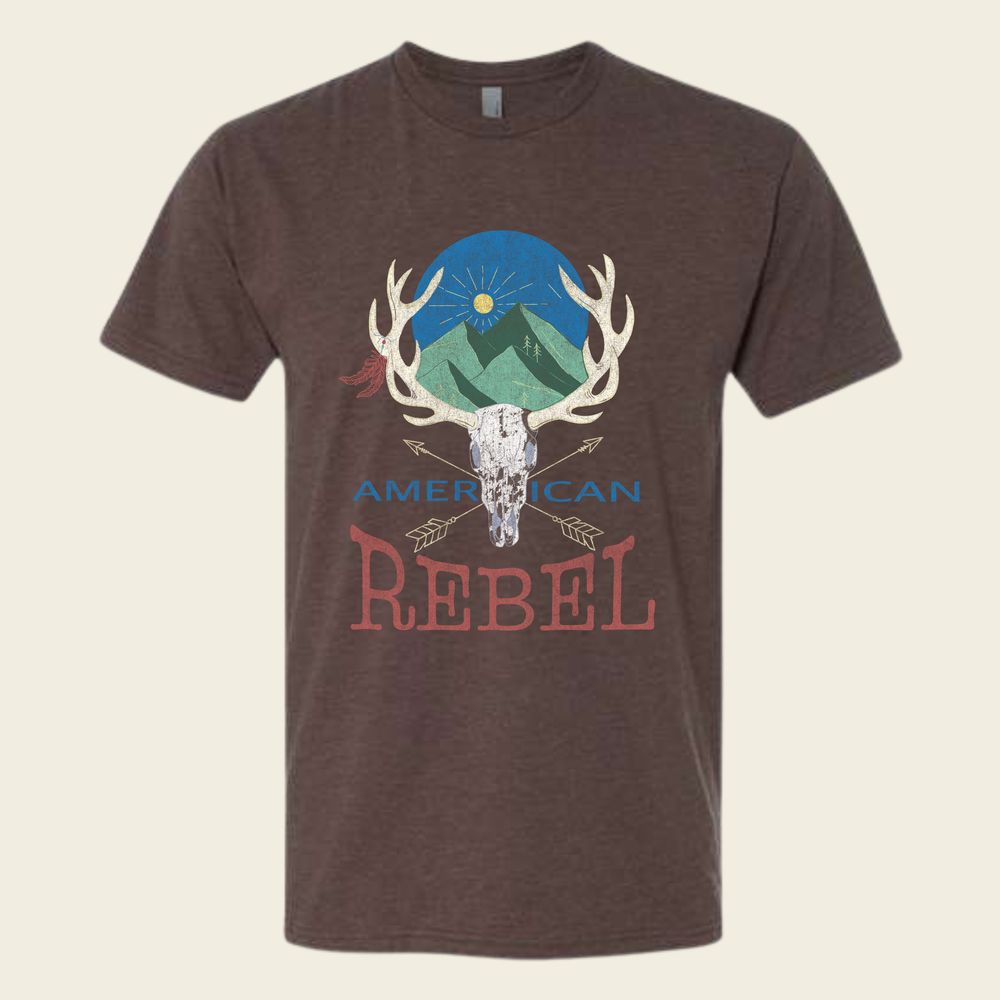
The American Rebel Tee is the other flavor. There's a streak in this country of not enjoying being told what to do, and it shows up everywhere — in the guy who ignores the "trail closed" sign, in the neighbor who mows his lawn at 7 a.m. because the HOA said not to. The shirt is for that streak. It doesn't need explaining, which is the point.
How a design makes the cut
Plenty of ideas don't survive. The ones that end up in the tees collection pass three tests:
- The map test. If the design claims a place, you should be able to point at that place. Vague "mountain vibes" art fails this one constantly.
- The local test. Would you wear it standing next to someone who's actually from there? A Texas shirt has to hold up in Texas. A camping joke has to land with someone whose tent has actual miles on it.
- The second-read test. Funny at 11 p.m. is easy. If the joke is still funny the next morning, it goes on a shirt. If it isn't, it goes in a drawer with the others.
It's not a complicated system. It just kills most ideas, which is what it's for.
Why tees, and not something else
You can put a design on almost anything now. Mugs, hats, blankets, phone cases. But the tee is still the format that matters, because it's the one you wear out into the world. A mug talks to your kitchen. A tee talks to the gas station, the trailhead, the bleachers, and everyone who passes you in the airport.
That's why the tees came first and why they still get the most attention. Every design starts by asking what it would say to a stranger in two seconds. If the answer is nothing, it doesn't get printed. If the answer is something true about a place, a habit, or a joke worth repeating, it does.
Common questions
Where can you still see the Milky Way in the United States?
You need to get well away from city glow — West Texas around Big Bend, the high desert in Nevada, rural Pennsylvania, northern Maine, and much of the mountain West still have genuinely dark skies. Go near a new moon and give your eyes at least twenty minutes to adjust with no white light.
What makes a graphic tee worth wearing?
Specificity. A design that names a real place, a real habit, or lands a joke on the second read says something in the two seconds anyone actually looks at it. Vague designs say nothing and get treated accordingly.
Why do Texans wear their state more than anyone else?
Texas was an independent country before it was a state, and the attitude stuck. Between the flag, the outline, the food, and the roads, the state comes with more built-in material than most, and Texans use all of it.
Tees
Made by Land & Light — American lifestyle apparel with a sense of place and a sense of humor.
See every shirt