
Golf for People Who Are Bad at Golf
A field guide to enjoying golf when you shoot 105: nine holes, muni courses, cheap balls, and the rules worth ignoring.
Golf for people who are bad at golf means playing nine holes at a municipal course, using found balls, taking mulligans without apology, and picking up when a hole goes sideways. The game gets good the moment you stop keeping honest score and start keeping honest company.
Most golf advice assumes you want to get better. This assumes you want to keep playing. Those are different projects, and the second one is easier and, frankly, more fun. Here is how to build a golf life around a swing that will never be featured in an instructional video.
Play nine holes, not eighteen
Eighteen holes of bad golf is four and a half hours of evidence against yourself. Nine holes is a pleasant walk with a problem attached. Most municipal courses sell a nine-hole rate, and twilight rates after work exist specifically for people like you. You tee off at 5:30, you finish as the light goes flat and gold, and the last two holes are the best part because nobody is behind you and nothing counts.
Nine holes also fixes the pacing problem. Bad golfers hit more shots, which takes more time, which creates guilt, which creates rushing, which creates worse shots. Cut the round in half and the whole spiral loosens. If nine feels good, play the back nine too. If it doesn't, you're home by seven.
The muni is your home course
The municipal course is the natural habitat of the bad golfer, and it is one of the better American institutions going. Cracked cart paths, a starter who has seen everything, a snack window that sells a hot dog and a domestic beer, and a first tee where nobody is watching your swing because they are worried about their own.
Private clubs and resort courses punish bad golf with forced carries, fast greens, and the sense that someone is judging you. The muni forgives. The fairways are wide because the mowing budget is what it is. The rough is playable because rough costs money. The greens are slow, which means your putts stop near the hole instead of rolling off it.
- Learn the starter's name. It gets you out on busy Saturdays.
- Walk if the course allows it. Bad golf in a cart is just driving with interruptions.
- Find the par-3 or executive course in your area. Short courses are where bad golfers become okay golfers, if that ever interests you.
Rules worth breaking, and one worth keeping
The official rules of golf were written for people playing for money and trophies. You are playing for the walk and the one good shot per round that keeps you coming back. Adjust accordingly.
- The breakfast ball. Your first tee shot of the day doesn't count. Everyone at the muni already knows this.
- Double par pickup. If you're lying eight on a par four, pick up, write down eight, and walk. The hole is over. Nobody needs to see the rest.
- Gimmes inside the leather. Short putts are conceded among friends. Grinding over an eighteen-inch putt in a casual round is a personality flaw.
- Improve your lie in your own fairway divots. You did nothing wrong. Roll it over.
The one rule to keep: play at a reasonable pace and let faster groups through. You can shoot 110 and still be the most welcome person on the course if you wave people past on the fifth tee. Slow play is the only sin at the muni. Bad play is just Tuesday.
What to actually practice, if anything
You do not need lessons on your driver. You need thirty minutes at the practice green, which is free at almost every course in the country. Here's the honest math of bad golf: the difference between shooting 108 and shooting 98 is almost entirely three-putts and chunked chips. Nobody bad at golf loses ten strokes off the tee. They lose them from forty yards and in.
So if you're going to practice at all, do this: bring one wedge and a putter to the practice green, chip to a hole, then putt out. Repeat until bored. That's it. That's the whole curriculum. Your driver will remain a mystery, and that's fine, because a bad drive followed by a decent chip and two putts is a bogey, and bogey golf is respectable golf by any human standard.
The scramble is your format
If you get invited to a charity scramble, a work outing, or a member-guest where your buddy needs a fourth, say yes. The scramble is the format built for the bad golfer. Everyone hits, the team plays the best ball, and your job is simple: hit one useful shot every few holes and be pleasant the rest of the time. A bad golfer who sinks one long putt in a scramble is a hero. A bad golfer who keeps the cart cooler organized is a legend.
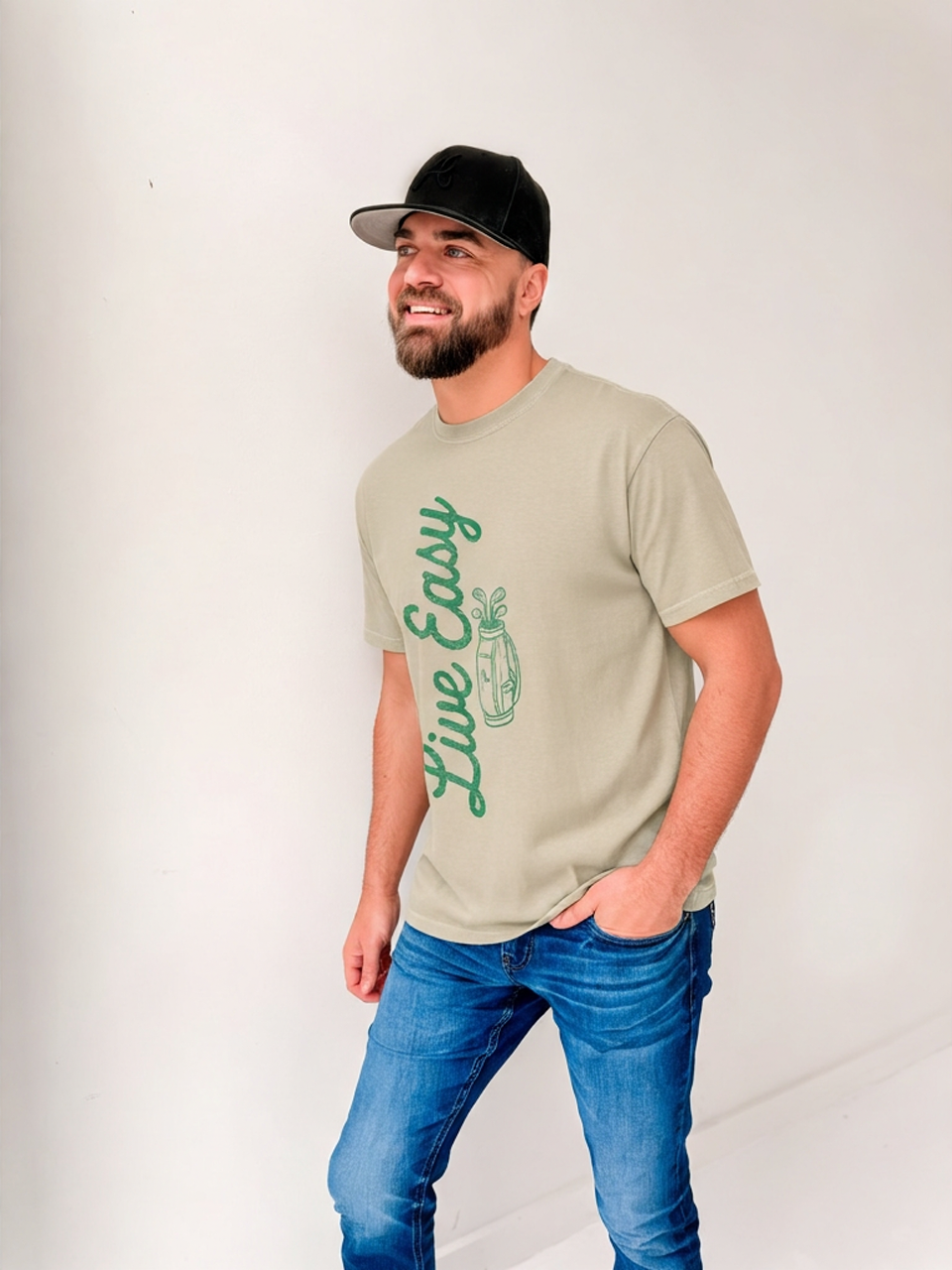
Dress code note: most scrambles want a collar, but the parking lot before and the bar after are a different matter. This is roughly the entire reason the Live Easy Golf Tee exists — a shirt for the version of golf where the score is a rumor and the beer cart matters more than the yardage book.
Gear for people who lose golf balls
Never buy new premium balls. You will donate them to the pond on the third hole within a week. The bad golfer's supply chain looks like this:
- Used balls. Sold by the bag at most pro shops and sporting goods stores. A scuffed ball flies fine, and you will not notice the difference. Be honest.
- The woods themselves. Five minutes of searching along a tree line usually nets you more balls than you lost. This is the closest golf comes to foraging.
- Used clubs. A ten-year-old set of irons from a secondhand shop plays the same for you as this year's model. The technology gap matters to people who hit the center of the face. That is not you yet.
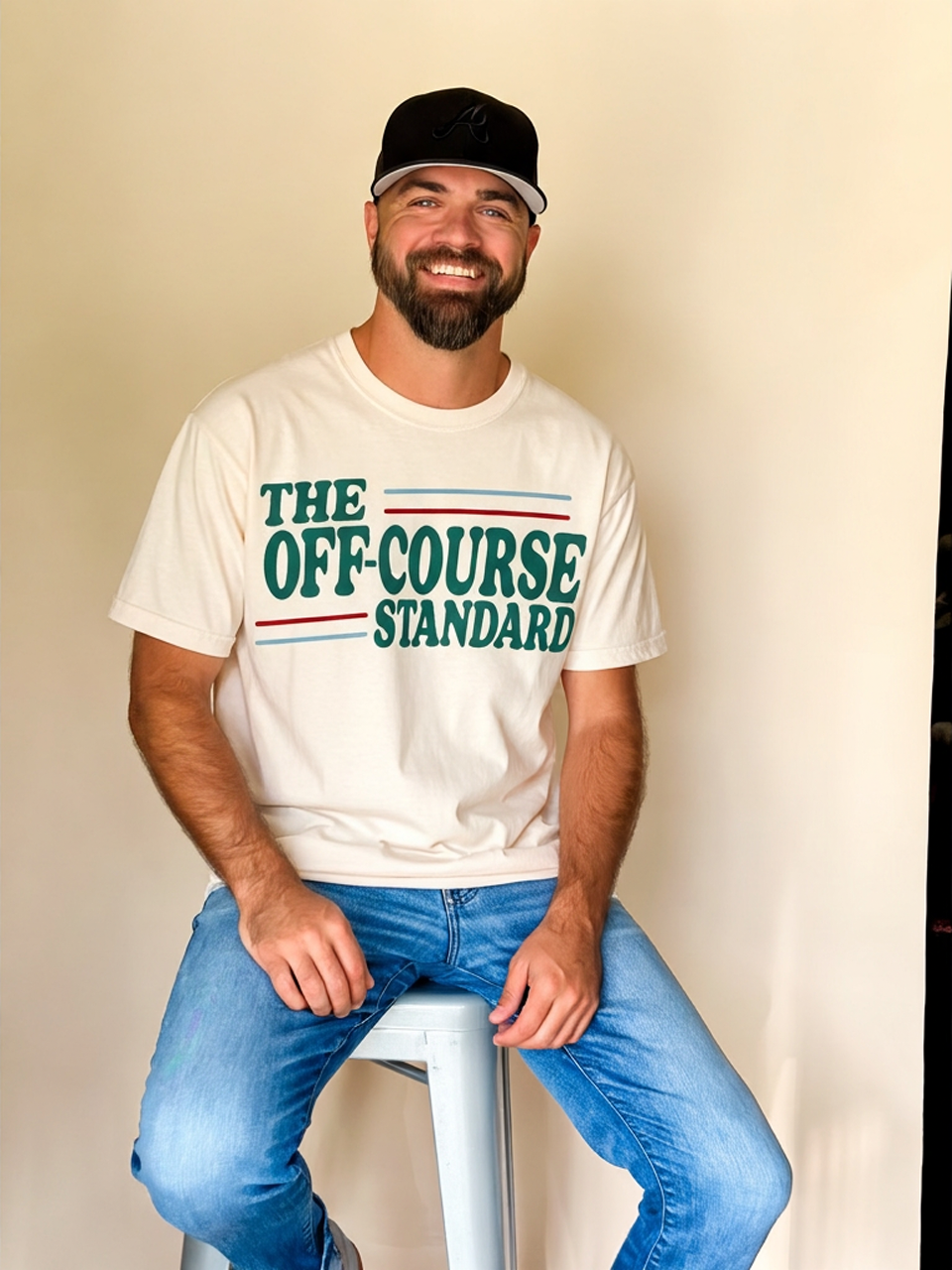
Spend the savings on the stuff that actually improves the day: sunscreen, a good hat, decent shoes for walking, and something to wear to the nineteenth hole. Land & Light keeps a shelf of that last category in the Off the Clock collection — shirts for the hours golf is supposed to be about. The Off-Course Standard Tee is named for exactly this situation: your best golf happens in the parking lot, at the grill, and on the drive home, and there's no shame in dressing for your strengths.
The real point of it
Golf is one of the few remaining excuses for an American adult to spend three unscheduled hours outdoors with friends, phones in the bag, walking on grass. Bad golfers get all of that. The birds don't know your handicap. The sunset over the ninth fairway looks the same whether you shot 79 or 112. Good golfers are out there grinding, checking yardages, muttering. You're out there having a walk with a stick and a story to tell later.
Keep the tee time. Skip the lessons. Play nine.
Common questions
Is it okay to play golf if I'm really bad?
Yes, as long as you keep pace and let faster groups play through. Courses, especially municipal ones, are full of bad golfers, and nobody is watching your swing. Slow play is the only thing anyone actually notices.
Should a bad golfer take lessons?
Only if you want to. If you'd rather just enjoy the game, spend your time chipping and putting on the free practice green instead. Short game is where bad golfers lose most of their strokes, and it's the cheapest thing to fix.
What should a beginner buy to start golfing?
Used clubs, used balls by the bag, a glove, and sunscreen. Skip new premium balls entirely until you stop losing three a round. Most courses rent or lend clubs if you want to try the game before buying anything.
Off the Clock


Made by Land & Light — American lifestyle apparel with a sense of place and a sense of humor.
See every shirt