
Campfire Stories Worth Retelling
The campfire stories that survive are short, local, and half true. Here's what makes one worth telling twice, with a few American legends that earn it.
A campfire story worth retelling is short, local, and just plausible enough that somebody checks over their shoulder. The best ones aren't invented on the spot; they're borrowed from the place you're camping and told like you half believe them.
That's the whole trick. Not the flashlight under the chin, not the fake scream at the end. A good campfire story does its work in the pause after you stop talking, when the fire pops and everyone pretends they weren't listening that hard.
Why most campfire stories die
Most campfire stories fail for the same reason most jokes fail: the teller cares more about the ending than the setup. The hook-handed man on lovers' lane has been told so many times that everyone in the circle can recite the last line with you. There's no tension in a story the audience finishes for you.
The stories that survive have three things in common. They're anchored to a real place, ideally one you can point at in the dark. They contain one detail that's verifiably true, which makes the rest feel true by association. And they end before the audience wants them to. A story that runs long gives people time to think, and thinking is the enemy of a good scare.
The other reason stories die is scope. A story about an ancient curse on all mankind is boring. A story about the trail you hiked in on, and the guy who was on it two winters ago, is not. Small is scary. Big is a movie pitch.
Regional legends that earn their keep
America is generous with local monsters, and the local ones are always better than the imported ones. Tell the story that belongs to the ground you're sitting on. A few that have held up for generations:
- The Jersey Devil. The Pine Barrens of southern New Jersey are a genuinely strange landscape — sandy roads, stunted pines, towns that emptied out and never refilled. The legend of a winged thing born to a woman named Leeds has been scaring people out there for a very long time, and the Barrens do half the storytelling for you.
- The Mothman. Point Pleasant, West Virginia, keeps this one alive, and the town leans into it. A tall figure with red eyes seen near an old munitions area. What makes it work as a campfire story is that the sightings were reported by ordinary people who didn't want the attention.
- The Hodag. Rhinelander, Wisconsin's horned, spike-backed beast started as a lumberjack tall tale and became the town mascot. It's the rare monster story that's funny on purpose, which makes it the right one for a fire with kids around.
- The Bear Lake Monster. Told along the Utah–Idaho line for generations. Any large, cold, turquoise lake at dusk will sell this story without much help from you.
- Champ. Lake Champlain's resident serpent, claimed by both Vermont and New York, which tells you something about how much people want it to be real.
You don't have to believe any of these. You just have to tell them the way a local would: flatly, with a shrug, like it's common knowledge and you're a little surprised the listener hasn't heard.
The true story beats the ghost story
Ask anyone who camps a lot for their best fire story and you won't get a monster. You'll get the night the food bag was hung wrong. The wrong turn that added six miles. The thunderstorm that arrived at 2 a.m. with the tent fly still in the truck. True stories have texture that invented ones don't — the specific brand of the failed headlamp, the exact wrong thing somebody said.
These stories also improve with retelling in a way scary stories don't. A ghost story gets stale. A story about your brother-in-law and the raccoon gets better every year, because the audience starts requesting their favorite parts. If your family or your camping group has one of these, it's worth more than anything in a book. Protect it. Tell it the same way every time, with the same pauses, until the pauses become part of the story.
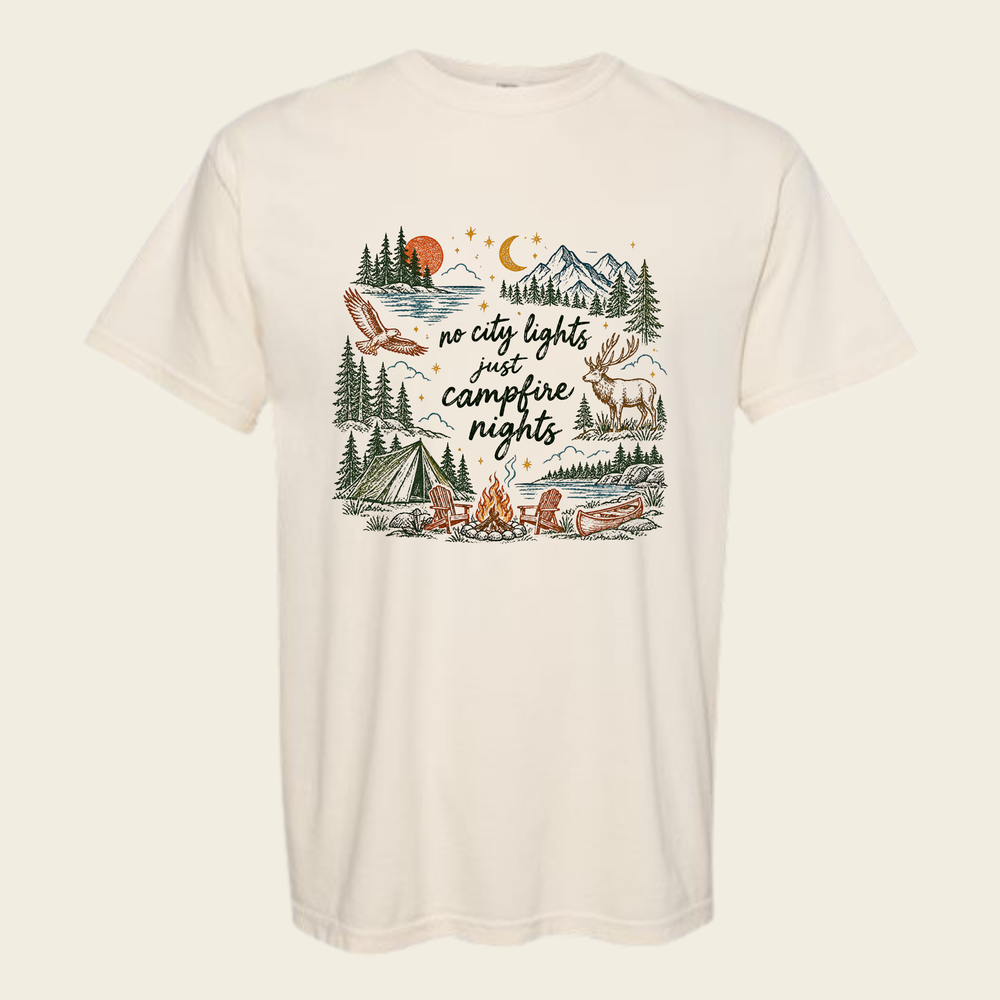
The dark helps here too. Away from town, with no glow on the horizon — the kind of night the No City Lights Tee is about — even a story about a raccoon has stakes. Real darkness makes everything ten percent more believable, which is exactly the margin a decent story needs.
How to actually tell one
Telling is a skill, and it's mostly restraint.
- Start bored. Open like you're mentioning something in passing. "You know that pull-off about a mile back?" is a better first line than anything dramatic.
- Use real names. Real roads, real trailheads, real towns. If you're camping near one, use it.
- One strange detail, not five. A single wrong thing — a light where there shouldn't be one, footprints that stop — is scarier than a parade of them.
- Slow down at the end, don't speed up. Amateurs rush the finish. Let the last line land quietly and then poke the fire like you're done thinking about it.
- Never explain. The second you explain what it was, the story is over and so is the fear. "We packed up early the next morning" is a complete ending.
And know your audience. A circle of ten-year-olds needs the Hodag, not the hitchhiker. Save the quiet, unresolved ones for after they've gone to the tent.
Building a repertoire
Three stories is a repertoire. One local legend for wherever you camp most, one true story from your own trips, and one quiet, unexplained one for the last hour of the fire. Learn them well enough that you're not remembering them, just telling them.
The best sources are unglamorous: the person at the local bait shop, historical markers on the drive in, whoever's been camping that area longest. Every region has its own inventory — the Ozarks, the Adirondacks, the North Woods, the desert Southwest all carry different stories because they're different places with different fears. Cold places produce stories about being caught out. Deserts produce stories about things seen at a distance. Match the story to the landscape and it does most of the work.
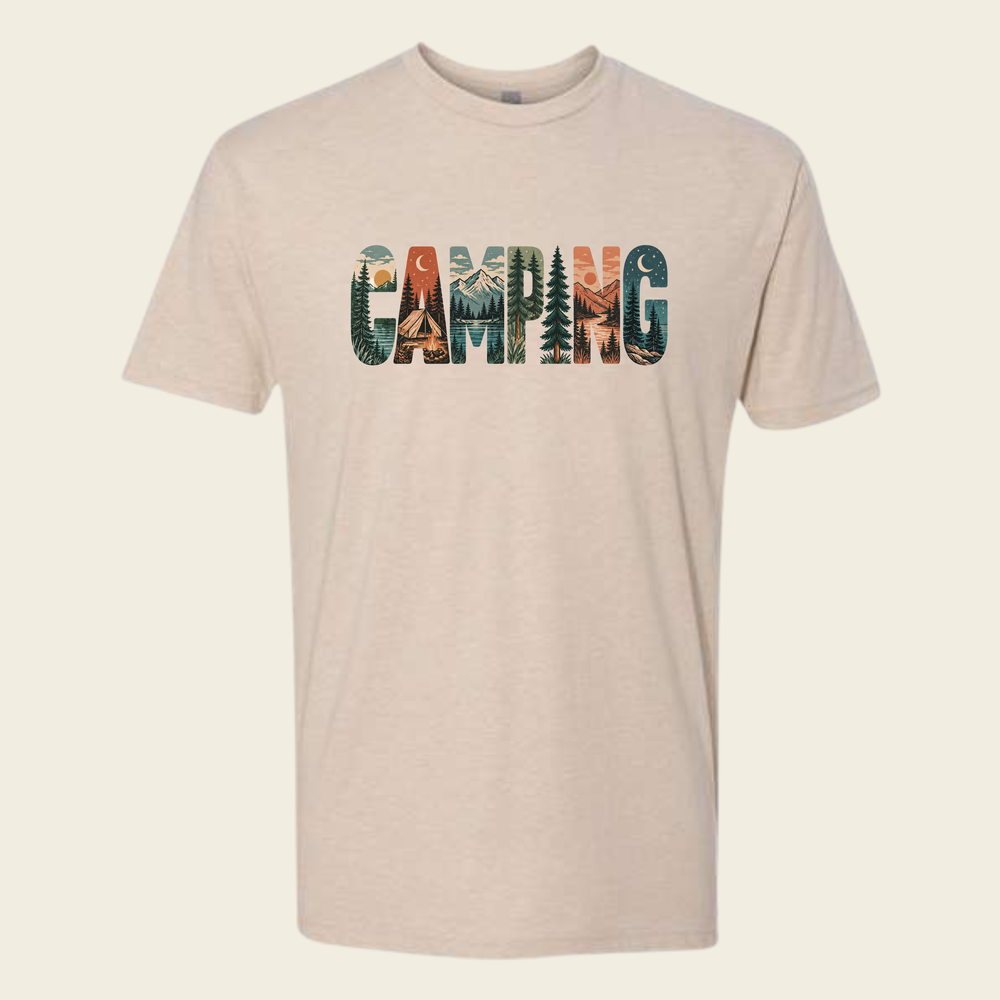
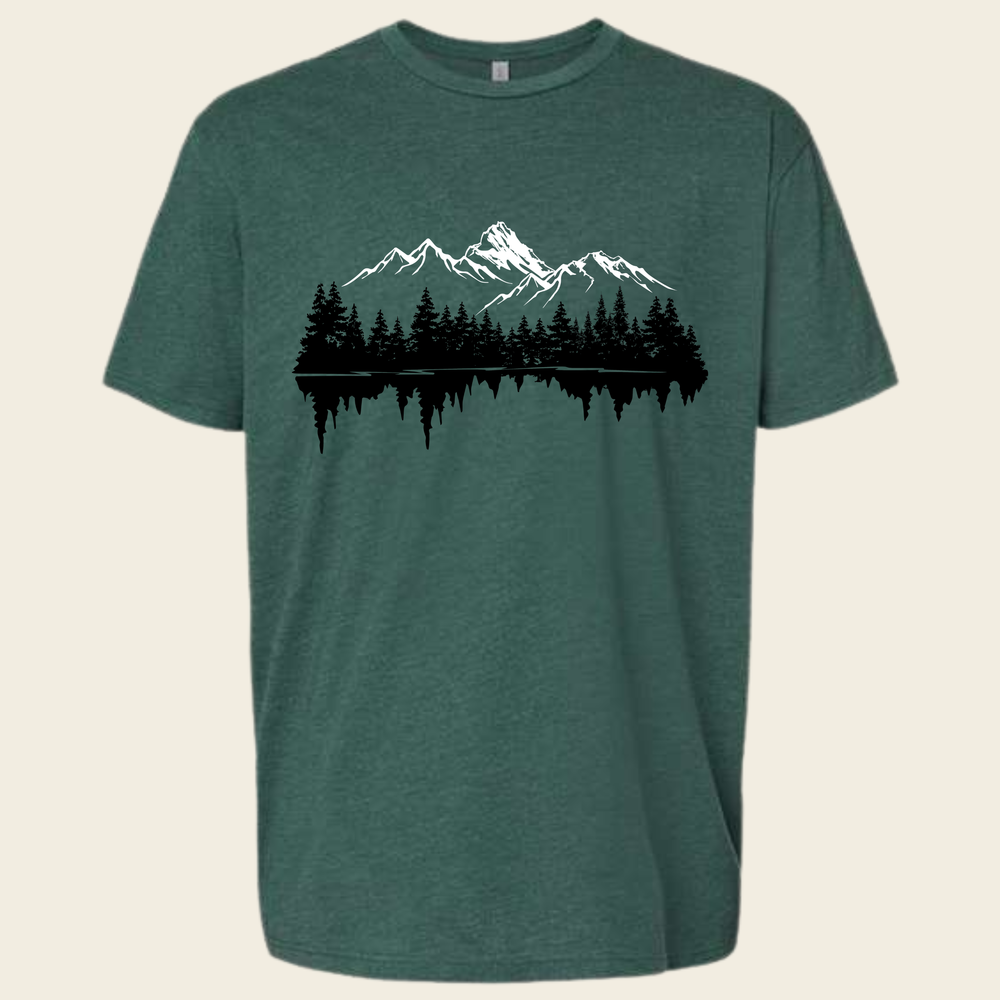
That's roughly the same idea behind our outdoors collection — designs pulled from actual places and the things people do in them, including the Camping Scenes Tee, which covers the whole ritual this post is about, and the Mountain Reflection Tee for the mornings after, when the fire's cold and nobody admits they slept badly.
The last hour of the fire
Every good fire has a last hour, when half the group has gone to bed and the wood's down to coals. This is when the real stories come out — not the performed ones, the true ones. The trip somebody almost didn't come back from. The thing somebody saw once and never mentioned again.
Don't rush this hour and don't fill it. Long silences are allowed. A story told to three people at midnight is worth ten told to a full circle at nine. If you get one good one out of a trip, the trip paid for itself.
Common questions
What makes a campfire story scary instead of silly?
Restraint and specificity. One unexplained detail set in a real, nearby place beats an elaborate monster every time. The scare lives in what you don't say.
How long should a campfire story be?
Three to five minutes told aloud, shorter for kids. If people are shifting on their logs, you're already too long. End before the audience expects it.
Where do you find good local legends?
Ask locals — bait shops, diners, campground hosts. Small-town museums and roadside historical markers are underrated sources, and most regions have a resident monster or a stretch of road with a reputation.
Outdoors


Made by Land & Light — American lifestyle apparel with a sense of place and a sense of humor.
See every shirt