
The Best Water in Texas
Where to actually get in the water in Texas: spring-fed pools, cold rivers, and one surprise out west.
The best water in Texas is spring-fed, and most of it comes out of the ground in the Hill Country at a temperature that will make you gasp in August. If you want one answer, it's the Frio River near Garner State Park, with Barton Springs in Austin as the city-limits runner-up.
But Texas is big and the argument is long, so here is the fuller version. This is about swimming, not scenery. Every place on this list is somewhere you can actually get wet.
Why spring-fed matters here
Texas lakes are mostly reservoirs. They're fine for boats and bass, but by late July the top few feet of a Texas lake feel like bathwater someone forgot about. The water that matters comes from the Edwards Aquifer and its cousins, pushing up through limestone at a steady, cold temperature all year. That's the whole trick. The air might be 104. The spring doesn't care.
This is why the good swimming in Texas clusters along the Balcones Escarpment, the line where the Hill Country breaks toward the coastal plain. Springs pop out along that line like a seam splitting. San Marcos, New Braunfels, Austin, Wimberley — they're all sitting on it.
The Frio River
Frio means cold in Spanish, and the river mostly earns the name. It runs clear and shallow over limestone through Uvalde County, and the stretch around Garner State Park and Concan is the classic version: cypress trees leaning over green water, kids jumping off rocks, tubes drifting past at walking speed.
Garner itself is one of the most loved state parks in Texas, and it fills up. Summer weekends require planning, and the park uses reservations. If you can go on a weekday in June, do that instead. The river is low and slow in a dry year, so check conditions before you drive three hours with a truck full of tubes.
- Concan is the hub for rentals and river access outside the park.
- Leakey, up Highway 83, is quieter and worth the extra miles.
- The drive on Ranch Road 337 between Leakey and Vanderpool is one of the best in the state, water or no water.
Barton Springs and the Austin answer
Barton Springs Pool sits in Zilker Park in the middle of Austin, fed by springs that keep it cold year-round — cold enough that people swim it in January on purpose. It's three acres of spring water with a grassy hillside on one side and a diving board that has launched generations of Austinites.
It's not a secret. Nothing in Austin is a secret anymore. But it's still the best urban swim in America that I know of, and the fact that a city grew to this size around it without paving it over is a small miracle. Go early on a weekday morning and you'll share it with lap swimmers and a few herons. That's the version worth having.
If Barton is packed, Deep Eddy Pool a short distance away is also spring-fed, also cold, and usually calmer.
Wimberley: Blue Hole and Jacob's Well
Wimberley is a small Hill Country town that happens to hold two of the most photographed swimming spots in Texas. Blue Hole is a stretch of Cypress Creek shaded by huge bald cypress trees, with rope swings and water the color the name promises. Jacob's Well is a spring opening in Cypress Creek — a dark, vertical mouth in the limestone that people leap into from the surrounding rock.
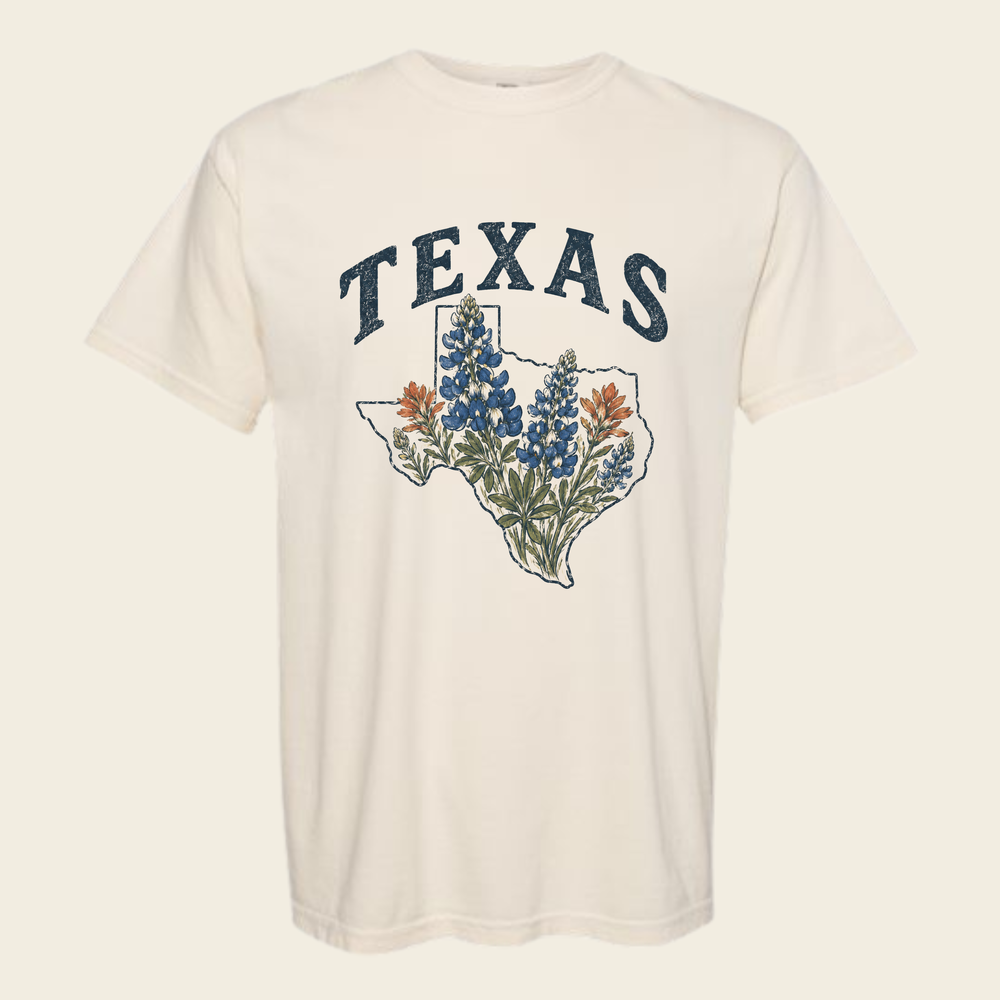
Both require reservations in swimming season, and both sell out. That's the price of being famous in the age of the phone camera. Jacob's Well has also run low or stopped flowing in bad drought years, so check before you go. When the springs are up and you've got a spot booked, Wimberley is about as good as a Texas summer day gets. In spring, the drive out through the Hill Country runs past bluebonnet fields that people pull over and sit in — the flower on the Texas Bluebonnet Tee is not an exaggeration, it really does carpet whole hillsides in April.
The rivers you float: Guadalupe, Comal, San Marcos
Tubing is a Texas institution, and three rivers carry most of it:
- The Guadalupe below Canyon Lake dam runs cold because the water comes off the bottom of the lake. This is the rowdy one — coolers, crowds, and a long slow parade on summer Saturdays. The Horseshoe stretch near Sattler is the famous section.
- The Comal in New Braunfels is short, spring-fed, and clear. It starts at Comal Springs in Landa Park and is often called one of the shortest rivers anywhere. The tube chute is a rite of passage.
- The San Marcos is the clearest of the three, spring-fed from the headwaters at Spring Lake. Rio Vista Park's rapids in the middle of town are free and always busy. The water is so clear you can watch fish hold in the current under your tube.
Pick the Guadalupe for the party, the Comal for families, the San Marcos for the water itself.
Balmorhea, the West Texas surprise
Drive far enough west and the Hill Country logic breaks down — until you hit Balmorhea State Park, near the Davis Mountains, where San Solomon Springs feeds an enormous spring-fed pool in the middle of the Chihuahuan Desert. It's deep enough that people scuba dive in it. There are fish and turtles in the pool with you, because it's really a walled-in spring, not a pool in the suburban sense.
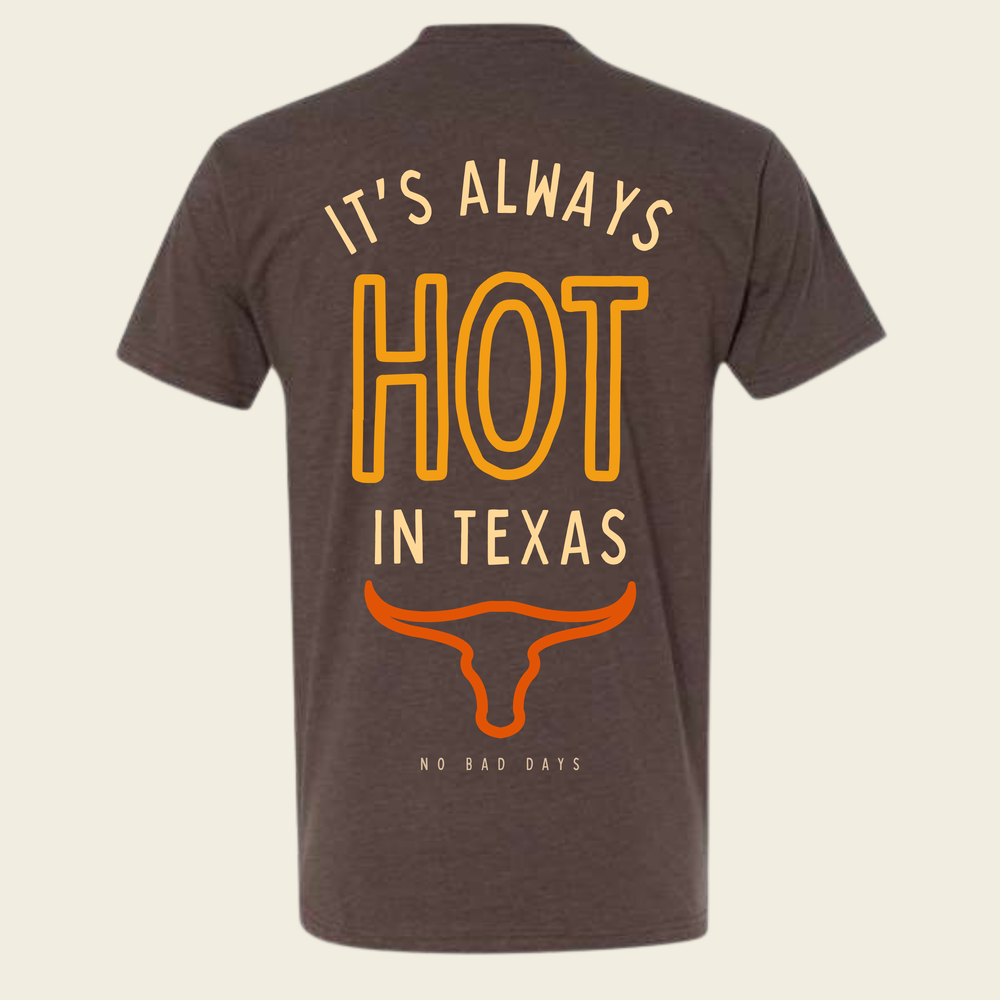
Swimming in cold, clear water while looking out at desert scrub is a strange and excellent experience. It pairs well with a night at the McDonald Observatory up the road, where the dark skies are some of the best in the country. This is the trip for people who think they've seen Texas. Out here it's a different state entirely — the joke on the Hot in Texas Tee applies double in the desert, which is exactly why the spring feels like a reward.
Honorable mentions and how to do it right
Hamilton Pool, west of Austin, is a collapsed grotto with a waterfall — spectacular, reservation-only, and sometimes closed to swimming, so check first. Krause Springs in Spicewood is privately owned, cash-friendly, and beloved. The Devil's Waterhole at Inks Lake is a granite-lined jumping spot on constant-level water. And the Gulf at Port Aransas or South Padre is a different category entirely — warm, salty, and not what this list is about, but nobody's mad at a beach day.
A few habits that make any of these trips better:
- Book ahead. The famous spots reserve out weeks in advance in summer.
- Go on weekday mornings. Texas water at 9 a.m. Tuesday and 2 p.m. Saturday are different sports.
- Wear water shoes. Limestone is slick and river rock is sharp.
- Check flow and drought conditions. Springs and rivers vary a lot year to year.
- Pack out everything. The good spots stay good because people bother.
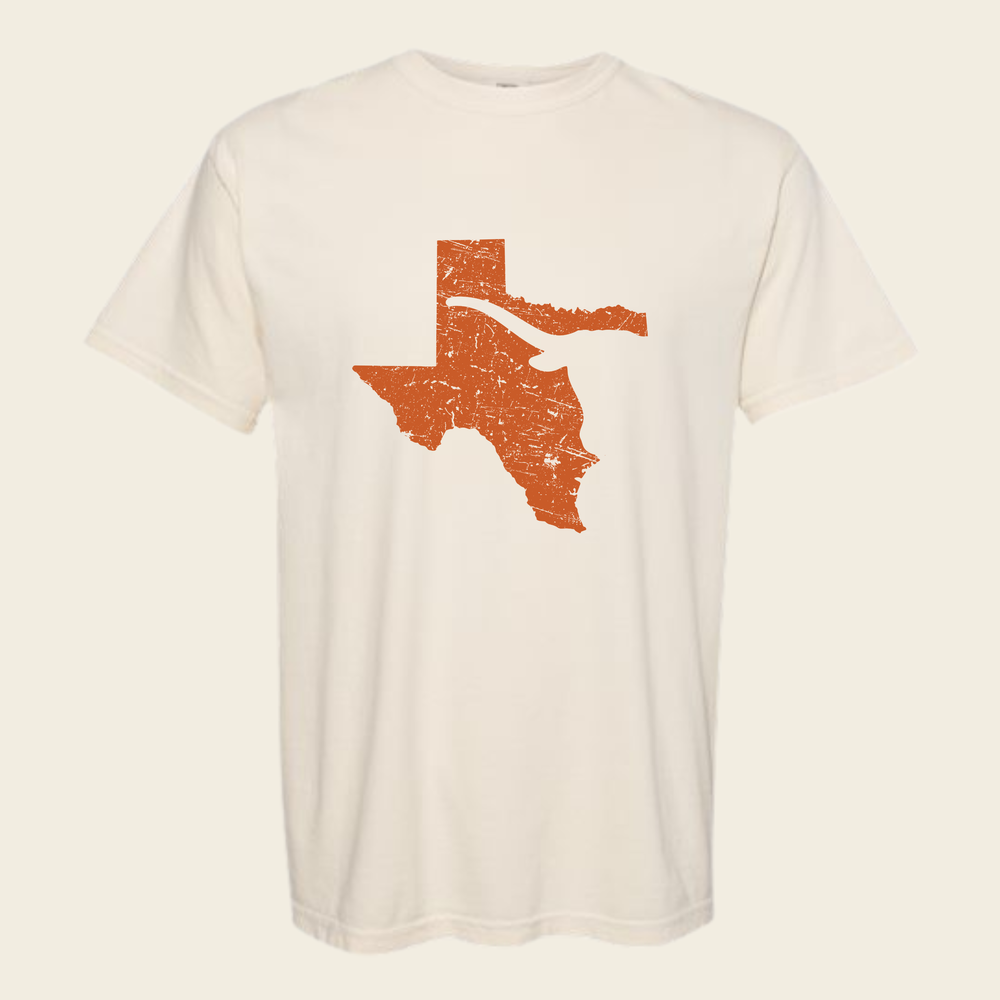
Most of this list sits within a couple hours of the same stretch of Hill Country, which is part of why Texans defend that country so fiercely. It's the kind of state pride that shows up everywhere from truck bumpers to the front of a Texas State Pride Tee, and the rest of our Texas collection comes from the same affection. The water earned it.
Common questions
What is the coldest swimming spot in Texas?
The spring-fed spots are all cold year-round — Barton Springs, the upper San Marcos, and Balmorhea among them. The Guadalupe below Canyon Lake also runs cold because the release comes from deep in the lake. Any of them will shock you in August, which is the point.
Do I need reservations to swim in the Hill Country?
For the famous spots, usually yes in summer. Jacob's Well, Blue Hole in Wimberley, Hamilton Pool, and busy state parks like Garner all use reservation systems during peak season. Book before you drive.
Which river is best for a first Texas tubing trip?
The Comal in New Braunfels. It's short, spring-fed, clear, and easy to manage with kids or first-timers. Save the Guadalupe for when you want a longer, louder day.
Texas

Made by Land & Light — American lifestyle apparel with a sense of place and a sense of humor.
See every shirt