
Why People From Kentucky Never Really Leave
Kentuckians move away all the time. They just never stop being from Kentucky, and there are specific reasons why.
People from Kentucky leave all the time. They just never stop being from there, because Kentucky hands you a full identity — a team, a race, a drink, a way of talking — and none of it transfers or expires. You can live in Denver for twenty years and still flinch when someone puts tomatoes in their beer cheese.
It starts with the land itself
Kentucky is not one place. The Bluegrass around Lexington is rolling limestone pasture with black plank fences and horses that cost more than the houses near them. Head east on the Mountain Parkway and the land folds up into hollows and ridgelines around Hazard and Pikeville, where the roads follow creeks because there was never anywhere else to put them. West of Bowling Green it flattens out toward Paducah and the rivers, and it feels closer to Missouri than to Appalachia.
That variety matters for why people stay attached. Whatever kind of landscape a person imprints on as a kid — sandstone arches in the Red River Gorge, tobacco barns going gray in a bottomland, the fog sitting on a hollow at 7 a.m. — Kentucky has a version of it. When they move somewhere else, the new place is usually only one kind of landscape, and it feels like less.
The calendar is not negotiable
Kentucky runs on a schedule that keeps pulling people back, physically or at least mentally:
- Spring is Keeneland's spring meet and then the Derby. Even Kentuckians who have never bet a race in their lives know the first Saturday in May the way other people know Christmas. Expats host Derby parties in apartments in Chicago and Seattle and get quietly annoyed when guests treat it as a costume event.
- Summer is humid, loud with cicadas, and organized around county fairs, creek swimming, and complaining about the humidity.
- Fall is Keeneland's other meet, the Gorge turning red and orange, and the slow build of anticipation for basketball.
- Winter is basketball. Full stop.
You can move away from a place. It is much harder to move away from a calendar, because it follows you around the year and taps you on the shoulder every few months.
The food does not travel
Some regional foods export well. Kentucky's mostly don't, and that keeps people tethered.
Ale-8-One comes from Winchester and gets scarce fast once you cross the state line, which is why Kentuckians living elsewhere load the trunk with cases when they visit home. Beer cheese also claims Winchester, and finding a decent version outside the state is close to hopeless. The Hot Brown belongs to Louisville — turkey, bacon, Mornay sauce, broiler — and it is the kind of dish that only makes sense in the place that invented it. Burgoo shows up at church fundraisers and political picnics and never anywhere else. Country ham is salty enough to alarm the uninitiated, which Kentuckians consider a feature. Benedictine spread, cucumber and cream cheese dyed faintly green, gets served at Derby parties and baby showers and confuses everyone who didn't grow up with it.
None of this is fine dining. All of it is homework you can only turn in at home, which means going home.
Big Blue Nation has no borders
University of Kentucky basketball is the single biggest reason the diaspora never fully detaches. It is not a team you follow; it is a citizenship you hold. Kids in towns hours from Lexington grow up on it, and when they move away they seek out the UK bar in whatever city they land in — there is almost always one — and spend winter Saturdays with strangers who feel like cousins.
Louisville fans would like it noted that the Cardinals exist, and the rivalry between the two is genuinely serious, splitting families and workplaces. But that internal argument is itself a form of belonging. Two Kentuckians who disagree about basketball still have more in common with each other than with anyone who doesn't understand why the argument matters.
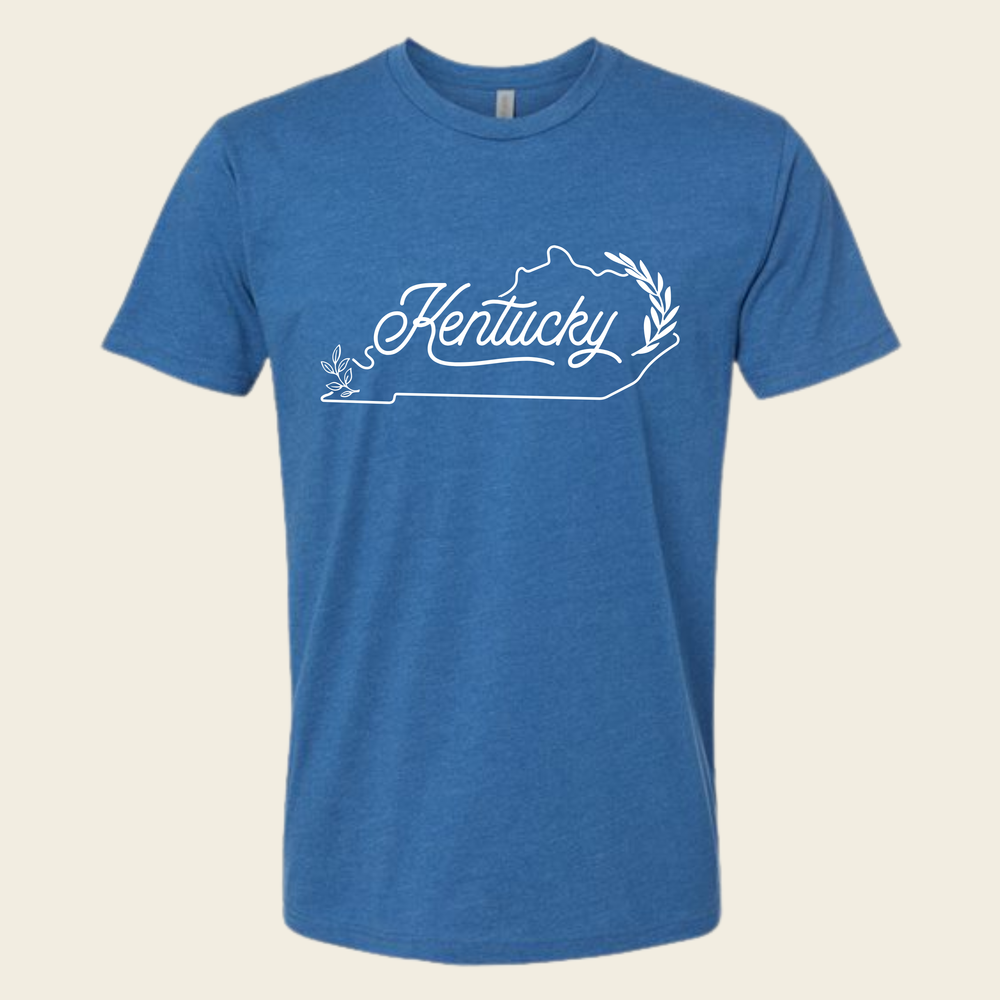
This is roughly the sentiment behind the Script Kentucky Tee — no explanation on the shirt, because if you know, you know, and if you don't, a paragraph wouldn't help.
Leaving is part of the tradition
Here is the honest part: Kentucky has been sending its people elsewhere for generations. Eastern Kentucky in particular saw wave after wave of families head north on the interstates for factory work in Ohio, Indiana, and Michigan. Whole neighborhoods in those states filled with Kentucky accents, Kentucky recipes, and Kentucky loyalties.
What's notable is what those families did after they left. They kept driving back down for funerals, reunions, and homecomings. They kept the family land even when nobody lived on it. They raised kids in the Midwest who still said they were from Kentucky, sometimes about a county they'd only visited in summers. Leaving for work was understood as a practical decision, not a change of allegiance. That template — go where the job is, stay who you are — got passed down, and it's why a Kentuckian in Charlotte or Columbus today doesn't feel like a defector. They feel like the latest in a long line of people running a temporary errand that happens to last decades.
The shorthand you carry with you
Every Kentuckian abroad ends up performing a small set of rituals. Explaining that Louisville is pronounced nothing like it's spelled. Clarifying that yes, there are horses, and no, they don't own one. Defending bourbon opinions with unearned confidence. Getting quietly emotional at an airport when someone else's luggage has a UK logo on it.
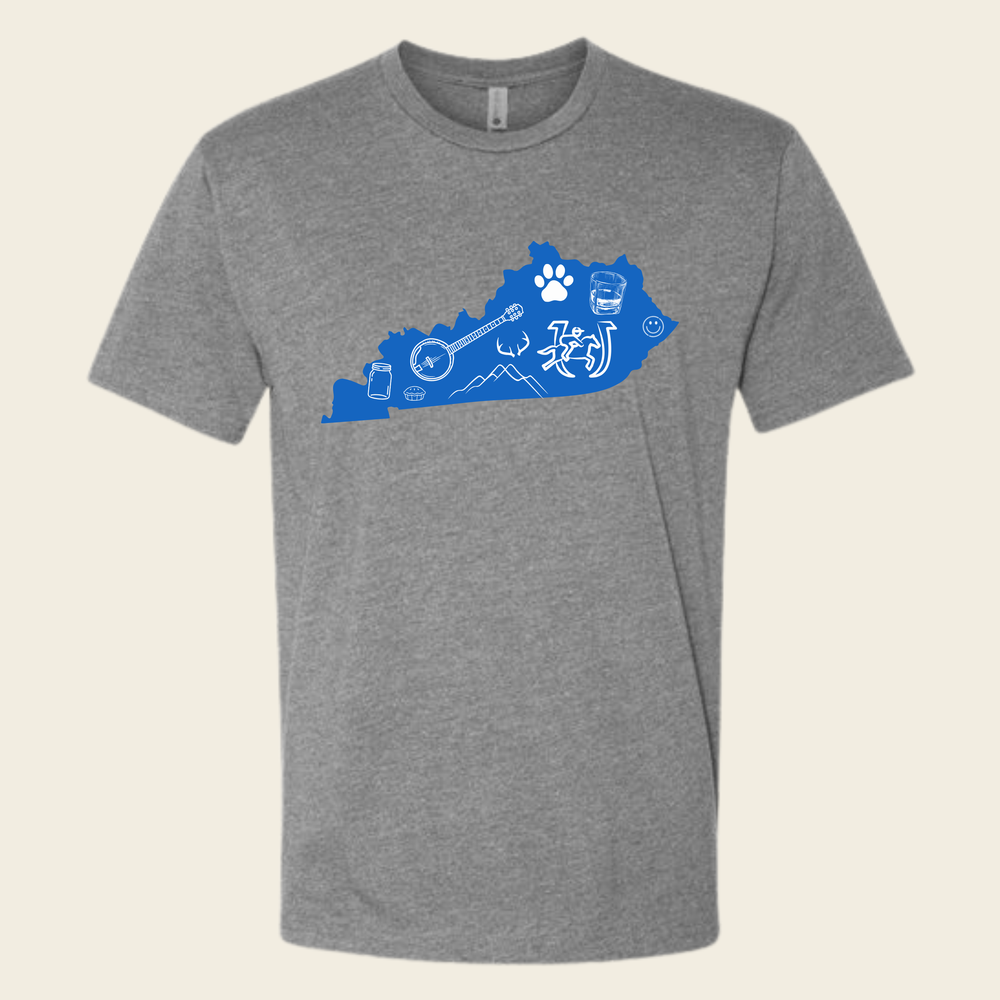
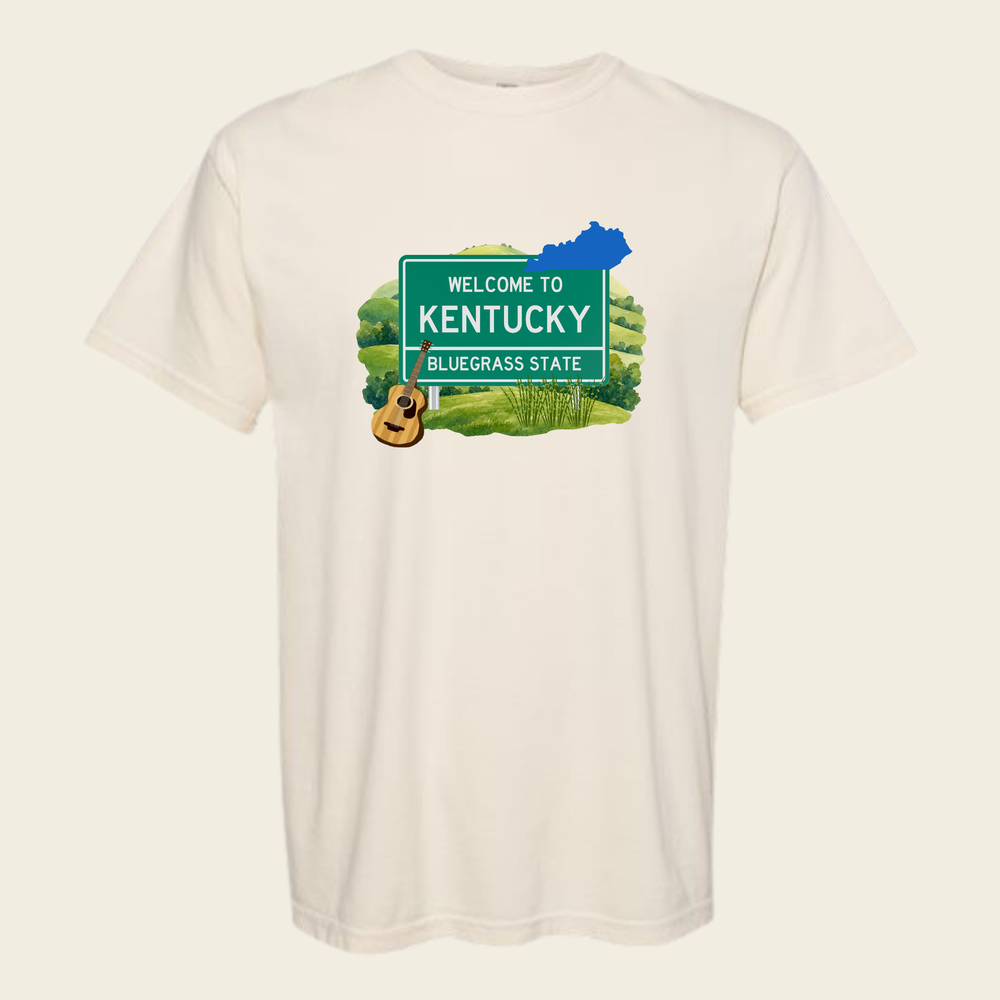
The state's icons — the horse, the bottle, the bridle, the bluegrass — work as a private language among people who recognize them. The Kentucky Icons Tee is built on exactly that idea: a handful of symbols that say everything to the right person and nothing to anyone else. And for the ones who moved away and finally moved back, the Welcome to Kentucky Tee reads less like a greeting and more like an inside joke about the sign they've passed a hundred times on the drive home.
The whole Kentucky collection exists for this crowd — the ones who stayed, the ones who left, and the ones who left but keep a case of Ale-8 in the garage just in case.
So do they ever really leave?
Physically, sure. Kentuckians live everywhere. But the state is unusually good at making its identity portable: a calendar you can keep from anywhere, a team you can watch from anywhere, food you can smuggle, and an accent that softens but never fully goes away. Most places you're from. Kentucky is a place you remain. The address changes; the answer to "where are you from" doesn't, and it never comes with hesitation.
Common questions
Why are Kentuckians so attached to UK basketball?
Because it's a statewide inheritance rather than a college affiliation — most fans never attended the school. It gives people from very different parts of the state one shared thing, and it travels well, which matters for a state that exports so many of its people.
What foods do Kentuckians miss most when they move away?
Ale-8-One and proper beer cheese top the list because both are hard to find outside the state. Country ham, burgoo, and a real Hot Brown round it out, and none of them are easy to replicate elsewhere.
Do people who leave Kentucky actually move back?
Many do, often when it's time to raise kids or when family land needs looking after. Even those who never move back tend to keep close ties — regular trips home, family property, and a firm answer about where they're from.
Kentucky

Made by Land & Light — American lifestyle apparel with a sense of place and a sense of humor.
See every shirt