
What Locals in Florida Say That Nobody Else Does
Pub subs, the cone of uncertainty, cafecito, and why 73 degrees counts as cold. A field guide to talking like a Floridian.
Floridians have a vocabulary built from Publix, hurricanes, snowbirds, and Cuban coffee, and most of it means nothing north of the Georgia line. If you hear someone order a pub sub, complain about no-see-ums, or call 73 degrees "chilly," you have found a local.
The state is big enough that the language changes as you drive. The Panhandle sounds like Alabama. Miami sounds like nowhere else in the country. But there is a shared core, a set of words and phrases that mark you as someone who actually lives there, and this is a tour of it.
"Season" is a complete sentence
Ask a Floridian in a coastal town why the restaurant has a two-hour wait and they will say one word: season. No further explanation. Season means the stretch of winter and early spring when snowbirds and tourists arrive, traffic on US 41 doubles, and every early-bird special fills up by five.
Related vocabulary:
- Snowbirds — part-time residents who arrive when it gets cold up north and leave when it gets hot down south. Said with a tone somewhere between affection and complaint.
- "When does season end?" — the question locals ask each other starting in February.
- "It's dead" — August. Locals get their restaurants back and consider it a fair trade for the heat.
Roads get the definite article
Floridians do not drive on Turnpike. They drive on the Turnpike. Same with the roads that everyone knows by nickname rather than number:
- Alligator Alley — the stretch of I-75 across the Everglades between Naples and Fort Lauderdale. Nobody calls it I-75 on that segment.
- A1A — the coastal road along the Atlantic. Pronounced letter by letter, never explained.
- The Trail — the Tamiami Trail, US 41, which is a contraction of Tampa and Miami, which locals enjoy telling you.
- I-4 — spoken with a sigh. If you know, you know.
Also useful: "down south" in Florida often means Miami, even if you are already in Florida, and "the Keys" needs no other name attached. If someone says they are heading to the Keys, the conversation moves on.
The Publix dictionary
Publix is a grocery store the way the ocean is some water. It is where locals shop, gossip, and shelter from afternoon storms, and it has generated its own vocabulary.
The centerpiece is the pub sub — a sandwich from the Publix deli counter, ordered by number ticket, defended with real feeling. Locals have opinions about chicken tender subs the way other states have opinions about barbecue. Say "pub sub" outside Florida and you get a blank look. Say it inside Florida and you get a follow-up question about whether you get it on white or wheat.
Other Publix-adjacent phrases: "Where shopping is a pleasure," quoted deadpan, and "they're BOGO," which functions as a full justification for buying four of anything.
Miami has its own dictionary entirely
Miami English is its own documented thing, shaped by Spanish grammar and Cuban coffee. Some of the essentials:
- Cafecito — a small, sweet, very strong Cuban espresso. Consumed standing up.
- Colada — a larger cup of the same, meant to be shared. Ordering a colada and drinking it alone is a decision you will feel.
- Ventanita — the walk-up window at a Cuban café where the cafecito happens. Also where the neighborhood news happens.
- "Bro" — punctuation, not a noun. Used regardless of who is being addressed.
- "Dale" — go ahead, let's go, okay, goodbye, and hello, depending on tone.
- "Getting down from the car" — Miami for getting out of the car, borrowed straight from Spanish. Locals do not notice they say it.
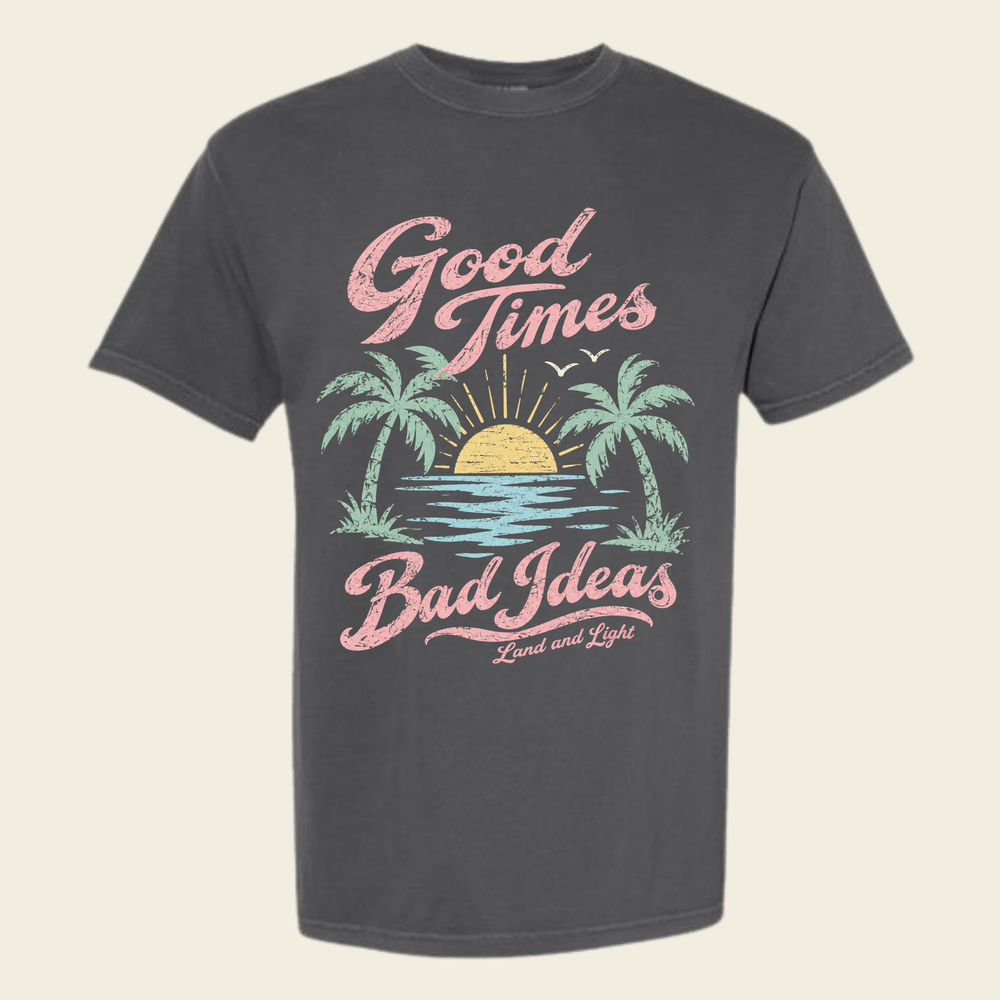
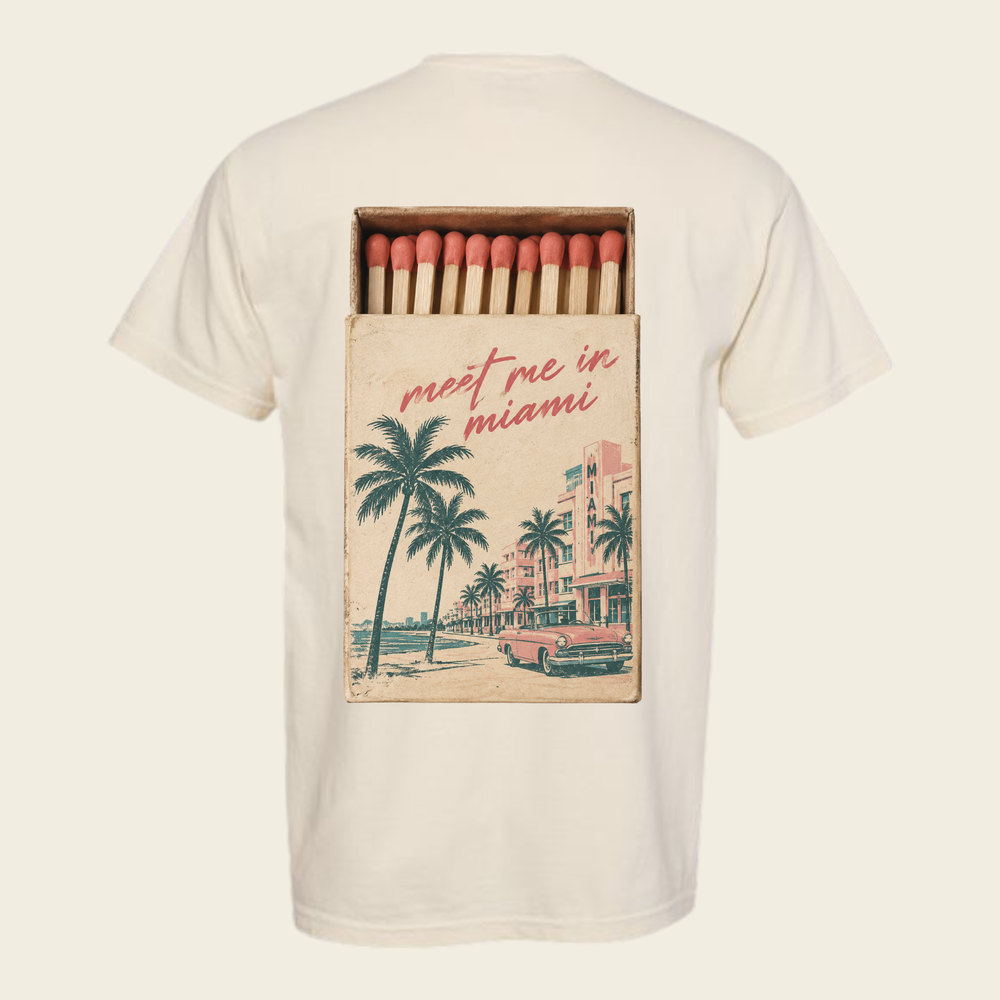
If you have stood at a ventanita at eight in the morning listening to three arguments at once, the Meet Me in Miami Tee will make sense to you. The Good Times Miami Beach Tee covers the afternoon portion of the same day.
Hurricane season has its own grammar
From June through November, Floridians speak fluent meteorology. Nobody else in the country says these things casually:
- The cone of uncertainty — the forecast graphic showing where a storm might go. Discussed at gas stations, offices, and family dinners with the seriousness of a stock portfolio.
- Spaghetti models — the tangle of possible storm tracks. "The spaghetti models look better today" is a normal sentence.
- Hurricane snacks — the food bought during storm prep that gets eaten whether or not the storm shows up. Usually eaten before landfall.
- "It's going to turn" — the local's confident, evidence-optional prediction that the storm will miss them. Sometimes right.
The other weather phrase that confuses visitors is "it'll pass." Summer rain in Florida arrives most afternoons, dumps hard for twenty minutes, and leaves. Locals do not cancel plans for it. They wait it out under an awning and carry on. A sun shower — rain falling while the sun is fully out — does not even get a comment.
73 degrees is sweater weather
This is the one that gets Floridians mocked, and they do not care. When a winter front drops the temperature into the low 70s, out come the hoodies, the boots, and the phrase "it's freezing." Northerners visiting in shorts will point and laugh. Locals will zip up and let them.
The logic is sound if you live there. When your body calibrates to nine months of heat and humidity, 73 with a breeze feels like an event. The 73 Degrees Tee exists for exactly this person, and the rest of the Florida collection covers the other eleven months.
Words for the water and what bites you near it
Florida life happens on and around water, and the vocabulary follows:
- No-see-ums — biting insects small enough that you feel them before you see them, hence the name. They own dusk near the coast.
- Lovebugs — the paired black bugs that swarm twice a year and coat the front of every car on the highway. Locals talk about "lovebug season" the way other people talk about pollen.
- Red tide — the algae bloom that locals check on before beach plans, the way other people check traffic.
- The sandbar — a specific offshore spot where boats anchor and people stand in waist-deep water holding drinks. Every coastal town has one, and locals talk about "the sandbar" as if there is only one on Earth.
- "Flat calm" — perfect boating water. Said with reverence.
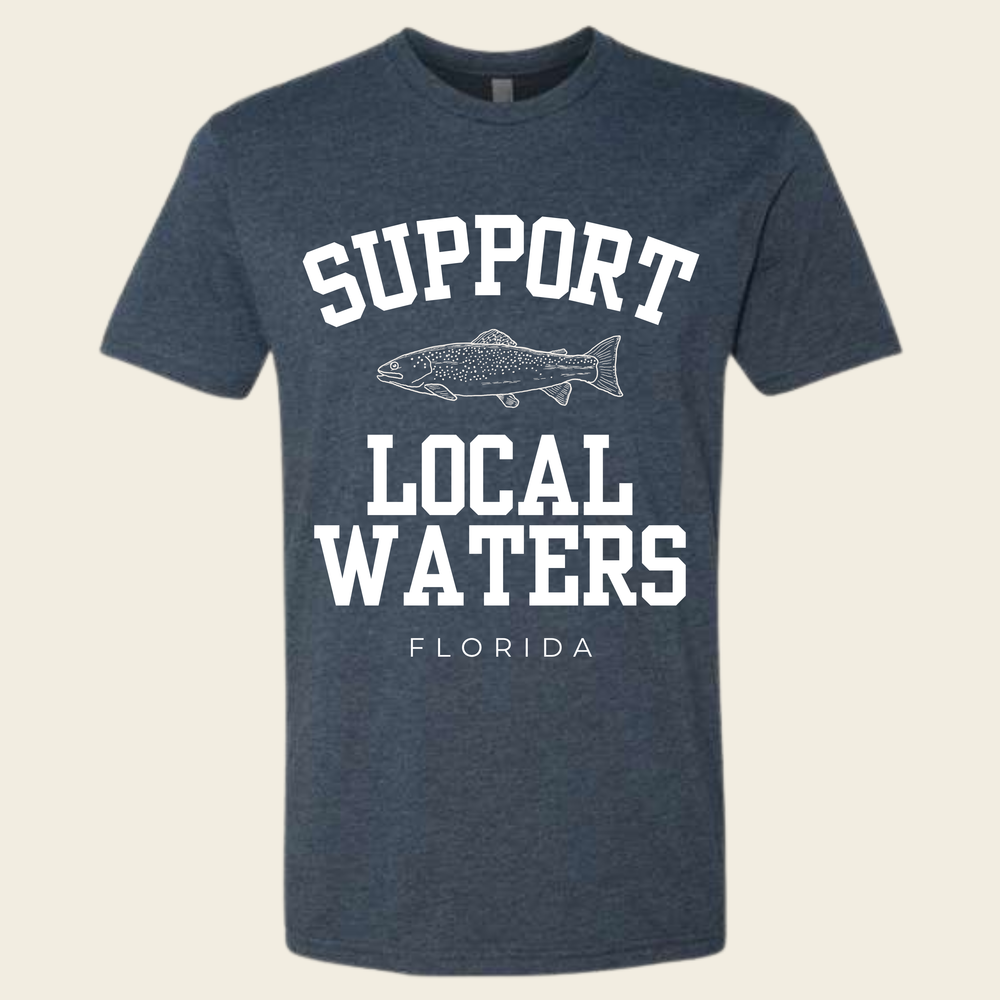
People who spend their weekends at the sandbar tend to be the same people who care about what happens to the water the rest of the week, which is who the Support Local Waters Tee was made for.
Common questions
What is a pub sub?
A pub sub is a deli sandwich from Publix, the grocery chain Floridians treat as an institution. Locals order them by ticket number at the deli counter and hold strong opinions about the chicken tender version. The name is used statewide and almost nowhere else.
Why do Floridians say 73 degrees is cold?
Because most of the year is hot and humid, and bodies calibrate to that. When a winter front drops temperatures into the low 70s, it genuinely feels cold to someone who lives there year-round. Visitors in shorts and locals in hoodies on the same beach is a normal Florida winter scene.
What does "the cone of uncertainty" mean?
It is the forecast graphic showing the range of possible paths a hurricane might take. During storm season, Floridians discuss the cone and the spaghetti models the way other people discuss sports. It is standard small talk from June through November.
Florida

Made by Land & Light — American lifestyle apparel with a sense of place and a sense of humor.
See every shirt