
A Million Dollars for Kentucky's Creeks, and the People Who Love Them
Kentucky just opened $1 million in grant funding to clean up its creeks and rivers — and local watershed groups are first in line.
In early October, the Winchester Sun reported that Kentucky's Energy and Environment Cabinet announced that applications are now being accepted for an estimated $1 million in new grant funding to protect water resources for Kentucky families. That's a million dollars headed toward the quiet, unglamorous work of making creeks swimmable, rivers fishable, and drinking water cleaner — the kind of work that rarely makes headlines but makes everything else possible.
What happened
The funding, announced at the start of October, is aimed squarely at the biggest problem Kentucky's waters face. Made possible through the U.S. Environmental Protection Agency, it will support projects that target run-off pollution — the primary cause of water quality issues in the commonwealth. Runoff isn't dramatic. It's sediment from a bare hillside, fertilizer washing off a field after a hard rain, a failing septic system nobody can afford to fix. It adds up slowly, and it gets cleaned up the same way: one watershed plan, one streambank, one project at a time.
The state isn't spreading the money thin, either. The Division of Water will prioritize proposals focused on developing and implementing watershed plans for impaired or at-risk waters — in other words, the streams that need the help most.
Why it matters
Some of the places in line for attention are small waters with big local meaning. The announcement specifically flags watershed plan writing for the Roundstone watershed in Rockcastle, Jackson, Clay, and Laurel Counties, and the Crafts Colly and Cowan Creek watersheds in Letcher County. If you've spent any time in eastern Kentucky, you know these aren't abstractions. They're the creeks behind people's houses, the ones kids wade in and grandparents remember fishing.
And this kind of money tends to land in good hands. Kentucky has a deep bench of volunteer watershed groups that know how to stretch a grant. Up in Northern Kentucky, for example, the Banklick Watershed Council — a volunteer-led nonprofit that since 2002 has worked to reduce pollution, stabilize streambanks, restore wetlands, and promote access to natural spaces — was named Kentucky Watershed Group of the Year by the Kentucky Waterways Alliance. That's the model: neighbors, science, and steady funding, pointed at the same creek for twenty years.
The bigger Kentucky picture
Kentucky is a water state, full stop. More miles of running water than nearly anywhere, limestone springs, misty river valleys, lakes that hold whole summers' worth of memories. The state's own water newsletter reads like a community calendar — the 10th annual Wild and Scenic Red Riverfest, the Herrington Lake Conservation League making an impact on trash and water pollution, cleanup days up and down the basins. A million dollars won't fix everything. But it keeps that whole ecosystem of caretakers — agencies, nonprofits, farmers, volunteers — moving in the same direction. If you've ever floated the Green, fished a tailwater, or just pulled over to look at fog on the Kentucky River, you've already felt what this money protects. (It's half the reason our Kentucky collection exists.)
What you can do
If you're part of a conservation district, watershed group, or community organization, the clock is friendly but real: letters of intent are strongly encouraged by November 13, 2026, and final project applications are due by February 15, 2027. Curious about the water near you? To learn about waterway designations in your area, visit the Kentucky Watershed Explorer — it's a genuinely fun rabbit hole.
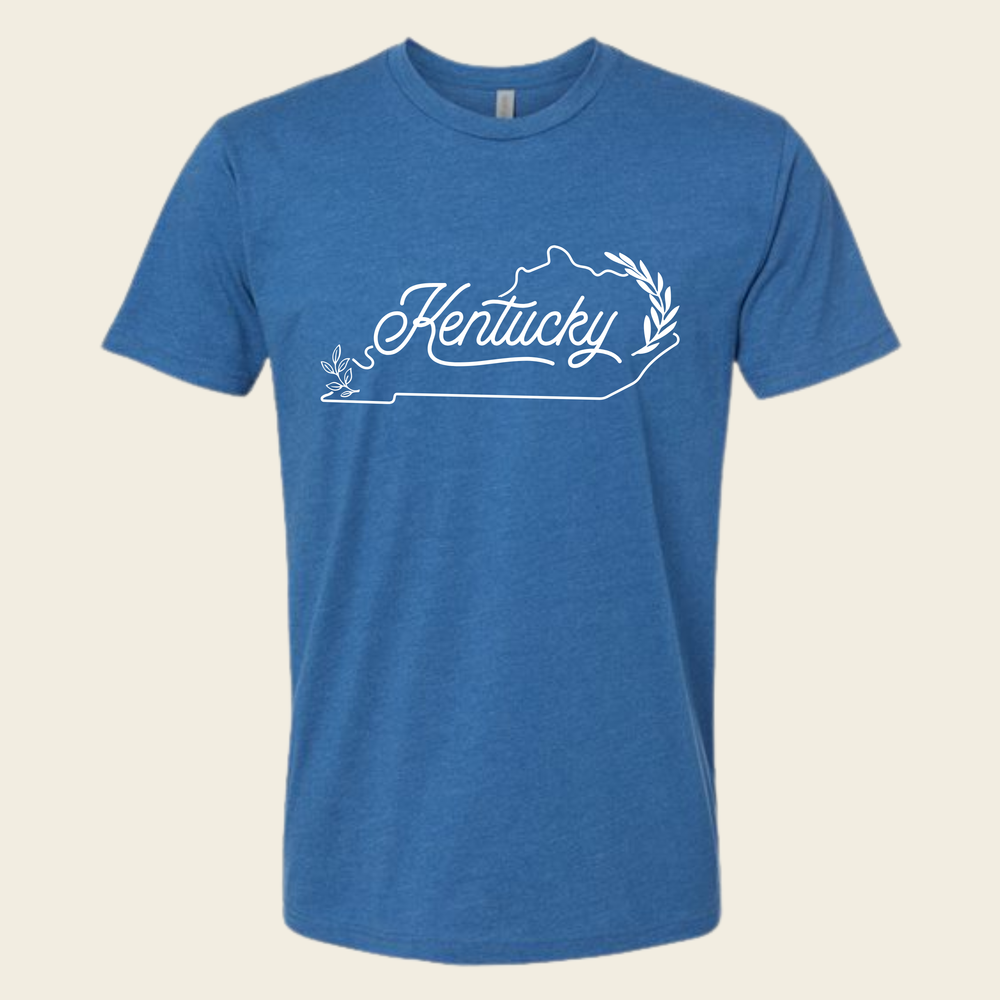
Not a grant-writer? Show up to a creek cleanup this fall, join your local watershed group, or just go spend a Saturday on the water you love. And if you want to wear the sentiment, the Script Kentucky Tee looks right at home on a riverbank.
Common questions
Who can apply for this funding?
The program is aimed at projects protecting Kentucky's water resources, with priority going to proposals focused on developing and implementing watershed plans for impaired or at-risk waters. Local watershed groups, conservation organizations, and similar community partners are the natural fit — check with the Kentucky Division of Water for specifics.
What is runoff pollution, exactly?
It's pollution carried into streams by rain and snowmelt — sediment, nutrients, and other contaminants from the land. It's the primary cause of water quality issues in the commonwealth, which is why this funding targets it directly.
When are applications due?
Letters of intent are encouraged by November 13, 2026, and final applications are due by February 15, 2027.
Reported by Winchester Sun. Details as published at the time of writing.
Kentucky

Made by Land & Light — American lifestyle apparel with a sense of place and a sense of humor.
See every shirt