
Thirteen Thousand Elk and Counting: Kentucky's Comeback Keeps Getting Bigger
New coverage this month puts Kentucky's restored elk herd at around 13,000 — on land the coal industry left behind.
In late September, the science outlet Futura-Sciences took a fresh look at Kentucky's elk restoration and landed on a number worth saying out loud: between 1997 and 2002, Kentucky released 1,541 elk onto old coal mines, and the herd now numbers around 13,000. That's a tenfold return on an animal that had been missing from the Commonwealth for a century and a half, and it's the kind of story that makes a bad Tuesday a little lighter.
What happened
The short version: elk had been gone from the state for 150 years, and the mines that scarred the mountains turned out to be exactly what they needed. In 1997, the Kentucky Department of Fish and Wildlife Resources ran a habitat study and a series of public meetings to ask whether elk could live there again — and then went big. Between 1997 and 2002, managers translocated 1,541 elk to Kentucky from Kansas, Arizona, New Mexico, North Dakota, Oregon and Utah.
The elk didn't just survive. They took to the reclaimed mines immediately — the grass on the benches and plateaus provided food, the surrounding forest provided cover, and the winters were far milder than in the Rockies. Kentucky's elk proved unusually productive, with high breeding success and calf survival.
Why it matters
Because comebacks on this scale are rare, and this one happened on land most people had written off. Kentucky's thriving, wild, free-ranging herd is the largest east of the Rocky Mountains, inhabiting more than four million acres across 16 southeast Kentucky counties.
And the favor is being paid forward. Kentucky has since trapped elk and sent them to help restore populations in other eastern states, returning the favor that the western states did it in the 1990s. The herd has helped other states — including Wisconsin, Virginia and Missouri — establish their own. Eastern Kentucky went from having no elk at all to being the seed stock for half the region.
What it means for the mountains
This is an Appalachian story as much as a wildlife story. The herd lives on reclaimed strip mines — working land that found a second life. The benefits stay local, too: the total economic impact to the state from elk hunting is estimated at more than $3.5 million each year, largely benefiting the economically challenged Appalachian region.
There's also something you can simply hear. You can hear the state's modern wild comeback in fall: elk bugles now echo across southeastern Kentucky — an experience that would have been impossible for most of the 20th century. If you've never stood on a ridgeline at dawn in October and heard a bull bugle across a holler, it belongs on your list.
Go hear it for yourself
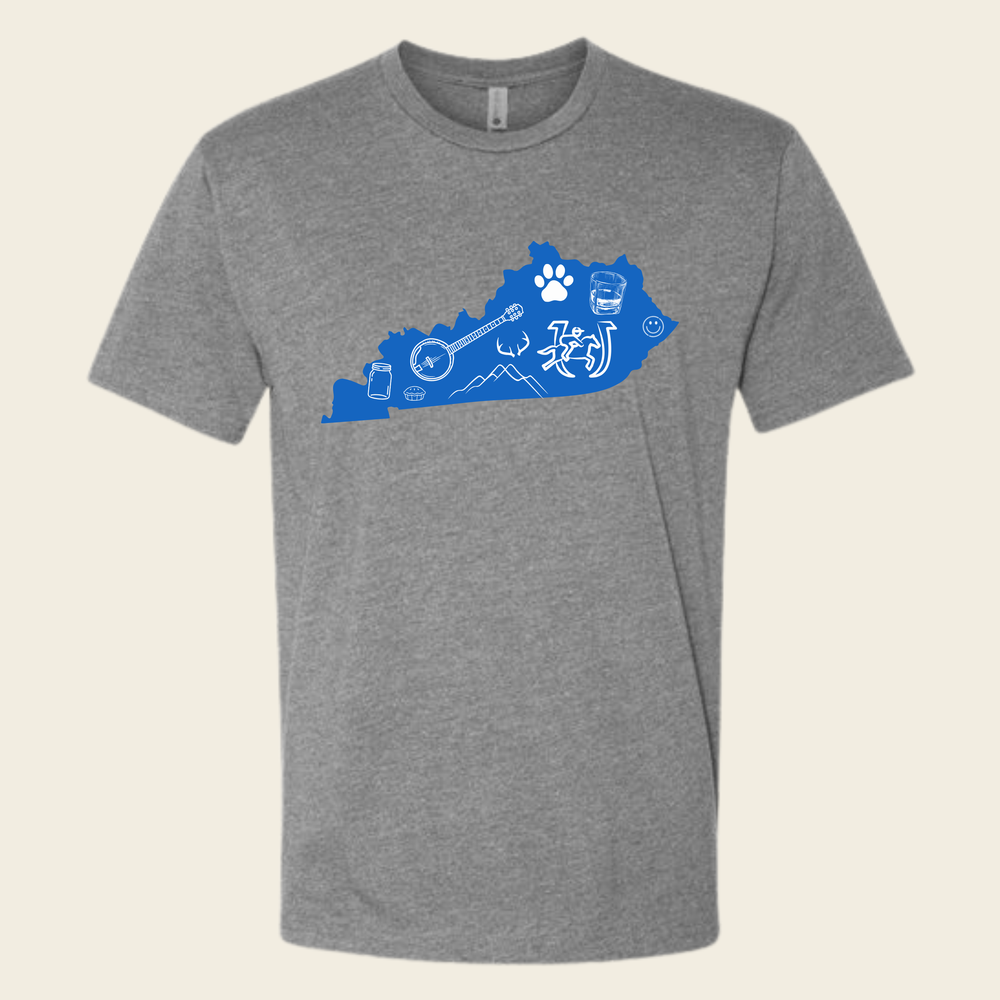
Early fall is bugling season, which makes right now about the best time of year to drive into the southeastern counties and listen. Pack a thermos, go slow on the mountain roads, and bring a layer — we'd suggest something from our Kentucky collection, made for exactly this kind of morning. The elk have earned a spot alongside the bluegrass and the bourbon barrels on our Kentucky Icons Tee — thirteen thousand strong says they're not going anywhere.
Common questions
Are these the same elk that originally lived in Kentucky?
Not exactly. The animals living in Kentucky today are Rocky Mountain elk, not the extinct eastern subspecies. But as the Futura-Sciences piece puts it, the restoration shows a large grazer can return to a region it vanished from 150 years ago, as long as there is open ground to receive it — even ground created by a coal mine.
Where in Kentucky do the elk live?
The herd inhabits more than four million acres in 16 southeast Kentucky counties — the mountain country in the state's southeastern corner.
Why did the elk do so well here?
The grass on reclaimed mine benches and plateaus provided food, the surrounding forest provided cover, and the winters were far milder than in the Rockies. Good groceries, good shelter, easy winters — the same things that keep the rest of us in Kentucky.
Reported by Futura-Sciences. Details as published at the time of writing.
Kentucky

Made by Land & Light — American lifestyle apparel with a sense of place and a sense of humor.
See every shirt