
How to Survive a Florida Summer
Florida summer runs on a schedule: mornings for living, afternoons for storms, evenings for making up for lost time. Here's how locals work it.
You survive a Florida summer by accepting that the day has a schedule and it is not yours. Do everything before noon, get inside before the afternoon storm, and come back out in the evening when the light goes gold and the air finally lets up a little.
People who fight this schedule are the ones you see red-faced in a parking lot at 2 p.m., wondering why the state hates them. It doesn't hate you. It just has rules, and nobody posted them at the border. Consider this the posting.
The shape of a summer day
From roughly June through September, most of the peninsula runs on the same rhythm. The morning is humid but workable. By late morning the heat has real weight to it. Sometime in the afternoon, often with impressive punctuality, the sky stacks up into towering gray clouds and drops a thunderstorm on you that would count as a major weather event in other states. Here it counts as Tuesday.
Then it passes. The pavement steams, everything smells like hot rain, and the evening is genuinely pleasant if you can call anything above eighty degrees pleasant. Locals can, and do.
The practical version:
- Fish, run, bike, surf, or walk the dog early. Sunrise early, not brunch early.
- Plan indoor things for the early afternoon. This is when Florida invented the matinee, the long lunch, and the nap.
- Save the beach walk, the porch, and the good conversation for after five.
Where the locals actually go: the springs
The ocean in August is bathwater. It's fine, but it's not relief. Relief lives in North Florida, where hundreds of freshwater springs pour out of the aquifer clear as glass and cold enough to make you gasp on entry. The water stays in the low seventies all year, which in July feels roughly like jumping into a refrigerator.
Ichetucknee, Rainbow Springs, Ginnie Springs, Wakulla, Blue Spring, Alexander, Juniper — the names alone are worth the drive. You float a tube down a spring run under live oaks and Spanish moss, watch mullet and turtles go by under your feet, and forget it's ninety-five degrees fifty yards away in the parking lot. Show up early on summer weekends. The springs are not a secret, and some parks close the gates when they hit capacity.
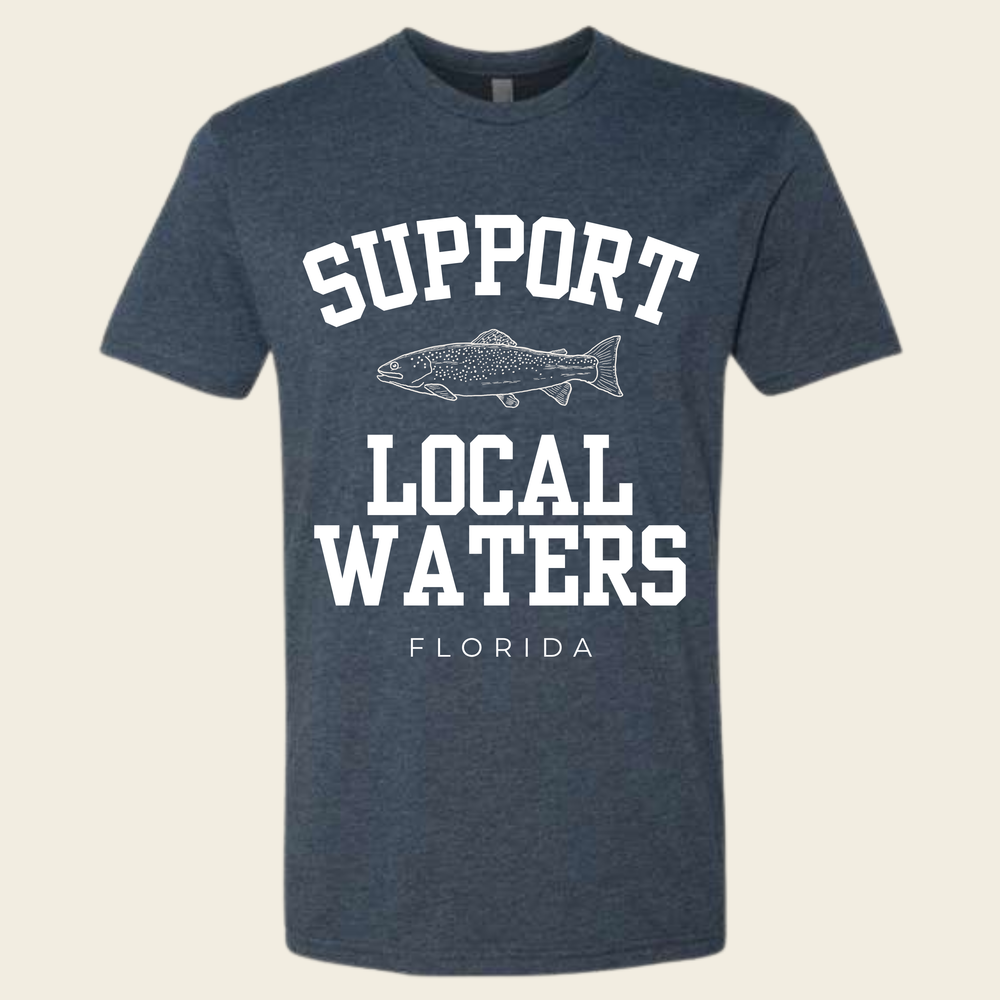
This is also where the argument for actually caring about the place gets easy. The springs run clear because the water underneath Florida runs clear, and that's not guaranteed. It's the whole idea behind the Support Local Waters Tee — the water is the point, so mind the water.
The beach, done correctly
The beach in summer is still good. It's just good at specific hours. Sunrise on the Atlantic side is the best show in the state and it's free. Sunset on the Gulf side is the second-best show, and half the west coast towns treat it like a nightly civic event.
The Gulf, incidentally, is a different ocean entirely. Flat, warm, green-blue, no waves to speak of most days. The Atlantic side has surf, or at least the idea of surf. Pick your coast based on temperament.
A few rules that will keep you out of trouble:
- Check the flag when you walk on. Purple means something is stinging out there. Red means the rip currents are working. Neither is negotiable.
- Shuffle your feet in the shallows. Stingrays lie in the sand and would rather move than sting you, if you give them the memo.
- Sunscreen before you leave the house. The Florida sun does not offer a grace period.
- Bring more water than seems reasonable. Then bring more.
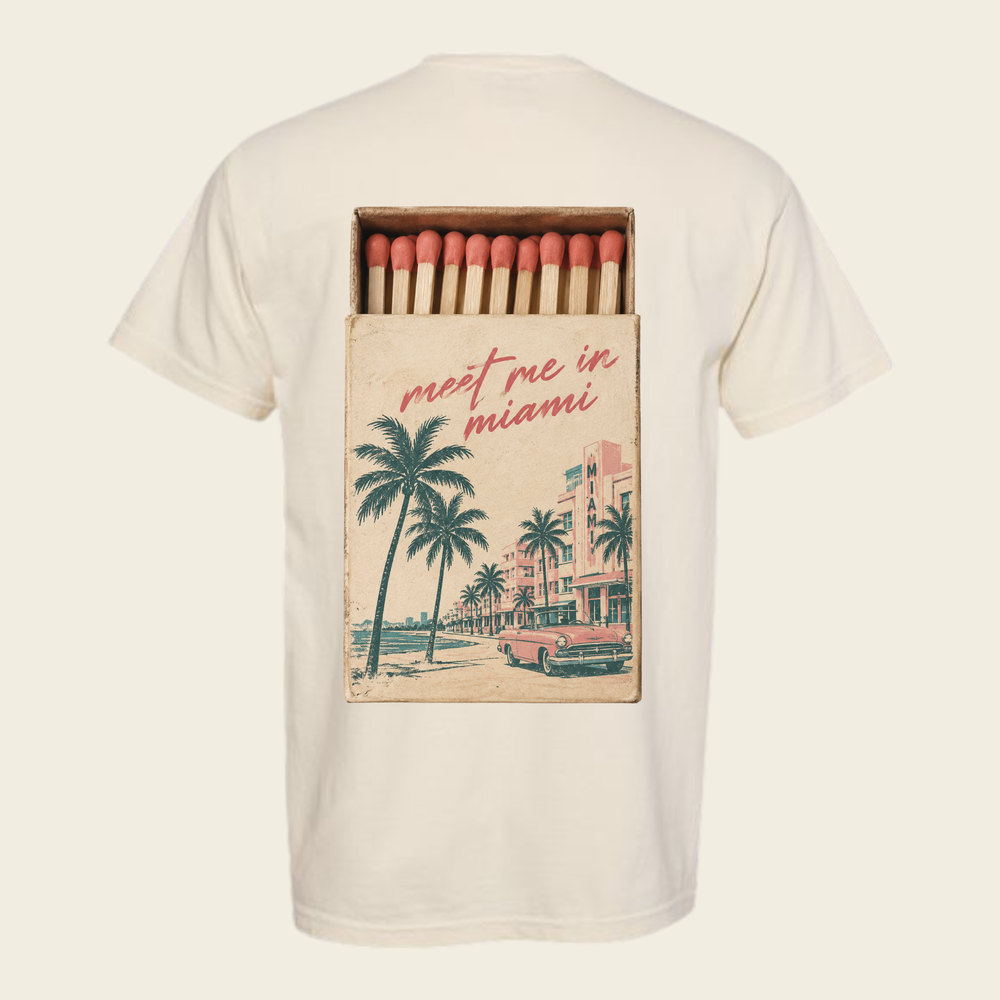
If you like the beach at its most beach — pastel buildings, loud swim trunks, everybody a little too tan — that's the Miami end of the spectrum, and it's what the Good Times Miami Beach Tee is about. Miami Beach in summer is hot, humid, and entirely unbothered by either fact.
Air conditioning is infrastructure
Nobody talks about this enough. Florida in summer is not survived outdoors. It's survived by moving between air-conditioned spaces with brief outdoor intervals, like an astronaut on a spacewalk.
The state has built accordingly. Publix is not just a grocery store; it's a climate refuge with a deli counter, and the sub sandwich there is a legitimate regional food. In Miami, the ventanita — the walk-up cafecito window — lets you get a small, powerful Cuban coffee without committing to full outdoor exposure. Movie theaters, museums, bowling alleys, and the mall all do their best business in July for a reason.
Set your home thermostat wherever the argument in your household lands. But know that walking from ninety-five-degree air into a sixty-eight-degree restaurant is its own weather event, and Floridians carry a light layer in summer for exactly this reason, which confuses everyone who visits.
The storms, and how to read them
The daily afternoon thunderstorm is mostly a scheduling issue, but it deserves respect. Florida storms carry serious lightning. If you can hear thunder, you're close enough to be hit, and the golf course, the beach, and the boat are the three worst places to test that. Get inside, wait it out, and you'll usually be back to your day within the hour.
Hurricane season is a different category. It runs through the summer and fall, and the honest advice is boring: know your evacuation zone, keep water and gas on hand, and take the forecasts seriously when one is actually pointed at you. The rest of the time, don't let cable news ruin your June. Most summer days in Florida are just hot days with a dramatic third act.
What to wear, drink, and expect
Light colors, loose clothes, a hat you don't mind sweating through, and sandals you can hose off. Cotton t-shirt weather is year-round here; summer just makes it mandatory. Drink water before you're thirsty, because by the time you're thirsty in Florida you're already behind.
Expect afternoon plans to be rain-or-shine plans. Expect your sunglasses to fog when you walk outside. Expect to check the weather app, see the same forecast — hot, then storm, then hot — and check it again tomorrow anyway.
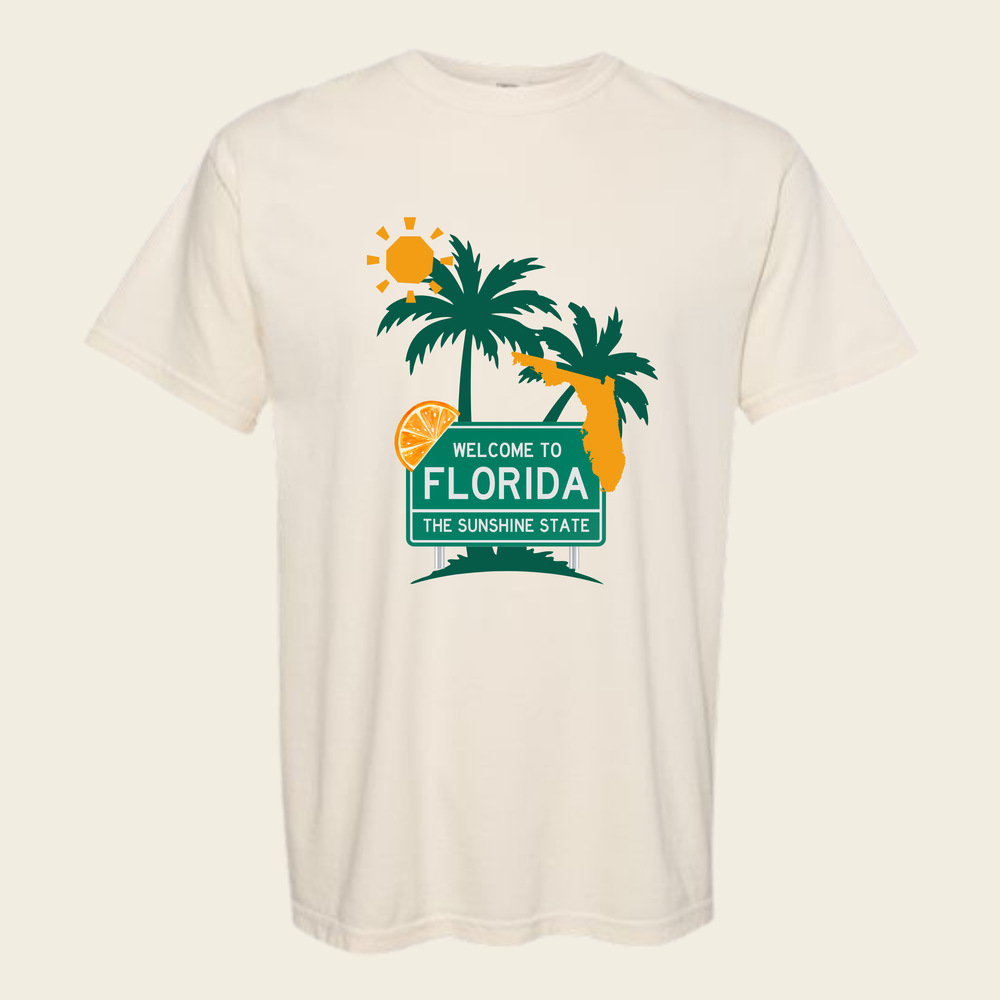
And expect to develop a strange affection for all of it. There's a reason the standard greeting on shirts, signs, and bumper stickers is some version of the one on the Welcome to Florida Tee — the state knows exactly what it is, and it's not apologizing. If the place gets under your skin, the whole Florida collection is built out of that same affection.
Common questions
What's the hottest part of a Florida summer day?
Mid to late afternoon, roughly two to five, when the heat and humidity peak together — often right around when the daily storm builds. Mornings and evenings are far more livable, so plan around the middle of the day rather than through it.
Is the ocean actually too warm to cool off in?
In late summer, mostly yes — the Gulf especially feels like a bath. For real relief, head to the freshwater springs in North Florida, where the water stays in the low seventies all year and feels shockingly cold in July.
Do the afternoon storms ruin beach days?
Not if you plan for them. They typically roll through in the afternoon and clear within an hour or so, so go early, take a lunch break when the sky stacks up, and come back for the evening. Just get off the sand when you hear thunder.
Florida

Made by Land & Light — American lifestyle apparel with a sense of place and a sense of humor.
See every shirt