
Florida at Its Least Touristy: The State Between the Postcards
The Florida most visitors never see: the Big Bend, the springs, cattle country, and the Forgotten Coast, with directions on how to find it.
The least touristy Florida sits in the middle and along the top, far from the theme parks and the condo towers. It is the Big Bend coast, the north Florida springs, the cattle country around Okeechobee, and the Forgotten Coast of the Panhandle — places where the state still smells like pine sap and low tide instead of sunscreen.
Most people experience Florida as a runway and a resort. That version is real, but it is a thin strip. Drive an hour inland from almost any beach town and you hit a different state: two-lane roads, boiled peanut stands, fish camps, and towns where the gas station is also the restaurant. This is a rough map of that Florida.
The Big Bend, where the coast forgets to have a beach
Look at a map of Florida and find the armpit — the stretch where the peninsula curves into the Panhandle. That is the Big Bend, and it is the least developed saltwater coastline in the state. There is almost no sand here. The land dissolves into salt marsh and seagrass flats, which is exactly why the condos never came.
Cedar Key is the best-known town on this coast, and it is still small enough that you can walk it before lunch. It runs on clams, art, and people who came for a weekend decades ago. Farther north, Steinhatchee is a working river town that fills up during scallop season, when families wade the grass flats with snorkels and mesh bags. Between those two points there is mostly nothing, which is the point.
- Eat mullet — smoked or fried — at whatever fish house is open.
- Go in scallop season if you want a crowd, or any other time if you don't.
- Do not expect a beach. Expect mud, grass, and birds.
Springs country
North central Florida sits on limestone, and the limestone leaks. The result is hundreds of freshwater springs, many of them clear enough to read a license plate through, all of them holding around 72 degrees year round. In August that feels like ice water. In January it feels like a bath, which is why manatees crowd into some of them all winter.
Ichetucknee is the classic tube run — a slow, clear river through cypress and eelgrass near the town of Fort White. Ginnie Springs draws divers and a rowdier weekend crowd. Rainbow Springs near Dunnellon is broad and calm and good for a lazy paddle. High Springs makes a good base for all of it, with outfitters renting tubes and kayaks along the main drag.
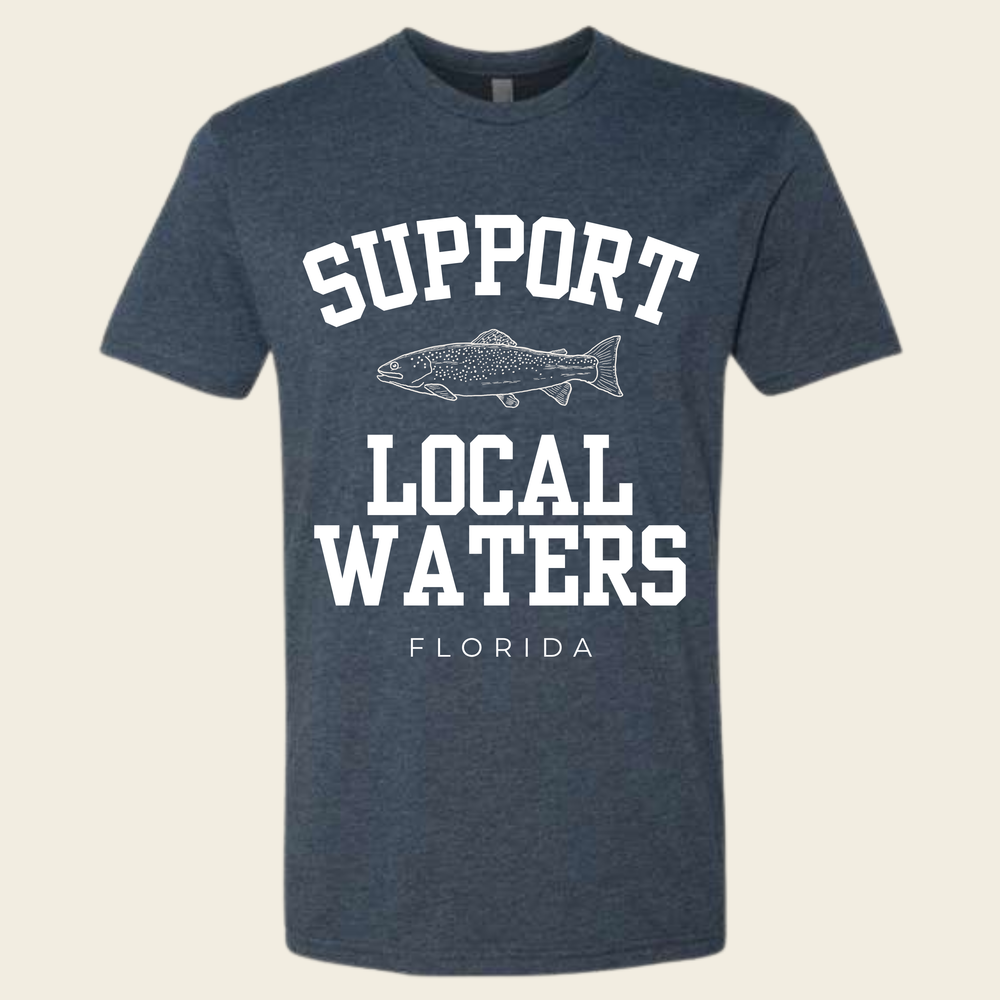
The springs are also the clearest argument for taking care of Florida's water, since everything upstream of them ends up in them. It is the whole idea behind the Support Local Waters Tee, which was made with places like the Ichetucknee in mind.
Cattle country in the middle
Florida has been cattle country far longer than it has been tourist country, and the middle of the state still shows it. The old Florida cowmen were called crackers, named for the sound of their whips, and their descendants still work herds on the prairie around Okeechobee, Arcadia, and Kissimmee.
Arcadia holds a long-running championship rodeo and has a downtown full of antique shops in old brick storefronts. The Kissimmee Prairie, north of Lake Okeechobee, is one of the darkest places in the state at night — a preserve where people go specifically to look at stars, which is not a sentence most visitors associate with Florida. And Yeehaw Junction is barely more than a crossroads on the way through, but the name alone justifies the detour.
The Forgotten Coast
West of the Big Bend, the Panhandle coast between Apalachicola and Port St. Joe markets itself as the Forgotten Coast, and the name is fair. The beaches here are white and quiet, backed by pine flatwoods instead of high-rises, and the towns are working towns first.
Apalachicola built its name on oysters, and even though the wild fishery has been through hard years, the town still feels like a seafood town — shrimp boats at the dock, oyster shells in the parking lots, a walkable old downtown of ship chandleries turned into shops. Just inland, Wewahitchka is the home of tupelo honey, harvested for a few weeks each spring when the tupelo trees bloom along the river swamps. Buy a jar from a roadside stand and it will outlast the trip.
- Drive US 98 along the water rather than the inland highway.
- St. George Island has a state park at its east end with miles of undeveloped beach.
- Eat seafood in Apalachicola and honey from Wewahitchka. That is the regional cuisine, and it is enough.
Small towns worth the stop
The connective tissue of untouristy Florida is its small towns, and a few reward a real stop rather than a slowdown.
Micanopy, just south of Gainesville, is a few blocks of antique shops and live oaks draped in Spanish moss, and it looks like the Florida people imagine existed before air conditioning. Two Egg, up near the Georgia line, is a place people visit almost entirely for the road sign, and that is a legitimate reason. High Springs earns its keep as the gateway to the springs. And all across the north half of the state, the roadside boiled peanut stand is its own institution — green peanuts in summer, a styrofoam cup of salt water and softness, eaten with the windows down.
How to actually travel this Florida
The rule is simple: get off the interstate. I-75 and I-95 are how you cross Florida; the two-lanes are how you see it.
- US 98 hugs the Gulf across the Panhandle and the Big Bend.
- US 90 runs the old northern route through Live Oak, Tallahassee, and Marianna, parallel to I-10 but a different world.
- State Road 40 cuts through the Ocala National Forest, a genuinely wild stretch of scrub and sand pine in the middle of the peninsula.
Timing matters too. The untouristy Florida is at its best from late October through April, when the air dries out, the bugs stand down, and the afternoons settle into that specific warmth the 73 Degrees Tee is named for. Summer is possible, but you will earn it.
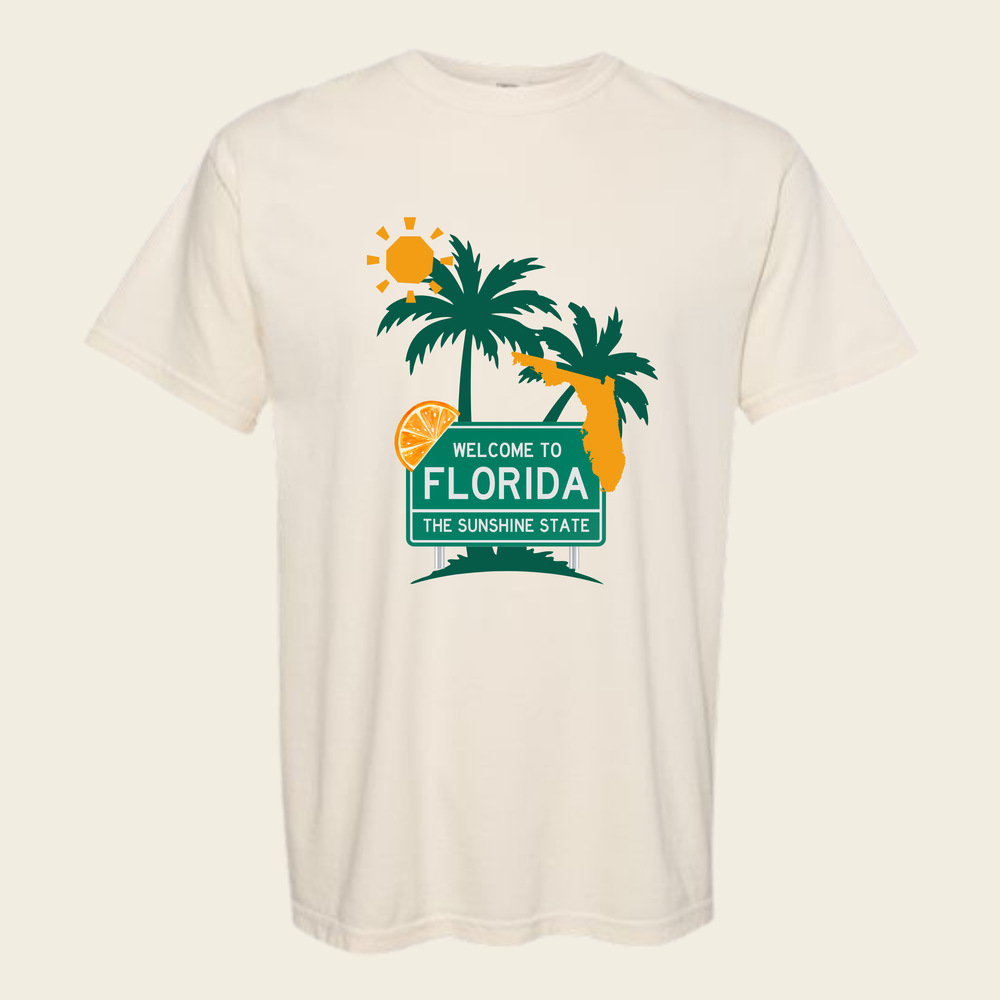
One more thing: the state welcome sign on the old highways still hits different than the one on the interstate, which is roughly the feeling behind the Welcome to Florida Tee. The rest of our takes on the state — the quiet parts and the loud ones — live in the Florida collection.
Common questions
What is the least touristy part of Florida?
The Big Bend coast between Cedar Key and Steinhatchee is probably the least touristed saltwater coastline in the state, because it has marsh instead of beach. The interior cattle country around Okeechobee and Arcadia is a close second.
When is the best time to visit rural Florida?
Late October through April. The humidity drops, the mosquitoes ease off, and the springs feel warm instead of cold. Summer works if you plan around water — tubing, scalloping, swimming — and stay out of the afternoon sun.
Do you need a boat to enjoy the Big Bend or the springs?
No. The main springs have swimming areas, tube runs, and rental outfitters, and towns like Cedar Key are walkable from a parking spot. A kayak rental gets you almost everywhere a boat would, more quietly.
Florida

Made by Land & Light — American lifestyle apparel with a sense of place and a sense of humor.
See every shirt