
Cryptids, and Why Every State Has One
Every American state has a cryptid because every state has dark woods, bored teenagers, and a story worth retelling.
Every state has a cryptid because every state has the two ingredients required: somewhere dark, and someone who came back from it with a story. That's the whole recipe, and it has produced Mothman, the Jersey Devil, the Skunk Ape, and a few dozen creatures you've never heard of unless you grew up within thirty miles of them.
Cryptids are the folk art of the American road map. They tell you where the swamps are, where the mills closed, where the fog sits in the morning. You can learn a surprising amount about a place from what it claims lives in its woods.
What a cryptid actually is
A cryptid is an animal that people report seeing but science hasn't confirmed. That's the polite definition. The working definition is a local legend with legs, or wings, or a scream that carries across a hollow at 2 a.m.
The important thing about cryptids is that they are almost always tied to a specific place. Nobody claims Bigfoot lives in a Walmart parking lot. He lives in the timber of the Pacific Northwest, in country where a large thing genuinely could go unphotographed for a long time. The Jersey Devil lives in the Pine Barrens, which is a real and genuinely strange stretch of sandy pine forest in the middle of the most densely populated state in the country. The legend needs the terrain, and the terrain earns the legend.
The heavy hitters
Three cryptids do most of the cultural lifting, and each one is unmistakably regional.
Bigfoot belongs to the Northwest, though sightings get reported almost everywhere trees grow tall. The famous Patterson-Gimlin footage was shot at Bluff Creek in Northern California, and whatever you think of the film, the setting is honest: that country is steep, wet, and enormous. It's the kind of place where you understand the story the moment you stand in it.
Mothman belongs to Point Pleasant, West Virginia, where sightings clustered in the mid-1960s around an old munitions site locals call the TNT area. The story got permanently tangled up with the Silver Bridge collapse, which was a real tragedy, and the town has handled the whole thing with a mix of grief and dry humor ever since. There's a metal Mothman statue downtown with red eyes, and a festival every September.
The Jersey Devil belongs to the Pine Barrens, and the legend is old enough that it predates the state's turnpikes by a couple of centuries. The story usually involves a woman called Mother Leeds and a thirteenth child that flew up the chimney. New Jersey liked the creature enough to name its NHL team after it, which is about as official as a cryptid gets.
The regional deep cuts
Below the famous three sits a long roster of local monsters, and these are the good ones, because they're specific.
- The Skunk Ape — Florida's swamp Bigfoot, said to smell terrible, reported around the Everglades. There's a research headquarters you can visit in Ochopee.
- Champ — the lake monster of Lake Champlain, claimed with equal enthusiasm by Vermont and New York.
- The Fouke Monster — a hairy creature from the bottomlands near Fouke, Arkansas, immortalized in a low-budget 1970s film that terrified a generation of drive-in kids.
- The Loveland Frogman — Ohio's contribution, a man-sized frog reported near the Little Miami River. Ohio committed to this one without embarrassment.
- The Lizard Man of Scape Ore Swamp — Bishopville, South Carolina. Blamed, at various points, for chewing on cars.
- The Flatwoods Monster — West Virginia's second entry, a tall spade-headed thing from Braxton County. One state, two world-class cryptids. That tells you something about West Virginia's hollows.
- The Hodag — Rhinelander, Wisconsin. A horned beast that started as an outright hoax by a local prankster, and the town kept it anyway, which is the correct move.
The pattern holds everywhere: swamps produce swamp things, lakes produce serpents, deep timber produces something tall and hairy. The monster is a portrait of the landscape.
Why every state ends up with one
Three reasons, and none of them require the creature to exist.
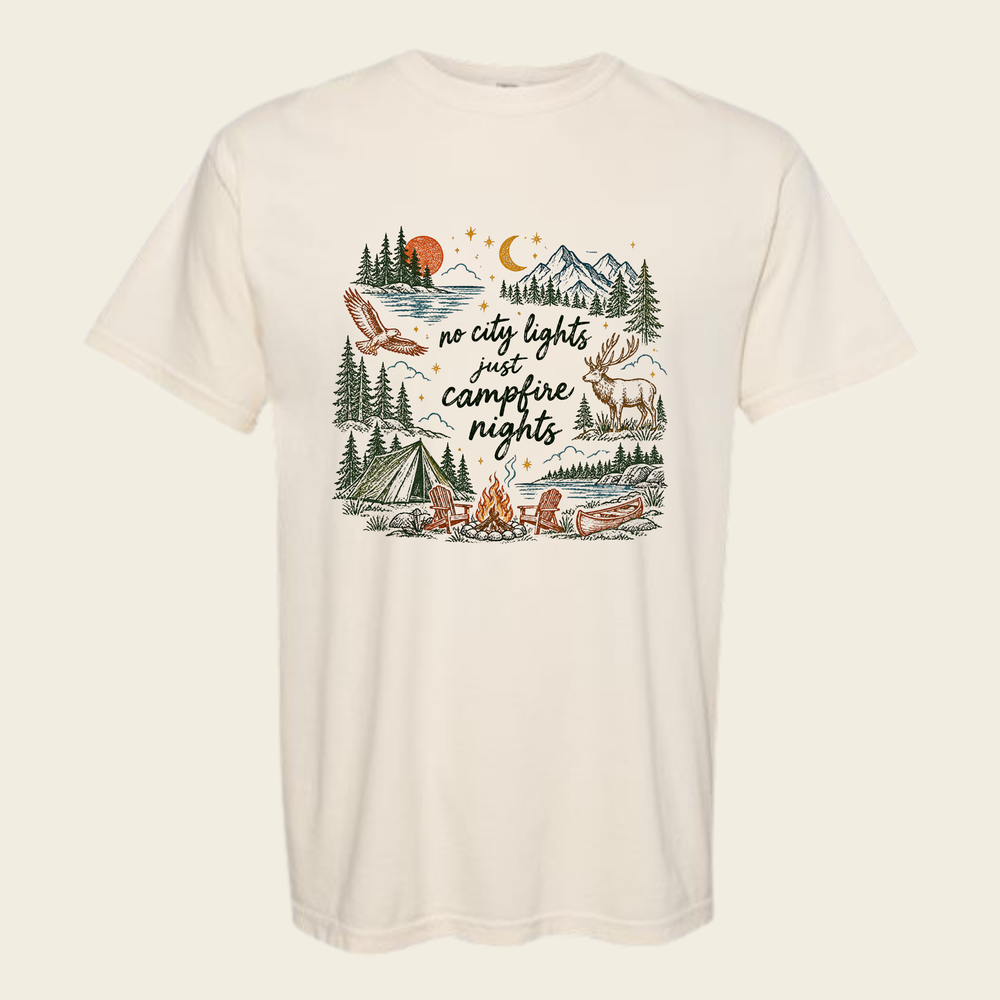
First, darkness. Most cryptid sightings happen at night, on back roads, away from streetlights, where a deer, an owl, or a bear on its hind legs becomes negotiable. If you've ever driven a two-lane at midnight with no moon, you know how fast your certainty about shapes evaporates. It's the same reason people drive hours to see real stars — the dark out there is a different substance than the dark in town, which is roughly the whole argument behind the No City Lights Tee.
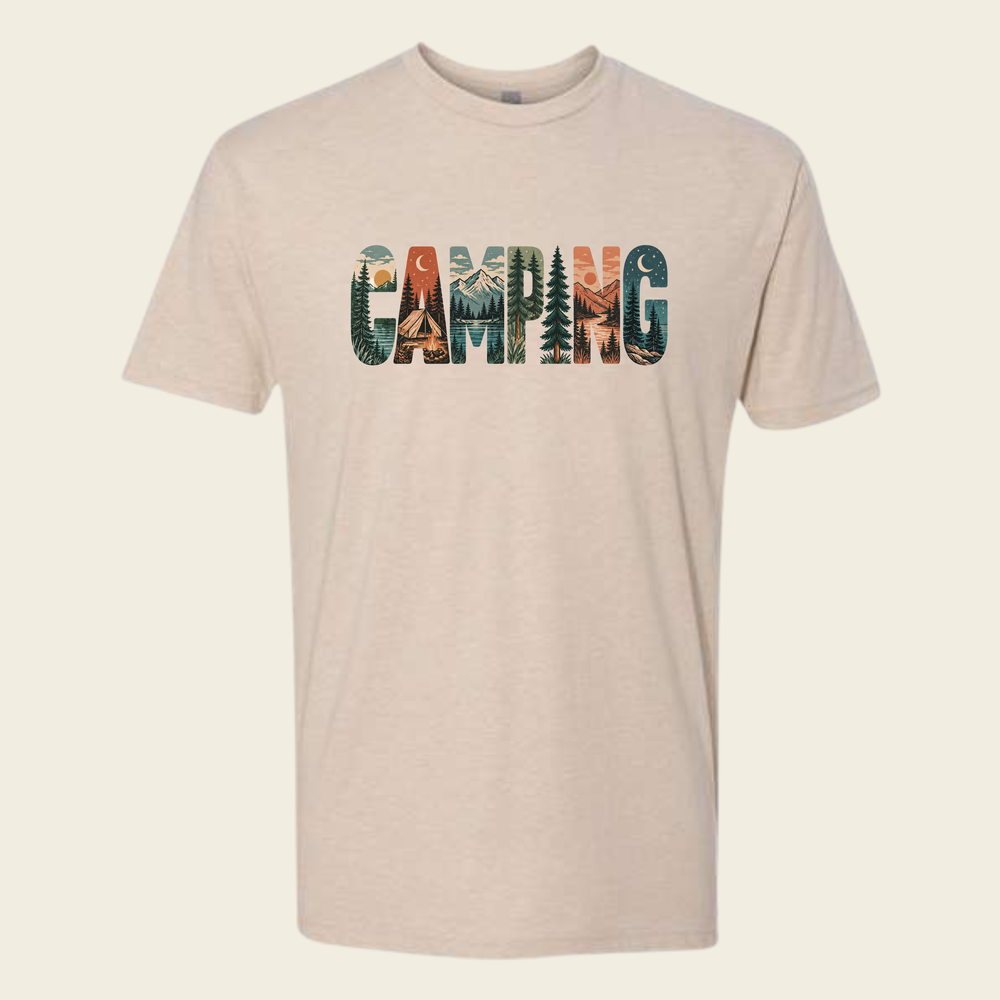
Second, storytelling. A cryptid is a campfire story that got a name and a hometown. Stories with names travel better. "I saw something weird" dies at the fire ring. "I saw the Frogman" gets retold in three counties. Half of American camping culture is the transmission of these stories from older cousins to younger ones — the Camping Scenes Tee crowd knows exactly which uncle is responsible.
Third, identity. Small towns don't get many things that are theirs alone. A monster is theirs alone. Nobody else can have the Hodag. That's worth protecting.
The towns that leaned in
The smartest towns stopped debating whether their creature was real and started painting it on the water tower.
Point Pleasant built the statue and hosts the festival. Rhinelander put the Hodag on seemingly everything, including the high school. Fouke, Arkansas embraced its monster and the film that made it famous. Douglas, Wyoming did the same with the jackalope, which everyone involved cheerfully admits is a taxidermy joke — a rabbit with antlers — and which the town celebrates anyway.
This is the right instinct. The question was never whether the creature is out there. The question is whether the story gives people a reason to pull off the highway, eat at the diner, and take a picture with the statue. It does. Cryptids are one of the few forms of tourism a town can generate entirely from its own imagination.
How to go looking without embarrassing yourself
If you want to visit cryptid country, treat it like any other trip into the outdoors, because that's what it is. The monsters live in real terrain with real weather.
- Go in the right season. The Pine Barrens in August are a bug convention. The Everglades in summer are worse.
- Respect private land. A lot of famous sighting spots are on somebody's back forty. The TNT area near Point Pleasant has publicly accessible sections; not everywhere does.
- Talk to locals, and let them tell it their way. The story is the attraction. Correcting someone's monster is bad manners.
- Bring a real flashlight and tell someone where you're going. The genuinely dangerous things in American woods are cold, water, and your own sense of direction — not anything with red eyes.
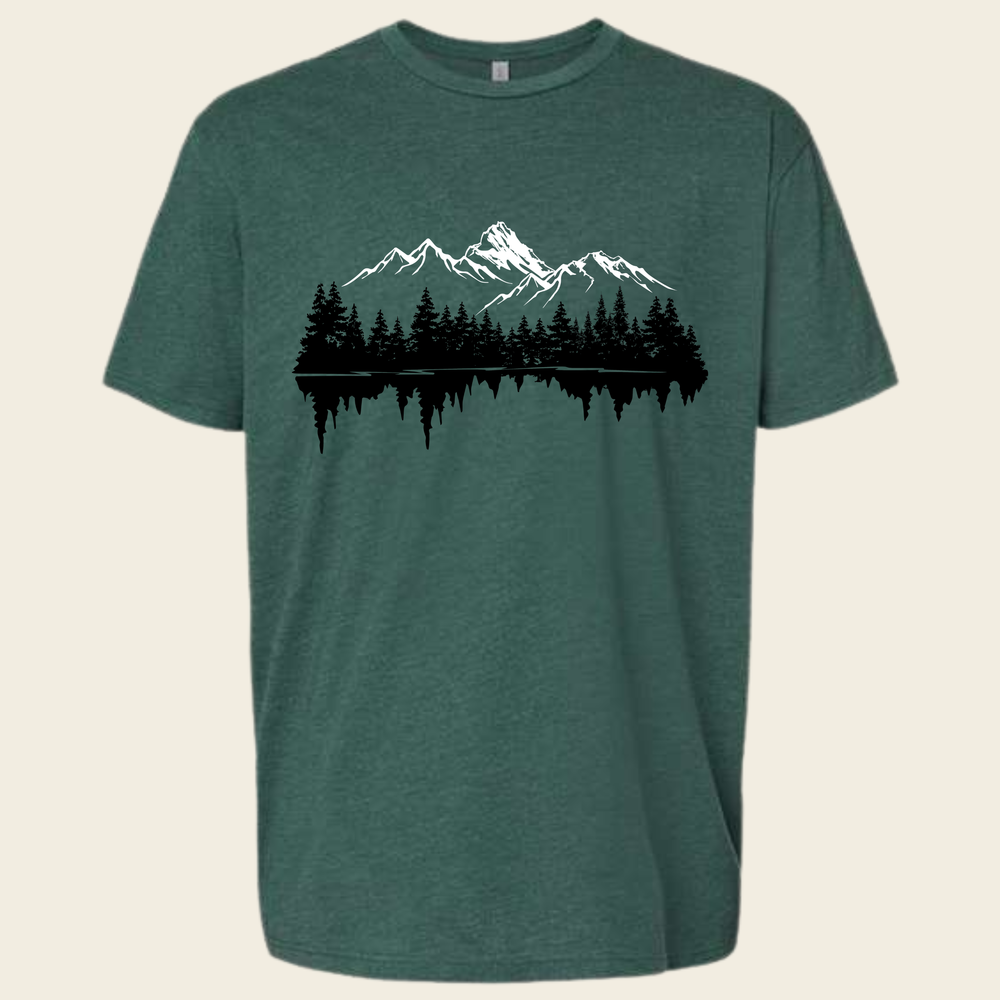
And if you come back having seen nothing, you still spent a night somewhere quiet with a good story in your head, which is most of the point. The mountains don't care whether you found a monster — a lesson the Mountain Reflection Tee makes without saying anything at all.
Common questions
What's the most famous American cryptid?
Bigfoot, by a wide margin. He's the only one with genuinely national reach, though Mothman has been gaining ground for years thanks to Point Pleasant's festival and the statue.
Are any cryptids real animals?
None have been confirmed, though skeptics point out that most sightings can be explained by bears, owls, big cats, or floating logs seen at bad angles in bad light. The jackalope and the Hodag are admitted inventions, which hasn't hurt them at all.
Why does West Virginia have so many cryptids?
Terrain, mostly. The state is nearly all mountains and hollows, the dark comes early between ridges, and the storytelling tradition there runs deep. Mothman and the Flatwoods Monster both came out of that landscape.
Outdoors

Made by Land & Light — American lifestyle apparel with a sense of place and a sense of humor.
See every shirt